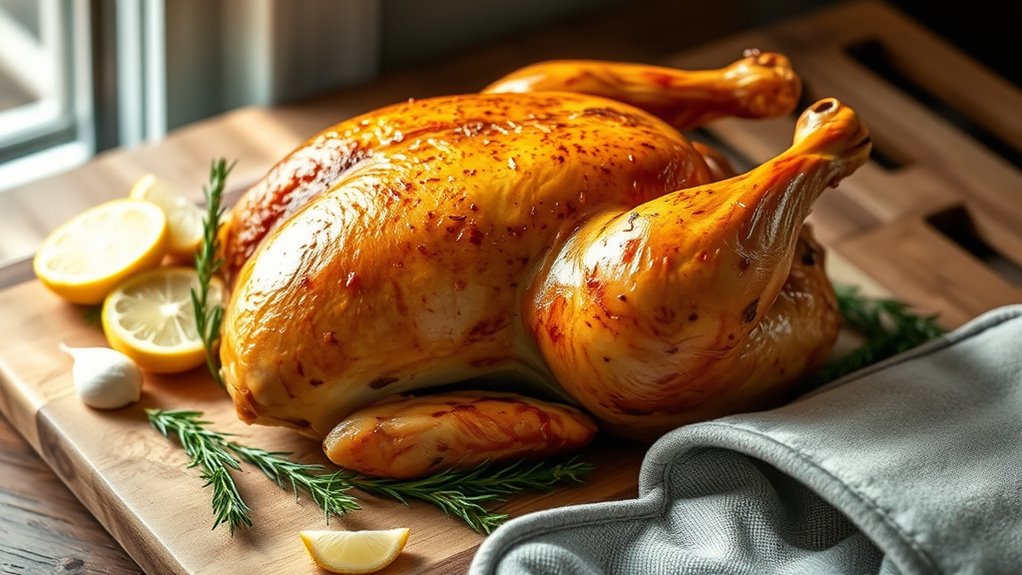
How Long to Cook Whole Chicken in Oven
To cook a whole chicken in the oven, it’s important to know the right temperature and timing for the best results. Roasting a whole chicken at 350°F is a common method that ensures even cooking and tender meat.
Typically, you should cook the chicken for about 20 minutes per pound, so a 4-pound bird will take roughly 80 minutes to roast fully.
If you prefer crispier skin, increase the oven temperature to 400°F and reduce the cooking time to about 15 minutes per pound.
Always use a meat thermometer to check that the internal temperature reaches 165°F to guarantee the chicken is fully cooked and safe to eat.
Don’t forget to let the chicken rest before carving. Resting helps retain the juices, resulting in moist and flavorful meat.
Keep exploring different roasting techniques and timings to perfect your whole chicken cooking skills.
Key Takeaways
- Roast a whole chicken at 350°F for about 20 minutes per pound, adjusting time based on weight and oven variations.
- Higher temperatures (400°F–425°F) reduce cooking time to 15 minutes per pound and crisp the skin but may dry the meat.
- Use a meat thermometer inserted in the thickest thigh part to ensure an internal temperature of 165°F for doneness.
- Add 15–30 minutes to cooking time if the chicken is stuffed, ensuring the stuffing also reaches 165°F.
- Let the chicken rest covered for 10–15 minutes after roasting to allow juices to redistribute and enhance tenderness.
How Long Does It Take to Roast a Whole Chicken?
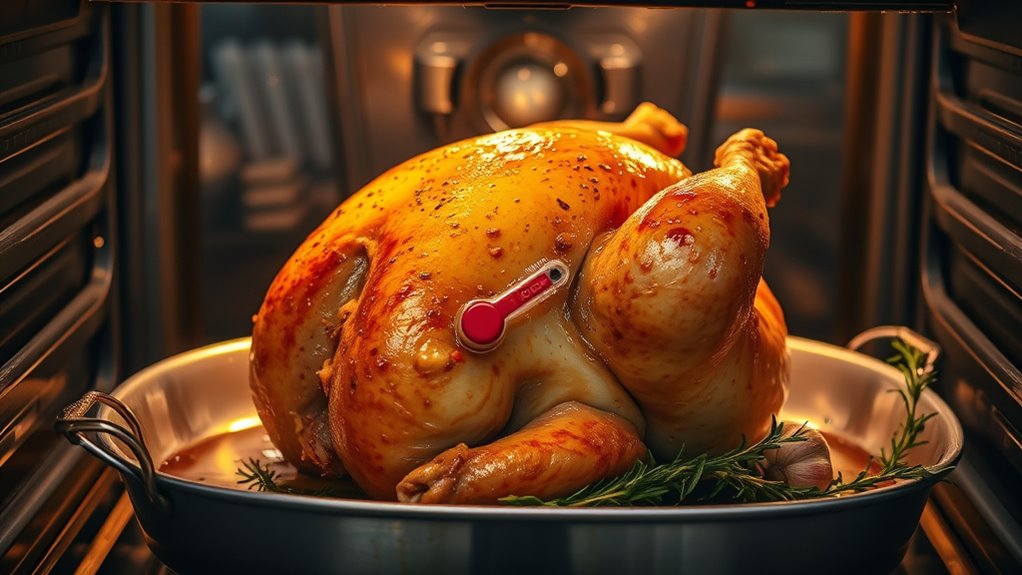
When you roast a whole chicken, the cooking time mainly depends on its weight and the oven temperature you choose. Typically, roasting at 350°F (175°C) takes about 20 minutes per pound. So, if your chicken weighs 4 pounds, expect roughly 80 minutes in the oven.
Cooking at higher temperatures, like 400°F (200°C), reduces the time slightly, around 15 minutes per pound, but you need to watch carefully to avoid drying out the meat. Remember, the goal is to cook the chicken evenly while keeping it juicy. Using a consistent oven temperature guarantees predictable results.
Avoid relying solely on time; factors like chicken size and oven variations also matter. Always check for doneness to guarantee a perfectly roasted chicken.
How to Calculate Cooking Time for a Whole Chicken
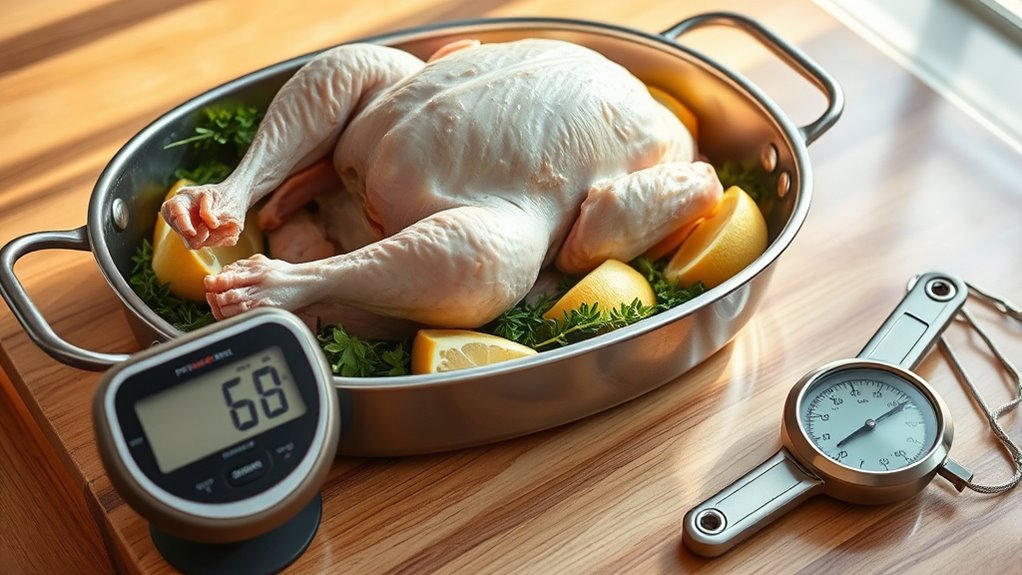
Knowing the weight of your chicken and the oven temperature helps you estimate the cooking time, but calculating it accurately guarantees your chicken cooks perfectly every time. Start by preheating your oven to the desired temperature, usually between 350°F and 425°F. The general rule is to roast the chicken for about 20 minutes per pound at 350°F.
If you’re cooking at a higher temperature, reduce the time slightly to prevent drying out. Multiply the chicken’s weight by the minutes per pound to get a rough cooking time. Always use a meat thermometer to check doneness; the internal temperature should reach 165°F in the thickest part of the thigh.
Adjust your cooking time accordingly if your chicken is larger or smaller than average.
How Weight and Size Affect Chicken Cooking Time
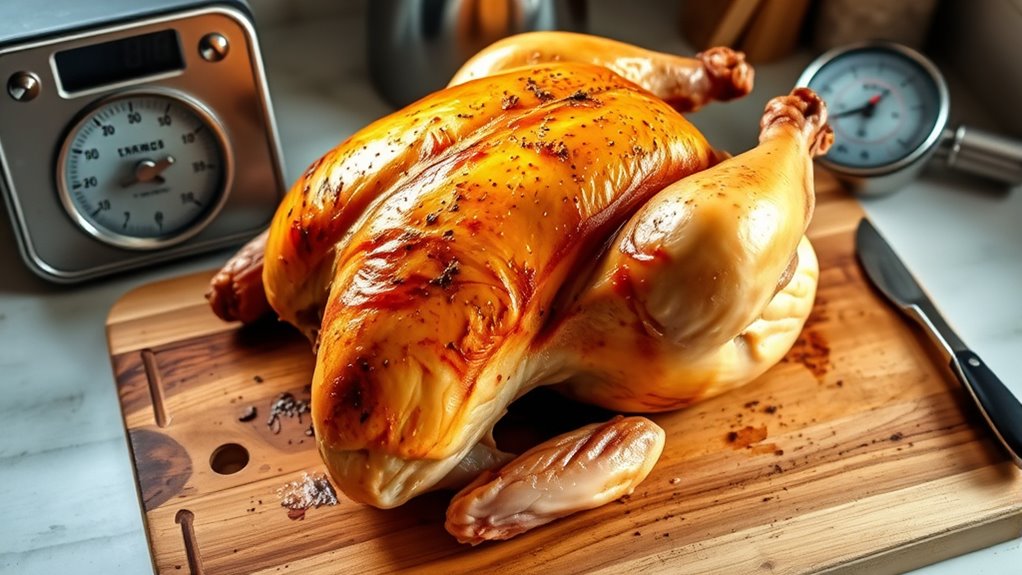
Your chicken’s weight directly affects how long it needs to cook—heavier birds take more time to reach the right temperature. Size also matters because larger chickens can cook unevenly if heat doesn’t distribute well.
Understanding these factors helps you adjust cooking times for a perfectly cooked chicken every time.
Weight Impact On Cooking
Because the weight and size of a whole chicken directly influence how heat penetrates and cooks the meat, you’ll need to adjust your cooking time accordingly. Heavier chickens take longer to cook since heat takes more time to reach the center, ensuring the meat is safe and juicy.
For example, a 3-pound chicken might need about 1 hour and 15 minutes at 350°F, while a 5-pound bird could require closer to 1 hour and 45 minutes. If you don’t compensate for the weight, you risk undercooking the thicker parts or drying out the outer meat.
Always use a meat thermometer to check doneness—aim for an internal temperature of 165°F in the thickest part. This approach helps you cook your chicken perfectly, regardless of its size.
Size And Heat Distribution
Although weight plays a big role, the overall size and shape of the chicken also affect how heat moves through it during cooking. When you roast a plump, round chicken, heat penetrates more evenly compared to a long, narrow bird. Larger chickens take longer because heat needs to reach the center without overcooking the outer parts.
You should consider the bird’s thickness, not just weight, for accurate cooking times. Uneven shapes may cause some areas to cook faster, so rotating the chicken during roasting helps distribute heat better. Also, stuffing the cavity changes heat flow and can extend cooking time.
What Oven Temperature Works Best for Roasting Chicken
When roasting a whole chicken, choosing the right oven temperature is vital to achieving juicy meat and crispy skin. You’ll want to set your oven between 375°F and 425°F. Lower temperatures, around 375°F, cook the chicken more gently, helping retain moisture throughout the meat.
If you prefer a crispier skin, bump it up to 400°F or 425°F, but watch closely to avoid drying out the meat. Keep in mind that higher heat shortens cooking time, so it’s important to adjust accordingly. Using an oven thermometer can help guarantee accuracy, as many ovens run hotter or cooler than their settings.
Ultimately, balancing temperature and time will give you perfectly roasted chicken every time.
How to Prepare Your Chicken Before Roasting
Before roasting, make sure you clean and trim your chicken by removing any excess fat or leftover feathers. Next, season or marinate it to boost flavor and keep the meat juicy.
These simple steps will help you get the best results in the oven.
Cleaning And Trimming
Since proper cleaning and trimming set the foundation for a delicious roast, you should start by removing any leftover feathers, excess fat, and giblets from the chicken cavity. Rinse the chicken inside and out under cold running water, then pat it dry thoroughly with paper towels. Drying is essential to help the skin crisp up during roasting.
Trim away any excess skin or fat, especially around the neck and tail areas, to prevent flare-ups and uneven cooking. Check for any remaining pin feathers and remove them with tweezers if needed. Finally, tuck the wing tips under the body to avoid burning.
These simple steps guarantee your chicken is clean, tidy, and ready for even cooking in the oven.
Seasoning And Marinating
Although seasoning and marinating might seem straightforward, they play an essential role in enhancing your chicken’s flavor and juiciness. Start by patting your chicken dry to help the seasoning stick better. Rub the skin generously with salt, pepper, and your favorite herbs or spices.
For deeper flavor, consider marinating your chicken for a few hours or overnight in a mixture of oil, acid (like lemon juice or vinegar), garlic, and herbs. This not only tenderizes the meat but also infuses it with aromatic notes. Don’t forget to season inside the cavity for balanced taste.
When you’re ready, remove the chicken from the marinade and let it sit at room temperature for about 30 minutes before roasting. Proper seasoning and marinating set the stage for a juicy, flavorful roast.
How to Check If Your Whole Chicken Is Done
When cooking a whole chicken, you can’t rely on time alone to know it’s done—you need to check its internal temperature to guarantee it’s safe and juicy. Besides temperature, there are other ways to tell if your chicken is ready.
- Juices run clear: Pierce the thickest part of the thigh with a skewer or knife. If the juices run clear, the chicken is likely done. Pink or red juices mean it needs more time.
- Leg wiggle test: Gently wiggle the drumstick. It should move easily and feel loose when the chicken is cooked through.
- Firm texture: Press the thickest part of the breast. It should feel firm, not jiggly or soft.
Use these tips together to ensure your chicken is perfectly cooked every time.
Using a Meat Thermometer to Check Chicken Doneness
You’ll want to use a meat thermometer to make sure your chicken reaches the ideal internal temperature of 165°F. Insert the thermometer into the thickest part of the thigh without touching the bone for the most accurate reading.
Also, check that the juices run clear to confirm your chicken is fully cooked.
Ideal Internal Temperature
Since proper doneness guarantees both safety and juiciness, checking the ideal internal temperature with a meat thermometer is essential when cooking a whole chicken. You want to verify the chicken reaches the right temperature to avoid undercooking or drying it out.
Here’s what to keep in mind:
- Aim for an internal temperature of 165°F (74°C) in the thickest part of the thigh. This ensures the chicken is safe to eat.
- Avoid guessing doneness by color or juice clarity; temperature is the most reliable indicator.
- Let the chicken rest for 10-15 minutes after removing it from the oven; the internal temperature will stabilize and the juices will redistribute, keeping the meat moist.
Using a meat thermometer correctly guarantees a perfectly cooked, safe, and juicy chicken every time.
Thermometer Placement Tips
Although using a meat thermometer is essential, placing it correctly is equally important to get an accurate reading. Insert the thermometer into the thickest part of the chicken, usually the thigh, without touching the bone. Bone conducts heat differently and can give you a false temperature.
Avoid placing the thermometer too close to the skin or cavity, as these areas heat unevenly. Make sure the probe is fully inserted so the sensor reaches the center of the meat. If your thermometer has a digital display, leave it in while cooking to monitor the temperature continuously.
Proper placement guarantees you know exactly when your chicken hits the safe internal temperature, so you avoid undercooking or drying it out.
Checking for Juices
Once you’ve placed the thermometer correctly, checking the chicken’s juices provides another reliable way to gauge doneness. Clear juices indicate your chicken is cooked through, while pink or red juices signal it needs more time.
To check juices effectively:
- Poke the thickest part of the thigh with a skewer or fork.
- Observe the color of the juice that runs out.
- If the juice is clear, your chicken is safe to eat; if not, continue cooking.
Using this visual cue alongside your meat thermometer guarantees accuracy. Remember, the thermometer should read 165°F (74°C) in the thickest part for perfectly cooked chicken.
Combining these methods helps you serve juicy, safe, and delicious chicken every time.
Tips for Getting Crispy Skin on a Whole Chicken
To achieve crispy skin on your whole chicken, you need to focus on drying the skin thoroughly before cooking and using high heat during roasting. Pat the chicken dry with paper towels, and let it rest uncovered in the fridge for an hour to remove moisture.
Applying a light coating of oil or butter helps the skin brown evenly. Roast at 425°F (220°C) for the last 15 minutes to crisp up the skin without drying the meat.
| Tip | Why It Works | How to Do It |
|---|---|---|
| Dry the skin | Moisture prevents crispiness | Pat dry, rest uncovered |
| Use oil or butter | Promotes even browning | Rub lightly before roasting |
| High heat roasting | Renders fat, crisps skin | Increase temp last 15 mins |
How to Adjust Cooking Time for Stuffed Chickens
When you stuff a whole chicken, you’ll need to increase the cooking time to guarantee both the meat and the stuffing reach a safe temperature. Stuffing adds density inside the bird, which slows heat penetration. To adjust your cooking time effectively, follow these steps:
Stuffing a whole chicken requires longer cooking to ensure both meat and stuffing reach a safe temperature.
- Add 15 to 30 minutes to the usual cooking time for an unstuffed chicken, depending on the size and amount of stuffing.
- Use a meat thermometer to check that the internal temperature of the stuffing hits 165°F (74°C) to ensure safety.
- Avoid overstuffing, which can lead to uneven cooking and longer cook times, increasing the risk of dry meat.
Fix When Your Chicken Cooks Too Fast or Slow
If your chicken cooks too fast or too slow, it often means your oven temperature isn’t quite right or the bird’s size and placement need adjusting. First, double-check your oven’s temperature with an oven thermometer—many ovens run hotter or cooler than the dial indicates. If it’s cooking too fast, lower the temperature by 25°F and monitor progress.
For slow cooking, increase the temperature slightly or move the chicken closer to the heating element. Also, consider the chicken’s size; larger birds need more time, smaller ones less. Position your chicken on the middle rack to ensure even heat circulation.
Finally, avoid opening the oven door frequently, as this causes temperature fluctuations that affect cooking speed. These tweaks will help you cook your whole chicken perfectly every time.
Why Resting Time Matters for Juicy, Tender Chicken
Although you’ve cooked your chicken perfectly, skipping the resting time can dry out the meat and lose those flavorful juices. Resting lets the juices redistribute evenly, making every bite tender and moist instead of dry and stringy. When you remove the chicken from the oven, the heat causes the juices to move toward the surface.
Resting allows them to settle back inside the meat.
Here’s why resting matters:
- Juice Redistribution: Prevents all the flavorful liquids from spilling out when you cut.
- Even Cooking: The residual heat finishes cooking the chicken gently.
- Better Texture: Meat fibers relax, making the chicken more tender and easier to carve.
Give your chicken 10-15 minutes of rest under foil before serving—you’ll taste the difference.
Frequently Asked Questions
Can I Roast a Whole Chicken Without Trussing It?
Yes, you can roast a whole chicken without trussing it. Just expect the wings and legs to spread out more, which might cause uneven cooking.
You’ll want to monitor it closely and adjust as needed.
What Side Dishes Pair Best With Roasted Whole Chicken?
Think of your roasted chicken as the sun—bright and warm.
Pair it with mashed potatoes, roasted vegetables, or a fresh green salad to create a balanced, colorful plate that complements and highlights your star dish perfectly.
How Do I Store Leftover Roasted Chicken Safely?
You should cool leftover roasted chicken within two hours, then store it in airtight containers or wrap it tightly with foil.
Keep it in the fridge for up to four days, or freeze for longer storage.
Can I Use Frozen Whole Chicken for Roasting?
You can’t put the cart before the horse—never roast a frozen whole chicken directly. You need to thaw it completely first, usually in the fridge for 24 hours, to guarantee even cooking and avoid food safety risks.
What Are Common Seasoning Blends for Roasting Chicken?
You’ll often use blends like garlic, rosemary, thyme, paprika, salt, and pepper. Lemon zest, oregano, and cumin also work great.
Mix with olive oil or butter, then rub under the skin for extra flavor.
Conclusion
So, you’ve mastered the art of roasting a whole chicken without turning it into a charcoal briquette or a chewy mystery. Remember, it’s all about the right time, temp, and patience—because who doesn’t love waiting while their dinner slowly transforms into perfection?
Next time, skip the panic and trust the process. Your crispy, juicy chicken will thank you—before you devour it like a ravenous food critic on a deadline.
Bon appétit! Cooking a whole chicken in the oven takes time and care, but with the right temperature and timing, you’ll achieve a perfectly cooked whole chicken every time.