Are Blender Bottles Dishwasher Safe?
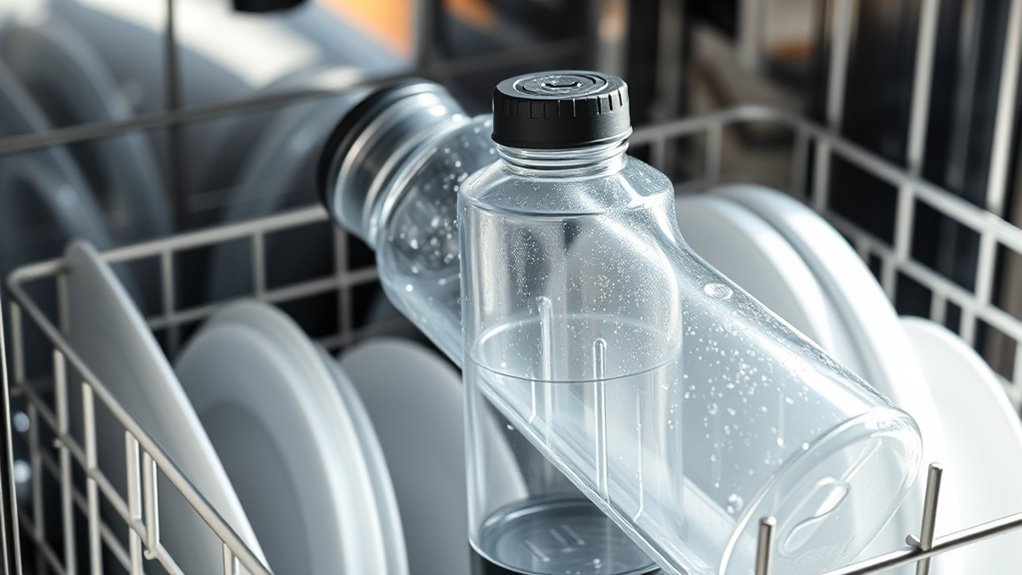
You can safely clean most Blender Bottles in the dishwasher, making it a convenient option for maintaining your bottle’s hygiene. When washing, place all parts, especially lids and gaskets, on the top rack to avoid heat damage.
Avoid high-heat or heavy-duty cycles to prevent warping and seal wear. Overloading the dishwasher can reduce cleaning effectiveness and increase the risk of damage, so load carefully.
Rinse your Blender Bottle immediately after use to prevent residue buildup. Allow it to air dry with lids off to keep it fresh.
Following these tips helps your Blender Bottle last longer and stay clean. Proper care and maintenance are essential to ensure your bottle remains in great condition for everyday use.
Key Takeaways
- Most Blender Bottles and wire whisk balls are dishwasher safe, but lids and rubber gaskets should be placed on the top rack.
- Avoid placing Blender Bottles on the bottom dishwasher rack to prevent warping or cracking from excessive heat.
- Use moderate dishwasher cycles (normal, eco, or delicate) with temperatures between 110°F and 140°F for safe cleaning.
- Repeated dishwasher use may cause discoloration, warping, or loosen seals, so inspect bottles regularly for damage.
- For best care, rinse immediately after use and air dry with the lid off to prevent odors and mold growth.
Dishwasher Safety for Blender Bottles
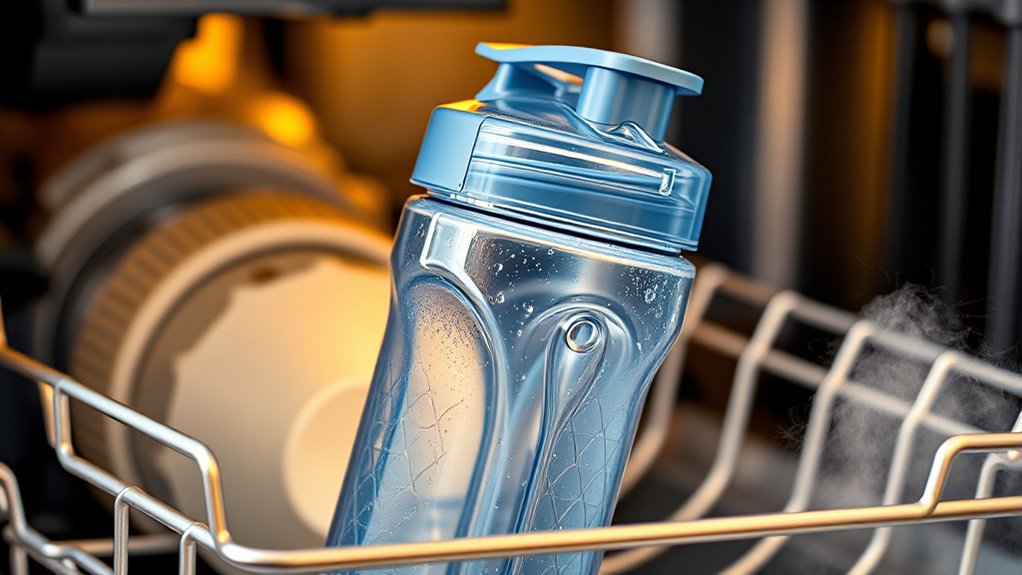
Wondering if you can safely toss your Blender Bottle in the dishwasher? The good news is that most Blender Bottles are designed with dishwasher safety in mind, making cleanup convenient.
Still, you’ll want to place it on the top rack to avoid excessive heat exposure, which could warp or damage the bottle over time. Avoid high-heat drying cycles to protect the bottle’s integrity and longevity.
Place your Blender Bottle on the top rack and skip high-heat drying to keep it in great shape.
Keep in mind that repeated dishwasher use may gradually affect the bottle’s appearance or performance, but it generally won’t compromise its safety. Using a dishwasher can save you time and effort, especially after an intense workout or busy day.
Always check the manufacturer’s recommendations to guarantee you’re caring for your Blender Bottle properly.
Which Blender Bottle Parts Are Dishwasher Safe
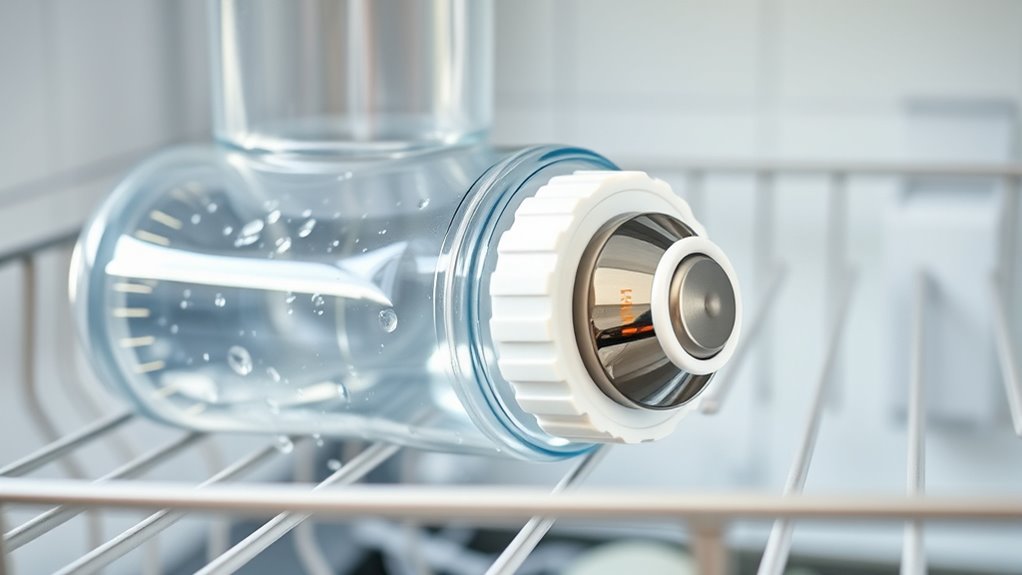
Although most Blender Bottles are dishwasher safe, not all parts handle dishwasher cleaning equally well. You’ll find that the main bottle and the wire whisk ball are generally dishwasher safe and stand up well to regular cleaning in the dishwasher’s top rack.
However, the lid and the rubber gasket can be a bit more sensitive. While many lids are designed to withstand dishwasher cycles, it’s best to place them on the top rack to avoid warping. The rubber gasket might degrade faster if exposed to dishwasher heat repeatedly, so you might want to wash it by hand to extend its life.
Always check your specific Blender Bottle model’s instructions, but focusing on top-rack placement for all parts is a good rule of thumb.
Effects of Dishwasher Heat and Detergents on Blender Bottles
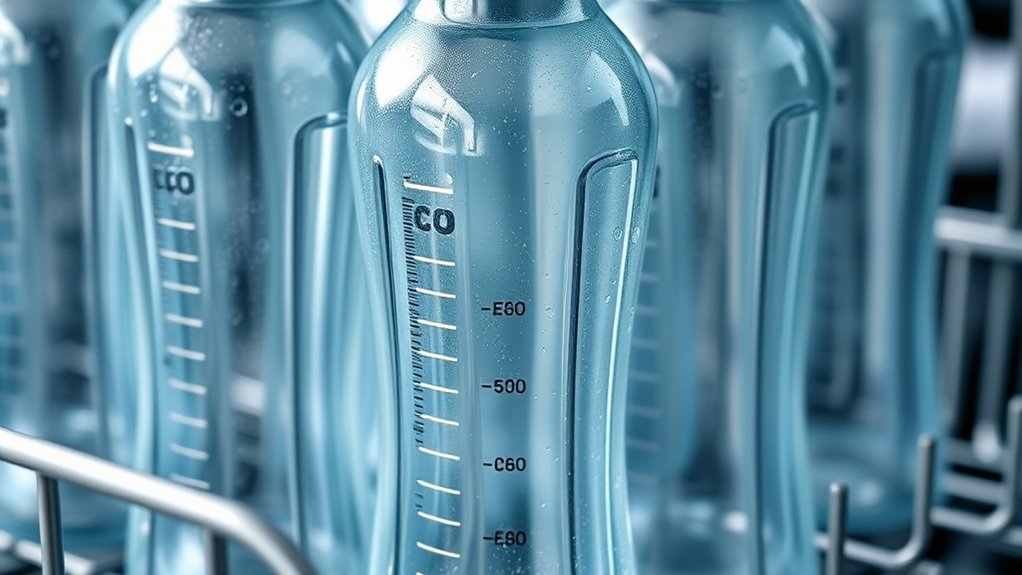
When you run your Blender Bottle through the dishwasher, the combination of high heat and strong detergents can affect its materials over time. The heat may cause plastic parts to warp or weaken, especially if they’re not designed to withstand dishwasher temperatures. Detergents, which are often quite harsh, can degrade the bottle’s surface, leading to discoloration and a dull finish.
Over repeated cycles, the seal and threads might lose their tightness, increasing the risk of leaks. The metal whisk ball can also experience wear, with heat potentially affecting its coating or causing rust if it’s not stainless steel. Understanding these effects helps you decide how often and in what way to clean your Blender Bottle to maintain its longevity and performance.
Recommended Dishwasher Settings for Blender Bottles
To keep your blender bottle in great shape, place it on the top rack where heat is gentler. Use a moderate water temperature to avoid warping or damage.
Choosing a gentle or normal wash cycle will clean effectively without stressing the bottle.
Ideal Dishwasher Rack Placement
Placing your Blender Bottle in the right dishwasher rack guarantees it gets thoroughly cleaned without damage. To protect your bottle and ensure all parts are spotless, follow these tips:
- Top Rack Placement: Always put your Blender Bottle on the top rack. The heat is gentler here, preventing warping and damage to the plastic.
- Secure Small Parts: Place the lid, loop, and BlenderBall in the utensil basket or a small mesh bag to avoid losing them during the wash cycle.
- Avoid Crowding: Give your bottle enough space to allow water and detergent to reach every surface, ensuring a thorough clean.
Optimal Water Temperature Settings
Although dishwasher settings vary, you should select a water temperature that effectively cleans your Blender Bottle without causing damage. Aim for a warm or medium setting, typically between 110°F to 140°F (43°C to 60°C). This range is hot enough to break down residues and kill bacteria but gentle enough to preserve the bottle’s plastic and sealing components.
Avoid using the highest temperature settings, like sanitizing or heavy-duty wash cycles, since extreme heat can warp the plastic or degrade the lid’s silicone gasket over time. If your dishwasher has an eco or energy-saving mode, it often uses lower temperatures that may not clean thoroughly. So, pick a moderate setting to balance cleanliness and longevity for your Blender Bottle.
Recommended Wash Cycle Types
When you run your dishwasher, choosing the right wash cycle can make a big difference in how well your Blender Bottle comes out. To keep it clean without damage, here are the best cycle types to use:
- Normal Wash – This cycle balances cleaning power and gentleness, perfect for daily use and removing typical residues.
- Eco or Energy-Saving Cycle – Uses lower temperatures and less water, protecting your bottle’s materials while still providing a decent clean.
- Top Rack or Delicate Cycle – Designed for fragile items, it’s ideal if your Blender Bottle has special coatings or if you want to avoid wear.
Avoid heavy-duty or high-heat cycles, as they might warp or degrade your Blender Bottle over time.
Common Dishwasher Mistakes With Blender Bottles
If you don’t load your blender bottle properly in the dishwasher, you risk damaging both the bottle and the appliance. A common mistake is placing the bottle on the bottom rack where high heat and water pressure can warp or crack it. Instead, put it on the top rack to avoid excessive heat exposure.
Another error is neglecting to separate the lid and blender ball; washing them together can trap water and residue, leading to mold and odors. You also shouldn’t overload the dishwasher, as this can prevent proper cleaning and cause the bottle to shift, increasing the risk of damage. Avoid using harsh detergents or bleach, which can degrade the plastic.
Following these tips helps keep your blender bottle in great shape while protecting your dishwasher.
Hand Washing vs. Dishwasher: Which Is Better?
You might wonder if hand washing cleans your blender bottle better than the dishwasher. It’s important to weigh how each method affects both cleanliness and the bottle’s durability.
Let’s compare how well they clean and how they impact your bottle’s lifespan.
Cleaning Effectiveness Comparison
Although both hand washing and dishwashers can clean Blender Bottles effectively, the level of cleanliness you achieve depends on several factors like water temperature, detergent quality, and thoroughness.
To help you decide which method suits you best, consider these points:
- Water temperature: Dishwashers use consistently high heat, which can better eliminate bacteria compared to hand washing with lukewarm water.
- Detergent strength: Dishwasher detergents tend to be stronger and more effective at breaking down protein residues than typical dish soaps.
- Cleaning thoroughness: Hand washing gives you control to scrub hard-to-reach areas, but it requires diligence to avoid missed spots.
Ultimately, you can get your Blender Bottle clean with either method if you pay attention to these factors.
Durability Impact Analysis
When deciding between hand washing and using a dishwasher, consider how each method affects your Blender Bottle’s durability. Hand washing is gentler on the materials, reducing the risk of warping or fading over time. Dishwashers expose the bottle to high heat and strong detergents, which can degrade plastic parts and seals faster.
However, dishwashers offer convenience and thorough cleaning.
| Method | Durability Impact |
|---|---|
| Hand Washing | Preserves plastic integrity and seals; less heat exposure |
| Dishwasher | Faster wear on plastic; potential seal damage due to heat |
| Overall | Hand washing extends lifespan; dishwasher risks faster wear |
You’ll get longer use by hand washing, but dishwashers can be safe if used carefully.
How Often to Clean Your Blender Bottle in the Dishwasher
How often should you run your Blender Bottle through the dishwasher to keep it clean and fresh? The answer depends on how frequently you use it and what you mix inside. Here’s a simple guideline:
- Daily Use: If you use your Blender Bottle every day, wash it in the dishwasher at least once daily to prevent residue buildup and bacteria growth.
- Occasional Use: For occasional users, dishwasher cleaning after every few uses is sufficient to maintain hygiene.
- After Sticky or Protein-Rich Drinks: Always run a dishwasher cycle immediately after blending thick, sticky, or protein-rich drinks to avoid stubborn stains and odors.
Sticking to this schedule ensures your Blender Bottle stays hygienic and ready for your next shake without any hassle.
Removing Odors and Stains From Blender Bottles
You’ll want to tackle odors and stains quickly to keep your blender bottle fresh and clean. Using simple tricks like baking soda or vinegar can effectively remove lingering smells.
Plus, following a few stain prevention tips will help your bottle look new longer.
Effective Odor Removal
Although blender bottles are designed for convenience, they can develop stubborn odors and stains after repeated use. To effectively remove smells, you’ll want to tackle them quickly. Here’s how:
- Baking Soda Soak: Mix two tablespoons of baking soda with warm water. Let your bottle soak overnight to neutralize odors.
- Vinegar Rinse: After soaking, rinse the bottle thoroughly with white vinegar. This helps break down lingering smells and kills bacteria.
- Lemon Juice Scrub: Use lemon juice combined with a bit of salt to scrub the inside. The natural acidity removes odors and brightens stains.
Following these steps guarantees your blender bottle stays fresh without harsh chemicals or extra effort. Regular cleaning keeps odors at bay, so you always enjoy your drinks.
Stain Prevention Tips
Keeping your blender bottle free from odors is one part of maintenance, but preventing stains takes just a bit more attention. To avoid stubborn stains, rinse your bottle immediately after use—especially if it held colorful or acidic ingredients like berries or citrus. Use a gentle scrub brush or sponge with warm, soapy water to clean every nook.
Avoid leaving residue inside for long periods, as it can cause discoloration. You can also soak your bottle in a mixture of baking soda and water for 15–30 minutes to lift stains naturally. If your bottle is dishwasher safe, placing it on the top rack helps preserve its appearance.
Regular, thorough cleaning prevents buildup and keeps your blender bottle looking fresh and stain-free over time.
Signs of Dishwasher Damage on Blender Bottles
When you notice your blender bottle looking faded or warped, it’s a clear sign that the dishwasher’s heat and detergent have taken a toll. These changes can affect the bottle’s durability and safety. Watch out for these signs:
- Discoloration: The plastic may turn dull or develop yellowish stains you can’t scrub off, indicating material breakdown.
- Warping: The bottle or lid might lose its original shape, causing leaks or poor sealing.
- Cracks or brittleness: Over time, the plastic can become brittle and develop small cracks that compromise its integrity.
If you spot any of these, it’s best to reconsider dishwasher use to avoid further damage and keep your blender bottle safe for daily use.
Best Practices to Keep Blender Bottles Fresh and Durable
Noticing signs of dishwasher damage means it’s time to adjust how you care for your blender bottle. To keep it fresh and durable, rinse it immediately after use to prevent residue buildup and odors. Hand wash with warm, soapy water using a bottle brush to reach every corner, especially around the lid and mixing ball.
Avoid harsh abrasives or bleach, which can degrade the materials. Let your bottle air dry completely with the lid off to stop mold growth. Store it in a cool, dry place away from direct sunlight, which can weaken plastic over time.
If you do use a dishwasher, place the bottle on the top rack only and avoid high-heat cycles. These simple steps will extend your blender bottle’s life and keep it smelling fresh.
Frequently Asked Questions
Can Blender Bottles Be Used for Hot Liquids?
You shouldn’t use Blender Bottles for hot liquids because the heat can warp the plastic and damage the seal. Stick to cold or room temperature drinks to keep your bottle in good shape and avoid leaks.
Are Blender Bottles Bpa-Free and Safe for Health?
You’ll be glad to know over 90% of Blender Bottles are BPA-free, making them safe for your health. They use high-quality materials, so you can trust they won’t leach harmful chemicals into your drinks.
How Do Blender Bottles Compare to Other Shaker Bottles?
You’ll find Blender Bottles offer a secure seal and effective mixing compared to others. Their patented BlenderBall whisk sets them apart, ensuring smoother shakes.
Plus, they’re durable and often come in various sizes and colors to fit your style.
Can Blender Bottles Be Used for Carbonated Drinks?
You shouldn’t use Blender Bottles for carbonated drinks because the pressure buildup can cause leaks or spills. They’re designed for shakes, so carbonated liquids might create a mess or damage the bottle’s seal over time.
What Materials Are Blender Bottles Made From?
Blender bottles are usually crafted from durable plastics like BPA-free polypropylene and Tritan, making them as tough as a warrior’s shield. Their metal whisk balls are stainless steel, ensuring your shakes mix perfectly every time.
Conclusion
Think of your blender bottle as a trusted companion on your fitness journey—it thrives when treated right. Tossing it in the dishwasher can be like a gentle rain, washing away grime without harm, but too much heat or harsh detergents might wear it down like a storm.
By choosing the right settings and cleaning often, you keep it fresh and sturdy, ready to blend your next shake with the same vigor as day one.
In conclusion, while many Blender Bottles are dishwasher safe, always check the manufacturer’s instructions. Proper care ensures your Blender Bottle stays durable and clean, supporting your fitness goals every step of the way.