How Do Rice Cookers Know When to Stop Cooking Step-by-Step
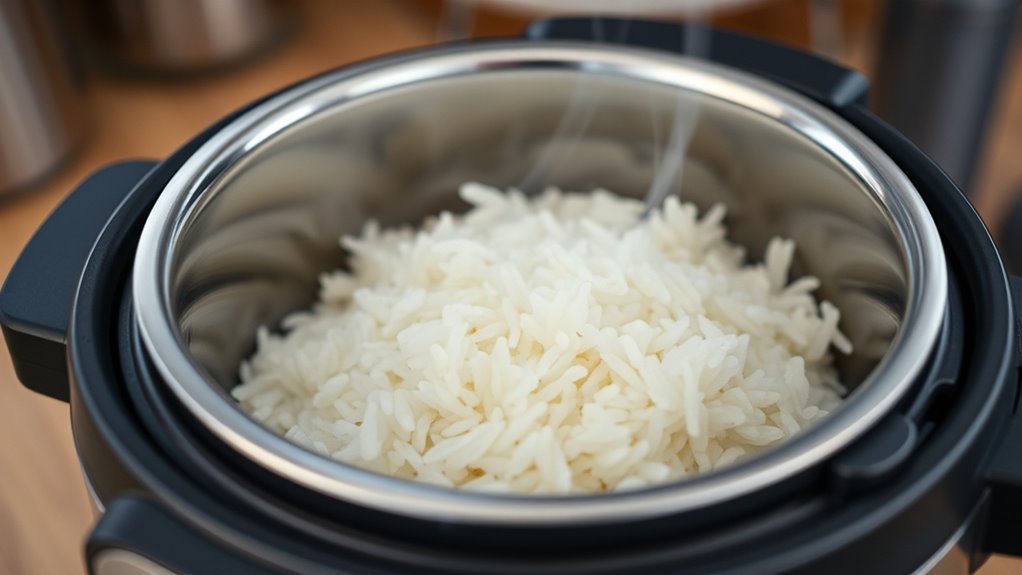
Your rice cooker knows when to stop cooking by using advanced sensors that monitor temperature, moisture, and steam pressure inside the pot. These sensors play a crucial role in the cooking process, ensuring perfectly cooked rice every time.
As the water heats and boils, the temperature remains steady while the rice absorbs all the water.
Once the water is fully absorbed, the temperature inside the pot begins to rise. This change signals the rice cooker to either switch off or shift to a keep warm mode.
Microcontrollers inside the cooker process this sensor data to adjust cooking time and prevent overcooking.
This smart technology fine-tunes the cooking process, allowing you to enjoy consistently delicious rice without constant supervision.
Understanding these mechanisms highlights how modern rice cookers combine sensors and microcontrollers for optimal results.
Key Takeaways
- Temperature sensors detect water boiling at 212°F and monitor temperature rise once water is absorbed or evaporated.
- Moisture sensors track real-time water content to prevent undercooked or mushy rice by adjusting cooking accordingly.
- Microcontrollers analyze sensor data to identify cooking completion by detecting temperature and moisture changes.
- Fuzzy logic technology fine-tunes cooking time and heat based on rice type and moisture levels for consistent results.
- Once sensors detect water absorption and temperature rise, the cooker switches off or moves to “keep warm” mode automatically.
How Rice Cookers Use Temperature Sensors to Detect Doneness
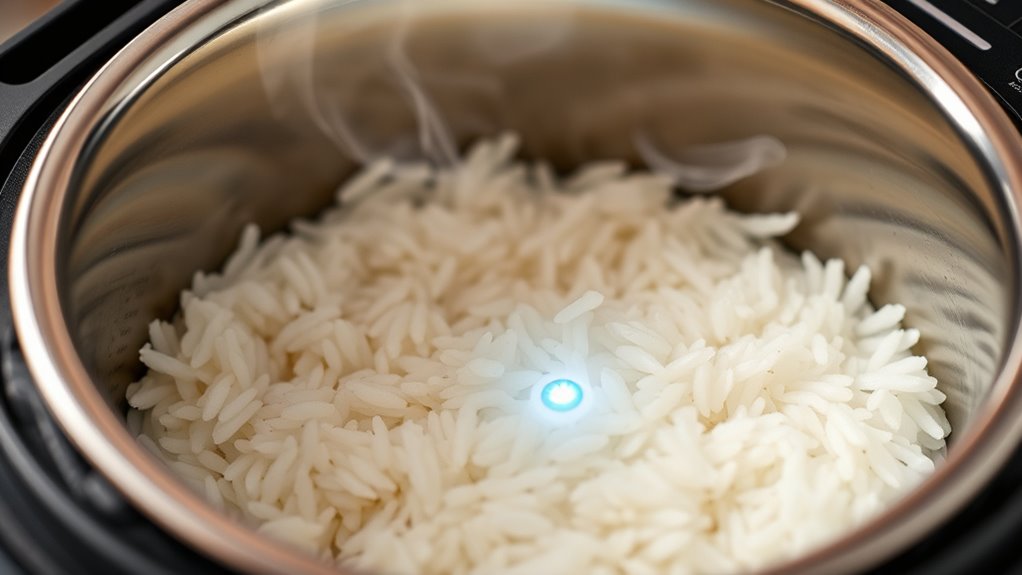
Although it might seem like magic, rice cookers actually rely on temperature sensors to know when your rice is perfectly cooked. When you start cooking, the water heats and stays at 212°F (100°C) as it boils. The cooker’s sensor monitors this temperature closely.
As long as water remains, the temperature stabilizes. Once the water fully absorbs or evaporates, the temperature inside the cooker rises above boiling point. Your rice cooker senses this temperature change and understands the rice is done.
It then switches off or shifts to a keep-warm mode automatically. This smart sensor prevents overcooking by responding to precise temperature shifts, so you don’t have to guess when to stop cooking. You get perfectly cooked rice every time with minimal effort.
Why the Timing of Water Absorption Matters for Perfect Rice

Because rice absorbs water at different rates depending on its type and age, the timing of this absorption is essential for achieving the perfect texture. When you cook rice, you want the grains to soak up just enough water to become tender but not mushy. If the absorption happens too quickly or too slowly, the rice can turn out undercooked or overly sticky.
Your rice cooker monitors how long the water takes to penetrate the grains, adjusting the cooking process accordingly. This guarantees each grain reaches the right level of softness. By controlling the timing of water absorption, the cooker helps you get fluffy, separate rice every time, no matter if you’re using short-grain, long-grain, or older rice that absorbs differently.
How Steam Pressure Signals When Rice Is Done Cooking
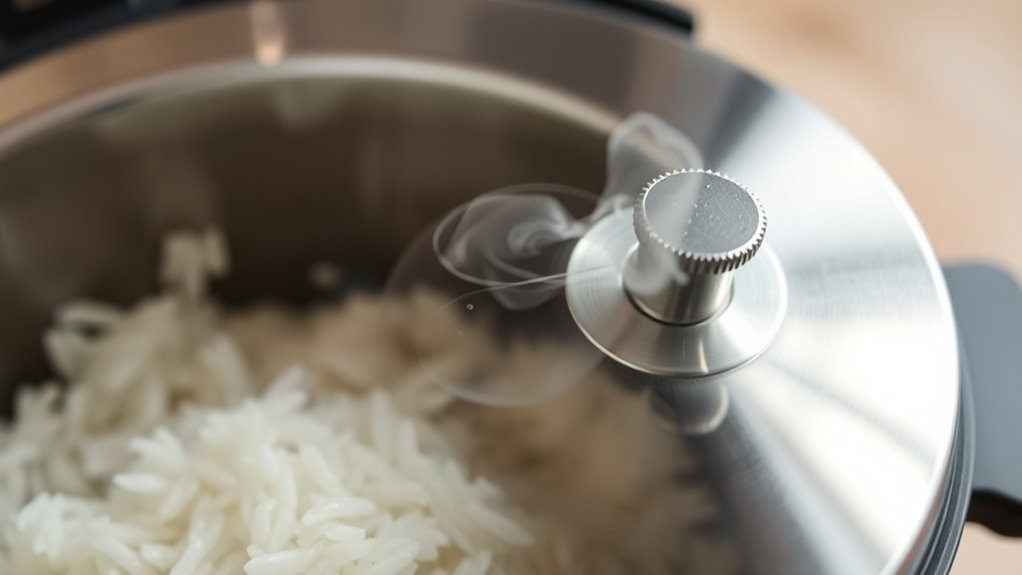
You might not realize it, but the steam pressure inside your rice cooker plays a key role in knowing when the rice is done. As the water absorbs and evaporates, pressure changes signal the cooker to adjust or stop heating.
Understanding this mechanic helps you see how precise cooking completion detection really is.
Steam Pressure Mechanics
When steam pressure inside the rice cooker rises to a certain level, it signals that the water has mostly evaporated and the rice is nearly done. You’ll find that as the cooker heats, water turns to steam, increasing pressure inside the sealed pot. This pressure buildup changes the cooker’s internal environment, allowing sensors or mechanical valves to detect the shift.
Once the pressure hits a specific threshold, it tells the cooker that the rice has absorbed most of the water and the cooking phase is almost complete. Understanding these mechanics helps you see how the cooker avoids overcooking by responding precisely to steam pressure changes rather than just timing. This method guarantees your rice is cooked evenly every time.
Cooking Completion Detection
Steam pressure doesn’t just build up randomly—it acts as a clear signal that the rice cooker uses to determine cooking completion. As the rice absorbs water and heats, steam pressure rises inside the cooker’s sealed environment. Once the water is fully absorbed or evaporated, steam pressure spikes because there’s no more liquid to boil.
The rice cooker’s sensor detects this sudden change, signaling that cooking is done. When the pressure reaches this threshold, the cooker automatically switches off or shifts to a keep-warm mode, preventing overcooking. By monitoring steam pressure, the rice cooker guarantees your rice is perfectly cooked every time without your intervention.
This smart detection method is what makes rice cookers so reliable and convenient for daily use.
How Microcontrollers Control Rice Cooker Cooking Cycles
You rely on microcontrollers to manage your rice cooker’s cooking cycles by integrating sensors that track temperature and steam changes. These tiny brains follow programmed instructions to adjust heat and timing precisely.
Understanding how they monitor conditions helps you see how your rice cooks perfectly every time.
Microcontroller Sensor Integration
Although rice cookers might seem simple, they rely on microcontrollers to manage cooking cycles with precision. You’ll find that these tiny computers connect directly to sensors like temperature probes and moisture detectors inside the cooker. The microcontroller continuously reads data from these sensors, tracking changes in heat and steam levels as the rice cooks.
When the sensors detect that the water has evaporated or the temperature rises beyond a set point, the microcontroller signals the cooker to switch modes or turn off heating. This seamless integration lets the rice cooker adapt cooking in real-time without any input from you. By combining sensor feedback with microcontroller control, the cooker ensures perfect rice every time, saving you from guesswork or overcooking.
Cooking Cycle Programming
How does the microcontroller know when to switch from cooking to warming? It follows a programmed cooking cycle designed to control timing and heat application. When you start the rice cooker, the microcontroller activates the heating element and begins a countdown based on preset cooking times for different rice types.
It continuously processes inputs, running through its code to manage power levels and duration efficiently. Once the cooking time elapses, the microcontroller signals the cooker to stop heating and switch to warming mode. This shift maintains the rice’s temperature without further cooking, preserving texture and flavor.
Temperature Monitoring Techniques
While the microcontroller manages timing, it also relies heavily on temperature monitoring to control the cooking cycle accurately. You’ll find sensors like thermistors or thermocouples embedded near the heating plate, constantly measuring the pot’s temperature. As the rice cooks, the microcontroller reads these temperature changes in real time.
When water boils away, the temperature spikes quickly, signaling the microcontroller to switch from cooking to warming mode. This precise temperature feedback helps prevent overcooking or burning. The microcontroller processes this data, adjusting power delivery to maintain ideal heat.
How Water Evaporation Signals Rice Doneness Inside the Cooker
When you start cooking rice, the water inside the cooker begins to heat and turn into steam. As the rice absorbs water and cooks, the amount of free water decreases. Once the rice absorbs most of the water, less steam escapes.
The cooker’s sensors detect this drop in steam pressure or moisture level. This change signals that the rice is nearly done. At this point, the cooker adjusts its temperature or switches to a keep-warm mode to prevent overcooking.
Fundamentally, the evaporation rate acts as a natural indicator of rice doneness. By tracking how much water has evaporated, the cooker knows precisely when the rice has absorbed enough moisture and can stop cooking to deliver perfectly cooked rice every time.
How Different Rice Types Affect Cooking Detection
You’ll notice that different rice types hold moisture differently, which changes how your cooker detects doneness. Because of this, cooking times adjust to match each variety’s unique water absorption.
Understanding these differences helps your rice cooker get the perfect texture every time.
Moisture Levels Variation
Because different rice varieties absorb and release moisture uniquely, your rice cooker must adjust its cooking detection accordingly. For instance, sticky rice holds moisture differently than long-grain varieties, causing variations in steam output and temperature changes during cooking. Your cooker’s sensors monitor these moisture shifts closely, ensuring it doesn’t stop too early or overcook the rice.
When moisture evaporates at a certain rate, the cooker recognizes that the rice is nearly done. If you use brown rice, which retains more moisture and takes longer to cook, the cooker detects a slower moisture reduction pattern. This adaptive sensing prevents undercooked or mushy rice by responding to the real-time moisture levels inside the pot, not just preset times or temperatures.
Your rice cooker’s ability to track moisture variations is key to perfect results every time.
Cooking Time Adjustments
Although rice cookers rely on sensors to monitor moisture and temperature, they also adjust cooking times based on the specific type of rice you’re cooking. Different rice varieties—like white, brown, jasmine, or basmati—have distinct moisture content and cooking requirements. For example, brown rice has a tougher bran layer, so your cooker extends the cooking time to ensure it softens properly.
In contrast, white rice cooks faster because it’s more processed. Your rice cooker’s microcontroller uses preset algorithms tailored to each type, modifying heating duration and intensity. This adjustment helps prevent undercooking or overcooking, so you get perfectly cooked rice every time without guessing.
Understanding this makes you appreciate how smart your rice cooker truly is in handling various rice types efficiently.
Why Some Rice Cookers Switch to “Keep Warm” Automatically
When the rice finishes cooking, the cooker doesn’t simply shut off; instead, it switches to “Keep Warm” mode to maintain the perfect serving temperature without overcooking. This automatic switch helps you avoid cold, stale rice by gently warming it until you’re ready to eat.
The cooker uses a temperature sensor to detect when the rice has absorbed all the water and reached the right heat, then lowers the temperature to prevent further cooking. This way, your rice stays fluffy and moist, not dry or burnt.
How Fuzzy Logic Technology Helps Rice Cookers Cook Better
Rice cookers don’t just stop at switching to “Keep Warm” mode—they can also adjust cooking based on the type of rice and how much water you add. Thanks to fuzzy logic technology, your rice cooker makes smarter decisions during cooking. Instead of simply reacting to temperature changes, it interprets multiple factors like rice texture, moisture, and heat levels.
This means it fine-tunes cooking time and temperature dynamically to achieve perfect results every time. You don’t have to measure precisely or guess cooking times; the cooker adapts automatically. Whether you’re cooking white, brown, or mixed rice, fuzzy logic helps prevent undercooking or overcooking by continuously monitoring and adjusting the process.
It’s like having a chef inside your kitchen appliance, ensuring consistently fluffy, delicious rice.
Common Sensor Problems That Cause Rice Cooker Errors
If your cooker suddenly stops or displays an error, faulty sensors are often the culprit. The main sensors—temperature, moisture, and pressure—can malfunction due to dirt buildup, moisture damage, or wear over time.
For example, if the temperature sensor fails, your rice cooker might overcook or undercook because it can’t accurately detect heat levels. Moisture sensors, when dirty, may send incorrect signals, causing the cooker to halt prematurely. Pressure sensors can also misread, triggering error codes or stopping the cooking cycle unexpectedly.
These sensor issues disrupt the cooker’s ability to monitor cooking conditions, leading to errors or incomplete cooking. Recognizing these common problems helps you diagnose why your rice cooker isn’t working properly and prepares you to address the issue effectively.
Tips to Maintain Your Rice Cooker’s Sensor Performance
Sensor issues can interrupt your cooking experience, but you can prevent many problems by keeping them clean and well-maintained. Regular care guarantees your rice cooker’s sensors work accurately, so your rice turns out perfect every time. Start by wiping the sensor area gently with a soft cloth after each use to remove any residue or moisture.
Avoid using abrasive cleaners, which can damage the sensor’s surface. Also, check the inner lid and heating plate for buildup that may affect sensor readings.
Here are three simple tips to maintain sensor performance:
- Clean the sensor and surrounding parts carefully after every cooking cycle.
- Allow the cooker to cool before wiping to avoid damage.
- Store your rice cooker in a dry place to prevent moisture buildup.
Frequently Asked Questions
Can I Use My Rice Cooker to Cook Other Grains Besides Rice?
Yes, you can use your rice cooker to cook other grains like quinoa, barley, or millet. Just adjust the water ratio and cooking time based on the grain type, and you’ll get perfectly cooked results every time.
How Do I Clean the Inner Pot Without Damaging the Non-Stick Coating?
Think of the inner pot like a delicate painting—use a soft sponge and mild detergent to clean it gently. Avoid abrasive scrubbers or harsh chemicals, and don’t soak it too long to keep the non-stick coating intact.
Are Rice Cookers Energy Efficient Compared to Stovetop Cooking?
Yes, rice cookers are generally more energy efficient than stovetop cooking because they use precise heat control and insulation, so you won’t waste energy keeping the pot boiling longer than necessary.
This precise control helps maintain the ideal temperature without constant supervision.
As a result, rice cookers optimize energy use for cooking rice perfectly every time.
What Safety Features Do Modern Rice Cookers Have?
Modern rice cookers have safety features like automatic shut-off, overheat protection, and pressure release valves. They also include cool-touch exteriors and locking lids to prevent accidents while cooking, keeping you safe and stress-free.
Can I Cook Rice From Frozen in a Rice Cooker?
Of course, you can toss frozen rice into your cooker—because patience is overrated, right? Just expect longer cooking times and maybe a mushy texture.
For best results, thaw first or rinse before cooking.
Conclusion
Now you know the clever tricks rice cookers use to sense when your rice is perfectly done. But what if one tiny sensor fails or water levels change unexpectedly? That’s when things get tricky—and your fluffy rice might turn out soggy or burnt.
Understanding these hidden signals helps you keep your cooker in top shape, so every meal is just right. Ready to reveal the secret to flawless rice every time? Proper maintenance and attention to the rice cooker’s sensors are key to achieving perfectly cooked rice consistently.
By knowing how rice cookers detect doneness, you can ensure your appliance works efficiently and your rice turns out delicious every time.