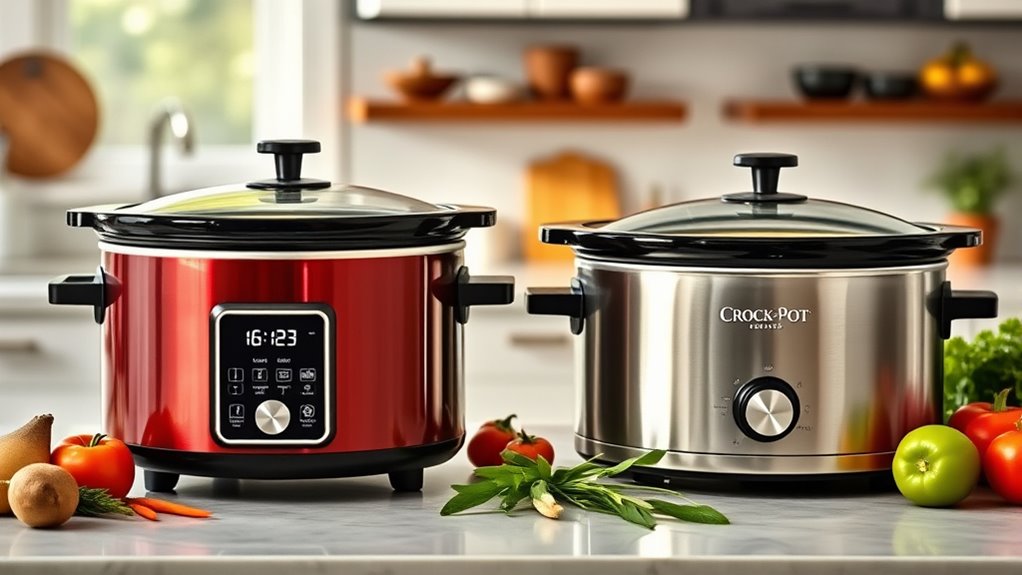
Are Slow Cookers and Crock Pots the Same?
You might think slow cookers and Crock-Pots are the same, but they’re not exactly. Slow cookers are kitchen appliances designed to cook food slowly at low temperatures, perfect for tenderizing meat and developing flavors.
A Crock-Pot is just a popular brand of slow cooker, known for its reliable design and removable stoneware pot.
While all Crock-Pots are slow cookers, not all slow cookers are Crock-Pots. Some slow cookers come with extra features like programmable timers or different shapes and sizes.
Understanding the differences, features, and benefits can help you choose the best option for your cooking needs.
If you want to learn more about how these appliances compare and which one fits your lifestyle, there’s plenty more useful info ahead.
Key Takeaways
- A Crock-Pot is a specific brand of slow cooker known for its removable stoneware insert and consistent cooking performance.
- All Crock-Pots are slow cookers, but not all slow cookers are Crock-Pots; other brands offer varied features and designs.
- Slow cookers and Crock-Pots generally share low, high, and warm settings for long, slow cooking at low temperatures.
- Crock-Pots often have more precise temperature control and a design focused on easy cleaning and serving.
- Variations in slow cookers include programmable and multi-cook functions, whereas Crock-Pots emphasize steady, reliable slow cooking.
What Is a Slow Cooker and How Does It Work?
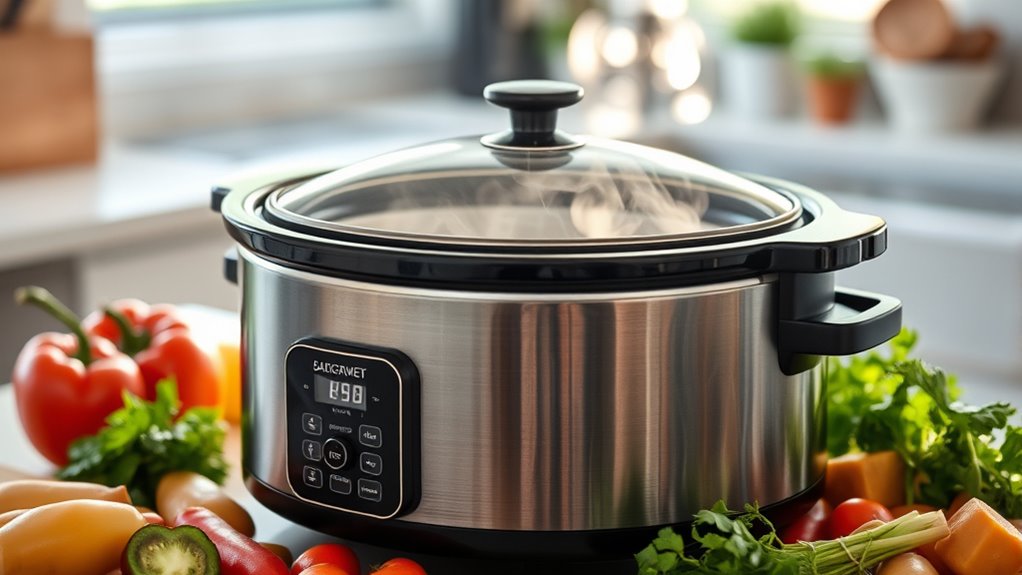
What exactly is a slow cooker, and how does it work? A slow cooker is a countertop electrical appliance designed to cook food at lower temperatures over an extended period. You simply add your ingredients into the removable pot, set the temperature, and let it cook for several hours.
The slow cooker uses a heating element surrounding the pot, which gradually raises the temperature to gently simmer the food. This method allows flavors to meld and tough cuts of meat to become tender without constant supervision. You’ll find settings like low, high, and sometimes warm, giving you control over cooking times and heat levels.
It’s perfect for preparing stews, soups, and casseroles while you focus on other tasks or relax.
How Is a Crock-Pot Different From Other Slow Cookers?
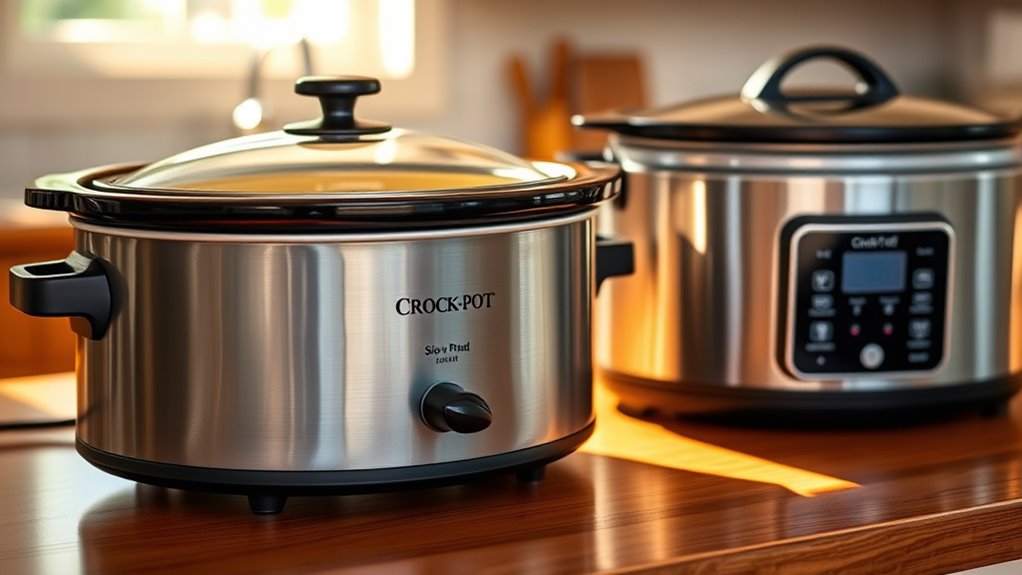
How exactly does a Crock-Pot stand out from other slow cookers? When you choose a Crock-Pot, you’re picking a specific brand known for its signature design and reliability. Unlike generic slow cookers, Crock-Pots often feature a removable stoneware insert that you can easily clean or use for serving.
They also typically offer simple, user-friendly controls with low, high, and warm settings, making them straightforward to operate. While other slow cookers might include advanced digital timers or specialty functions, Crock-Pots focus on consistent, steady cooking.
Are All Crock-Pots Slow Cookers?
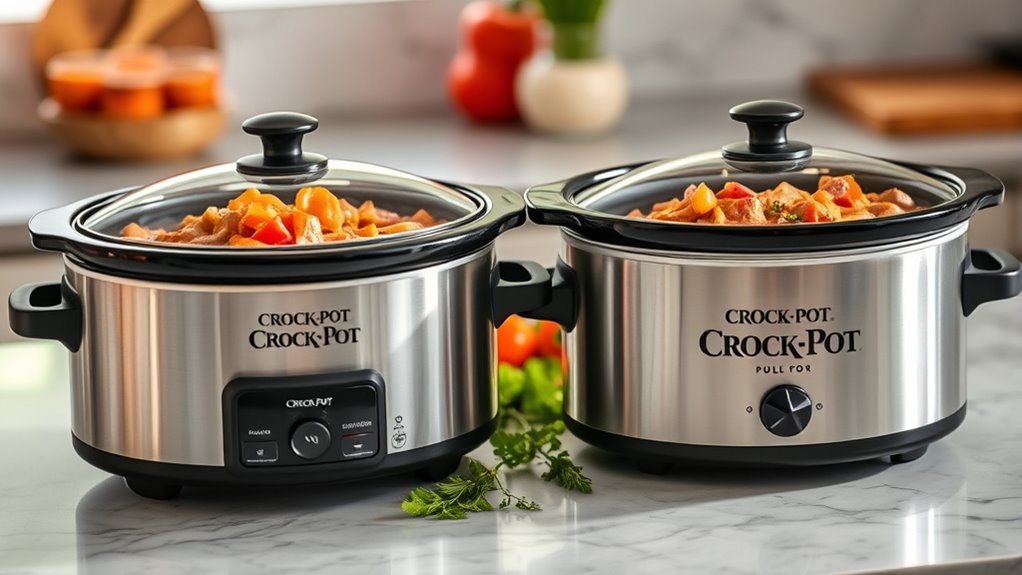
You might assume every Crock-Pot is a slow cooker, but it’s actually a specific brand within that category. Slow cookers come in various styles and features, while Crock-Pots stick to their signature design.
Understanding this helps you pick the right appliance for your cooking needs.
Crock-Pot Brand Specifics
Although many people use the terms interchangeably, not all Crock-Pots are slow cookers in the strictest sense. Crock-Pot is a brand name that popularized slow cookers, but the company now offers a variety of products beyond traditional slow cookers.
When you look at Crock-Pot models, you’ll find features like programmable timers, different heat settings, and even multi-cook functions that combine slow cooking with sautéing or steaming. Some Crock-Pots focus on convenience and versatility rather than just slow cooking.
Slow Cooker Variations
Crock-Pot’s expansion into multifunctional appliances raises a common question: are all Crock-Pots considered slow cookers? While traditional Crock-Pots are slow cookers, the brand now offers devices with added features that blur the lines. Not every Crock-Pot functions solely as a slow cooker.
Here are some variations you might encounter:
- Multicookers – Combine slow cooking with pressure cooking, sautéing, or steaming.
- Programmable Slow Cookers – Offer precise temperature control and timers beyond basic settings.
- Portable Slow Cookers – Designed for travel but still focus mostly on slow cooking.
When choosing, consider if you want purely slow cooking or versatility. Not all Crock-Pots fit the classic slow cooker mold, so check the features before buying.
Comparing Key Features: Temperature, Controls, and Capacity
When choosing between slow cookers and Crock-Pots, understanding their temperature settings, control options, and capacity is essential. Both offer low, high, and sometimes warm settings, but Crock-Pots often provide more precise temperature regulation and additional features like timers or programmable settings. This gives you flexibility in managing your cooking without constant monitoring.
In terms of capacity, slow cookers and Crock-Pots come in sizes ranging from small 1.5-quart models to large 8-quart versions, letting you pick one that suits your household size. Crock-Pots tend to have a broader variety of sizes and shapes, including oval and round, which can affect cooking evenness and what dishes you can prepare.
Knowing these key features helps you select the right appliance for your cooking style and needs.
How Do Cooking Times and Temperatures Differ Between Them?
When you use a slow cooker or a Crock Pot, you’ll notice they offer similar temperature settings like low, medium, and high. However, cooking times can vary slightly depending on the model and heat distribution.
Understanding these differences helps you plan your meals more efficiently.
Temperature Settings Comparison
Although slow cookers and Crock-Pots often get used interchangeably, their temperature settings can vary slightly, affecting your cooking times. When you use either appliance, understanding these differences helps you adjust recipes for the best results.
Here’s what you should know about their temperature settings:
- Slow cookers usually have low (around 190°F) and high (around 300°F) settings, with some models offering a warm option.
- Crock-Pots, a popular slow cooker brand, often have similar settings but may heat a bit more evenly due to their ceramic insert.
- Both appliances reach similar temperatures on high and low, but the heating element placement can influence how fast your food cooks.
Knowing these nuances lets you tweak cooking times confidently.
Typical Cooking Duration
Understanding the temperature settings is just one part of mastering your slow cooker or Crock-Pot. When it comes to typical cooking duration, both appliances operate similarly but may vary slightly depending on the model. You’ll generally find two main settings: low and high.
On low, expect meals to take around 6 to 8 hours, perfect for overnight cooking or when you’re out during the day. High speeds things up, usually cooking food in 3 to 4 hours. Some Crock-Pots offer a warm setting to keep food ready without overcooking.
While the names and exact times might differ between brands, your slow cooker or Crock-Pot will let you set the pace and temperature to fit your schedule, ensuring perfectly cooked meals every time.
Which Appliance Works Best for Different Types of Recipes?
Choosing the right appliance depends on the type of recipe you want to prepare. Both slow cookers and Crock-Pots excel at low-and-slow cooking, but they have subtle differences that affect your results.
- Stews and soups: Both appliances work well, but Crock-Pots often have better heat distribution, making them ideal for hearty soups.
- Roasts and tougher cuts: Slow cookers shine here, breaking down tough fibers over several hours without drying out the meat.
- Delicate dishes and desserts: Slow cookers offer more precise temperature control, perfect for dishes like custards or steamed puddings.
Understanding these distinctions helps you pick the best tool for your meal, ensuring delicious outcomes every time.
Price Differences Between Slow Cookers and Crock-Pots
Now that you know how slow cookers and Crock-Pots perform with different recipes, it’s worth comparing their price points to see which fits your budget. Generally, Crock-Pots tend to be slightly pricier due to their brand recognition, but both appliances offer affordable options. Prices vary based on features like programmable timers and digital controls.
Here’s a quick comparison:
| Appliance | Price Range |
|---|---|
| Slow Cookers | $20 – $80 |
| Crock-Pots | $30 – $100 |
| Basic Models | $20 – $40 |
| Advanced Models | $60 – $100+ |
You’ll find budget-friendly choices in both categories, but if you want extra features, be ready to spend more. Ultimately, weigh what you need against the price to get the best value.
How Size and Capacity Affect Your Choice
You’ll want to take into account the size and capacity of slow cookers since they come in various sizes, typically ranging from 1.5 to 8 quarts. Picking the right size helps you match the cooker to your meal portions and avoid wasting energy or space.
Also, think about storage and how easy it is to move your cooker when needed.
Common Slow Cooker Sizes
How much food do you usually prepare at once? Choosing the right slow cooker size depends on your typical meal volume. Slow cookers come in various sizes to fit different needs:
- Small (1.5 to 3 quarts): Perfect for singles or couples, ideal for dips, side dishes, or small meals.
- Medium (4 to 6 quarts): Great for families of three to five, offering enough space for stews, roasts, or casseroles.
- Large (7 quarts and up): Best if you often cook for large groups or like having leftovers, handling big cuts of meat and large batches easily.
Picking a size that matches your cooking habits guarantees efficiency, saves energy, and helps avoid under- or over-cooking.
Matching Capacity To Meals
Choosing the right slow cooker size is only part of the equation when preparing meals that suit your needs. You want a cooker that matches the number of servings you typically make. If you often cook for one or two people, a smaller 1.5 to 3-quart slow cooker works best, preventing wasted food and energy.
For families or gatherings, a 5 to 7-quart model ensures you can prepare enough for everyone comfortably. Also, consider the types of recipes you enjoy. Larger capacities give you flexibility for big cuts of meat or soups, while smaller pots handle side dishes or dips perfectly.
Matching the capacity to your meal plans helps you cook efficiently, avoid leftovers, and make the most out of your slow cooker’s capabilities.
Storage And Portability Considerations
Because slow cookers come in various sizes and capacities, their storage and portability can vary considerably. When choosing one, think about where you’ll store it and how often you’ll need to move it. Larger models might cook more food but take up more space and weigh more, making them harder to handle.
Smaller ones are easier to store and transport but may not suit big meals.
Consider these factors:
- Kitchen Space: Measure your cabinets or counter to ensure the slow cooker fits comfortably.
- Weight: Heavier units can be cumbersome, especially if you plan to take them to gatherings.
- Portability Features: Look for models with locking lids or carrying handles for safer transport.
Balancing size and convenience helps you pick the best slow cooker for your lifestyle.
Ease of Use and Cleaning for Slow Cookers and Crock-Pots
Although slow cookers and Crock-Pots function similarly, their ease of use and cleaning can vary slightly. When you use either, you’ll find both usually have removable stoneware inserts, making cleanup straightforward. However, some Crock-Pot models offer dishwasher-safe inserts and lids, which can save you time.
Slow cookers often have simpler controls, such as basic low, high, and warm settings, making them easy to operate without fuss. Crock-Pots might include additional features like timers or digital displays, which can be handy but sometimes add complexity. When it comes to cleaning, both require soaking if food sticks, but the non-stick coatings found on some Crock-Pot inserts can make scrubbing easier.
Are Slow Cooker and Crock-Pot Replacement Parts Compatible?
Since both slow cookers and Crock-Pots share similar designs, you might wonder if their replacement parts are interchangeable. While some parts overlap, compatibility isn’t guaranteed. You’ll want to check specifics before buying replacements to avoid frustration.
Here are key points to evaluate:
- Shape and Size: Crock-Pot inserts and lids might differ slightly in dimensions from other slow cookers, so measure carefully.
- Brand Specifics: Some brands design unique parts that only fit their models, so always verify part numbers.
- Electrical Components: Heating bases and cords are usually not interchangeable because of different wattages and connections.
In short, don’t assume parts will fit across brands; always confirm compatibility to keep your cooker working smoothly.
Popular Slow Cooker and Crock-Pot Models to Consider
If you’re looking to buy a slow cooker or Crock-Pot, you’ll find plenty of models that suit different needs and budgets. For example, the Crock-Pot 7-Quart Manual Slow Cooker offers simplicity and ample capacity, perfect for family meals.
If you want more control, the Hamilton Beach Set & Forget features programmable settings with a temperature probe. The Instant Pot Duo Slow Cooker combines pressure cooking and slow cooking, great if you want versatility in one appliance.
For compact kitchens, the Crock-Pot 2-Quart Mini is ideal for small portions. When considering your options, think about size, features, and ease of use. Each model has unique benefits, so you can find one that fits your cooking style without overwhelming your counter space.
Choosing the Best Slow Cooker or Crock-Pot for Your Kitchen
When choosing the best slow cooker or Crock-Pot for your kitchen, consider how you’ll use it most often. Think about your typical meal size, cooking frequency, and preferred features. This helps you find a model that fits your lifestyle perfectly.
Consider your meal size, cooking habits, and features to find the perfect slow cooker for your kitchen.
- Size Matters – Pick a capacity that matches your usual meal portions. A 4- to 6-quart slow cooker works well for families, while smaller ones suit singles or couples.
- Programmable Features – Look for digital controls and timers if you want more precise cooking and convenience.
- Shape and Material – Oval cookers handle larger cuts, while round ones save counter space. Ceramic inserts are common for even heat distribution and easy cleaning.
Frequently Asked Questions
Can Slow Cookers and Crock-Pots Be Used for Baking Desserts?
Yes, you can use slow cookers and Crock-Pots to bake desserts. Just adjust cooking times and use appropriate recipes designed for slow cooking. They’re great for cakes, puddings, and even cobblers with gentle, even heat.
Are Slow Cookers and Crock-Pots Safe to Leave on Overnight?
Yes, you can leave slow cookers and Crock-Pots on overnight safely, as long as you follow the manufacturer’s instructions and use the low or warm setting.
Always guarantee it’s on a stable surface and away from flammable items.
Can You Use a Slow Cooker or Crock-Pot to Prepare Baby Food?
You can definitely create creamy, comforting baby food using a slow cooker or Crock-Pot. They gently soften fruits and veggies, saving you time and effort, while ensuring safe, smooth, and nutritious meals for your little one.
Do Slow Cookers and Crock-Pots Consume a Lot of Electricity?
No, slow cookers and crock-pots don’t consume a lot of electricity. They use low wattage over long periods, making them energy-efficient compared to ovens or stovetops.
Are There Any Health Benefits to Using Slow Cookers or Crock-Pots?
You’ll find slow cookers simmer health benefits like a gentle rain nurturing a garden. They preserve nutrients, reduce harmful compounds from high heat, and let you enjoy wholesome, tender meals without constant monitoring or added fats.
Conclusion
When it comes to slow cookers and Crock-Pots, knowing the difference helps you choose the right tool for your kitchen. While all Crock-Pots are slow cookers, not all slow cookers are Crock-Pots. Remember, “don’t put all your eggs in one basket”—explore features, sizes, and controls to find what suits your cooking style best.
With the right choice, you’ll enjoy effortless meals that save time and bring great flavor every day. Understanding the distinctions between slow cookers and Crock-Pots ensures you select the best slow cooker for your needs. This way, your slow cooker or Crock-Pot becomes an essential kitchen appliance for delicious, convenient cooking.