What Is PFOA in Cookware and Should You Be Concerned?
PFOA is a chemical once commonly used in cookware coatings like Teflon to create nonstick surfaces that help food slide off easily. This chemical has raised concerns because it has been linked to health issues, including certain cancers and liver problems, as well as environmental harm.
Understanding PFOA in cookware is important for making safer choices when selecting kitchen tools.
Thankfully, most modern cookware is now PFOA-free due to strict regulations and growing awareness.
Learning how to identify safe nonstick pans and properly care for them can protect both your health and your kitchen.
Explore more to discover how to choose and maintain nonstick cookware wisely, ensuring safety and durability for everyday use.
Key Takeaways
- PFOA is a chemical used to create durable, nonstick coatings like Teflon on cookware surfaces.
- It has been largely phased out since 2015 due to health and environmental concerns.
- PFOA exposure links to cancers, liver damage, and environmental persistence impacting ecosystems.
- Look for “PFOA-free” labels or alternative materials like ceramic or stainless steel to avoid exposure.
- Replace nonstick pans showing wear such as scratches or peeling to maintain safety and performance.
What Is PFOA and Why Was It Used in Cookware?
Although you may not have heard of PFOA before, it’s a chemical once widely used in cookware to create nonstick surfaces. You’ll find that manufacturers relied on PFOA because it helped produce durable, smooth coatings like Teflon, preventing food from sticking and making cleanup easier. When you used pots or pans treated with PFOA, you enjoyed convenience and less mess in the kitchen.
This chemical also resisted heat and chemical breakdown, which made it ideal for everyday cooking tools. However, understanding what PFOA is helps you see why it was so popular in the past. It’s a synthetic compound designed to make your cookware perform better, offering you a nonstick experience you likely took for granted.
Is PFOA Still Allowed in Cookware?
Since health concerns about PFOA surfaced, regulatory agencies worldwide have taken steps to limit its use in cookware. Today, you’ll find that PFOA is largely phased out in most non-stick cookware, but it’s not banned everywhere. Manufacturers have shifted to safer alternatives, yet regulations differ by region.
Here’s what you should know:
- The U.S. EPA has considerably reduced PFOA use since 2015 through the PFOA Stewardship Program.
- The EU restricts PFOA under REACH regulations, limiting its presence in consumer products.
- Some countries still allow trace amounts, but transparency varies.
- Look for cookware labeled “PFOA-free” to ensure you avoid it.
Knowing this helps you make informed choices when picking safe, modern cookware.
What Are the Health Concerns Linked to PFOA Exposure?
You should know that PFOA exposure has been linked to potential cancer risks, which is a major concern. It can also affect your liver function, leading to possible health complications.
Understanding these risks helps you make safer choices with your cookware.
Potential Cancer Risks
When you’re exposed to PFOA, the chemical can build up in your body over time and increase the risk of certain cancers. Research has linked PFOA exposure to a higher chance of developing specific types of cancer, which makes understanding these risks important for your health.
Here are some cancers associated with PFOA exposure:
- Kidney cancer
- Testicular cancer
- Pancreatic cancer
- Prostate cancer
These findings come from studies on workers with high PFOA exposure and communities near manufacturing plants. While everyday cookware exposure is typically lower, it’s still wise to minimize contact. Choosing PFOA-free cookware can help you reduce your cancer risk and protect your long-term health.
Impact on Liver Function
Beyond its links to cancer, PFOA exposure also affects your liver, an organ crucial for detoxifying your body and regulating metabolism. Studies show that PFOA can cause liver enlargement and increase liver enzymes, signaling stress or damage. When your liver struggles, it can’t efficiently process toxins or produce essential proteins, impacting your overall health.
Prolonged exposure may lead to fatty liver disease or impair your liver’s ability to regenerate. This means you might feel more fatigued, experience digestive issues, or have a weakened immune response. Being aware of PFOA in cookware helps you make safer choices to protect your liver.
Opt for PFOA-free products and maintain a healthy lifestyle to reduce your risk and support liver function.
How Does PFOA Impact the Environment?
Although PFOA is widely used in cookware, it poses significant risks to the environment due to its persistence and resistance to natural breakdown. When released, it accumulates in soil and water, making it difficult to remove. You should know that this chemical can:
PFOA, common in cookware, persists in soil and water, posing long-term environmental risks.
- Contaminate drinking water sources, affecting communities and wildlife
- Persist in the environment for decades without degrading
- Bioaccumulate in animals, leading to toxic effects up the food chain
- Disrupt ecosystems by harming aquatic life and plants
Because PFOA doesn’t break down easily, it spreads far from its original source, impacting various habitats. By understanding its environmental impact, you can make more informed choices about the cookware you use and support safer alternatives to protect the planet.
How Can You Tell If Your Cookware Has PFOA?
You can start by checking the product labels for any mention of PFOA or PFOA-free claims. If the labels don’t provide clear information, visit the manufacturer’s website or contact their customer service directly.
These steps will help you confirm whether your cookware contains PFOA.
Checking Product Labels
When checking product labels to determine if your cookware contains PFOA, look for clear indications such as “PFOA-free” or certifications that highlight the absence of this chemical. These labels provide quick reassurance about the safety of your cookware.
To better understand what to look for, keep these tips in mind:
- Check for phrases like “PFOA-free” or “No PFOA used in manufacturing.”
- Look for certifications from reputable organizations, such as FDA approval or GreenGuard.
- Avoid vague terms like “non-stick” without additional details on chemical content.
- Review ingredient or material lists for PTFE or other fluoropolymers, which may or may not involve PFOA.
Manufacturer Information Sources
Since manufacturers hold detailed knowledge about their products, checking their official information sources is one of the most reliable ways to find out if your cookware contains PFOA. Visit the brand’s website and look for product specifications or safety data sheets that often mention if PFOA was used. You can also contact customer service directly—many companies provide clear answers about their materials.
Some brands proudly advertise “PFOA-free” on product pages, making it easier to identify safe options. Additionally, manufacturer FAQs or product manuals might highlight any chemical usage. By relying on these official channels, you get accurate, up-to-date information straight from the source, helping you make safer choices without guesswork or misinformation.
Always prioritize these trusted sources when in doubt about your cookware’s safety.
Which Modern Non-Stick Cookware Brands Are PFOA-Free?
Many modern cookware brands have responded to health concerns by offering PFOA-free non-stick options. If you’re shopping for safer cookware, you’ll find several reputable brands committed to eliminating PFOA from their manufacturing processes.
Here are some popular PFOA-free choices:
- T-fal: Known for its durable, affordable non-stick pans that don’t use PFOA.
- Calphalon: Offers a range of non-stick cookware made without PFOA.
- GreenPan: Specializes in ceramic non-stick cookware that’s free from PFOA and other harmful chemicals.
- All-Clad: Provides high-quality, PFOA-free non-stick cookware designed for serious home cooks.
What Are Safer Alternatives to PFOA in Cookware?
Although PFOA has raised health concerns, you don’t have to give up non-stick cookware entirely. Many manufacturers now use safer alternatives like ceramic coatings, which avoid harmful chemicals and still offer good non-stick performance.
You might also consider anodized aluminum cookware, which creates a hard, non-reactive surface without synthetic chemicals. Stainless steel and cast iron are excellent options too—they don’t rely on chemical coatings and provide durability and even heat distribution.
If you prefer non-stick convenience, look for brands that explicitly advertise PFOA-free and PFAS-free labels to reduce potential risks. By choosing these alternatives, you can enjoy cooking with peace of mind while minimizing exposure to harmful substances like PFOA.
How to Use Non-Stick Cookware Safely Around PFOA
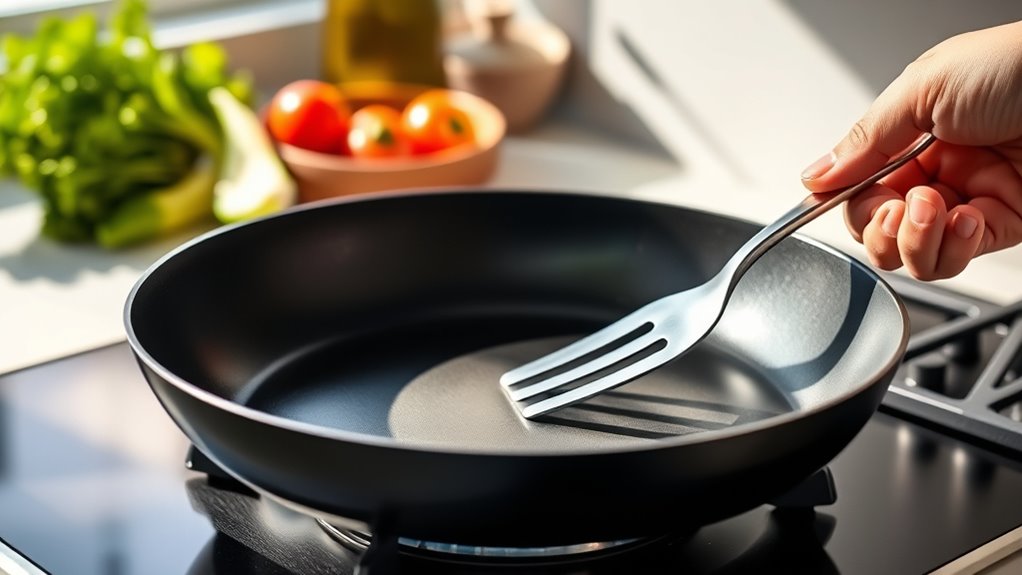
When you use non-stick cookware that may contain PFOA, taking a few simple precautions can help reduce your exposure and keep your kitchen safe. Focus on preventing overheating, as high temperatures can release harmful fumes. Avoid using metal utensils that scratch the surface, which can degrade the coating and increase risks.
Clean your cookware gently to preserve the non-stick layer and prevent damage. Finally, always ventilate your cooking area well to disperse any fumes that may arise.
- Cook on low to medium heat to avoid releasing PFOA-related fumes
- Use silicone, wooden, or plastic utensils to protect the coating
- Hand wash your cookware with mild detergent and a soft sponge
- Turn on exhaust fans or open windows while cooking
These steps help you safely enjoy your non-stick pans.
What Are the Signs Your Non-Stick Coating Is Wearing Off?
You’ll notice your non-stick coating is wearing off if you see visible scratches or peeling on the surface. Food will start sticking more often, making cooking and cleaning harder.
You might also spot discoloration or fading, which signals it’s time to replace your cookware.
Visible Scratches And Peeling
If your non-stick cookware starts showing visible scratches or peeling, it’s a clear sign the coating is deteriorating. You want to pay close attention because this damage can affect your cookware’s performance and safety. Here’s what to watch for:
- Scratches that expose the metal underneath
- Flaking or peeling of the non-stick surface
- Uneven spots where the coating appears worn down
- Discoloration or faded areas on the cookware’s surface
Noticing any of these signs means your non-stick coating is no longer intact. Continuing to use scratched or peeling pans can lead to further damage and potential contamination. It’s best to contemplate replacing the cookware or switching to safer alternatives to maintain both your food quality and health.
Food Sticking Frequently
Visible scratches and peeling aren’t the only signs that your non-stick coating is wearing off. If you notice food sticking more often during cooking, it’s a clear red flag. You rely on that slick surface to flip pancakes or sauté veggies effortlessly, so when food starts clinging, it means the protective layer is compromised.
This sticking also makes cleaning tougher, as residue builds up and scrubbing becomes necessary. Don’t ignore this change; it can lead to uneven cooking and may release harmful particles if the coating deteriorates further. If your meals no longer slide off smoothly, it’s time to assess whether your pan needs replacing.
Staying attentive to these signs helps you maintain safe, efficient cooking.
Discoloration Or Fading
When your non-stick cookware starts to lose its original color or shows signs of fading, it often indicates the coating is breaking down. You might notice the surface looking duller or uneven, signaling wear. This discoloration means the protective layer is thinning, which can affect cooking performance and safety.
To spot these changes early, watch for:
- Patches where the dark coating turns lighter or chalky
- Uneven fading across the pan’s surface
- Visible scratches revealing the metal underneath
- Areas with a rough or peeling texture
If you see these signs, it’s a good idea to rethink how you use the pan or consider replacing it to avoid potential health risks linked to degraded coatings.
How to Care for Non-Stick Cookware Without PFOA
Caring for non-stick cookware without PFOA involves a few simple but important steps to keep your pans performing well and lasting longer. First, always use wooden, silicone, or plastic utensils to avoid scratching the surface. Avoid metal tools that can damage the coating.
Second, hand wash your pans with warm, soapy water instead of using a dishwasher, which can wear down the non-stick layer over time. Third, avoid overheating your pans; cook on low to medium heat to preserve the coating’s integrity.
Finally, store your cookware carefully by placing a soft cloth or paper towel between stacked pans to prevent scratches. Following these habits will help you enjoy your non-stick cookware safely and effectively without PFOA concerns.
When Should You Replace Your Non-Stick Pans?
Although non-stick pans are designed for durability, you’ll need to replace them once their coating starts to peel, chip, or warp. Using damaged pans can compromise your food’s safety and cooking quality.
Keep an eye out for these signs that indicate it’s time for a new pan:
- Visible scratches or flaking on the surface
- Food sticking despite proper use and seasoning
- Uneven heating or warping of the pan’s base
- Persistent odors or discoloration after cleaning
Ignoring these issues not only affects your cooking but could also expose you to unwanted chemicals. By replacing your non-stick pans promptly, you guarantee safer meals and maintain ideal kitchen performance.
Don’t wait until the damage worsens—regularly inspect your cookware for these warning signs.
How Does PFOA Affect Non-Stick Cookware Performance?
Because PFOA has been commonly used in the manufacturing process of non-stick coatings, it directly influences how these pans perform. PFOA helps create a smooth, durable surface that resists sticking, making cooking and cleanup easier for you. It also contributes to the pan’s ability to withstand high temperatures without degrading quickly.
However, once manufacturers started phasing out PFOA, some cookware initially showed slight differences in non-stick quality or durability. Today, most high-quality non-stick pans use PFOA-free alternatives that match or exceed previous performance levels. When you choose non-stick cookware, understanding PFOA’s role helps you appreciate how these surfaces work and why modern options remain effective without this chemical.
Frequently Asked Questions
Can PFOA Be Found in Other Household Products Besides Cookware?
Yes, you can find PFOA in other household products like stain-resistant fabrics, carpets, and some cleaning products. It’s best to check labels and choose PFOA-free options to reduce your exposure and keep your home safer.
How Is PFOA Exposure Tested in Humans?
You can test PFOA exposure through blood or urine samples, revealing levels in your body. Studies show nearly 98% of Americans have detectable PFOA, which might surprise you and push you to limit exposure.
What Regulations Exist Internationally Regarding PFOA in Consumer Goods?
You’ll find strict international regulations limiting PFOA in consumer goods, like the Stockholm Convention banning its production and use.
Many countries also set safety limits to reduce your exposure and protect your health.
Are There Any Biodegradable Non-Stick Coatings Available?
Sure, you can find “biodegradable” non-stick coatings, but ironically, they often still contain chemicals you’d want to avoid.
How Long Does PFOA Remain in the Human Body After Exposure?
PFOA can stay in your body for several years, typically around 3 to 8 years, because it breaks down very slowly.
Conclusion
Now that you know what PFOA is and why it’s been phased out of cookware, you can make smarter choices for your kitchen. Don’t let old worries stick around like a stubborn vinyl record—keep an eye on your pans’ condition and replace them when needed.
Caring for your non-stick cookware properly guarantees it performs well without harmful chemicals. Stay informed, and your cooking will be safer and smoother, just like a well-tuned jukebox playing your favorite tune.
By choosing PFOA-free cookware and maintaining your pans, you reduce health risks and ensure a better cooking experience. Awareness about PFOA in cookware helps you protect your family while enjoying delicious meals every day.