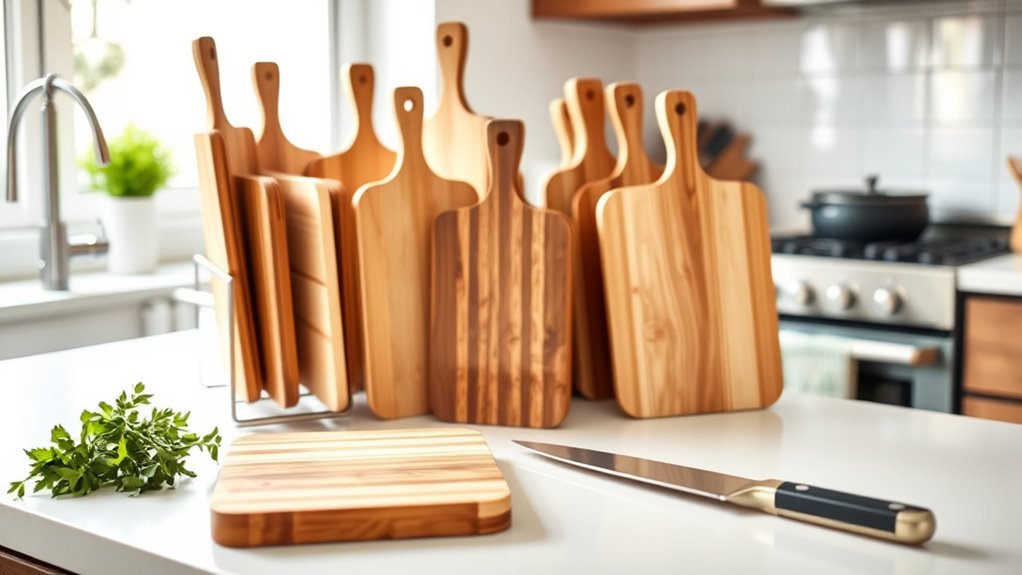
7 Tips for Storing Cutting Boards Properly
Proper cutting board storage is essential for maintaining hygiene and extending their lifespan. To keep your cutting boards clean and prevent warping, store them in a dry, well-ventilated spot. Avoid damp or enclosed areas like under sinks or inside cabinets with poor airflow.
Wooden and bamboo boards should be kept upright to allow proper drying. Regularly clean and oil these boards to maintain their condition and prevent cracking.
Separating boards by material helps prevent cross-contamination during food preparation.
Use racks or dividers to organize your cutting boards efficiently. Following these tips can help you maintain your boards’ hygiene and longevity.
Additionally, you may discover more ways to optimize your kitchen setup with proper storage solutions.
Key Takeaways
- Store cutting boards upright in a dry, well-ventilated area to prevent moisture buildup and promote airflow.
- Thoroughly dry boards immediately after washing to avoid warping and mold growth.
- Separate boards by material type to prevent cross-contamination and damage.
- Use material-specific racks or dividers that support proper drying and organization.
- Position storage solutions near prep areas for easy access and efficient kitchen workflow.
Choose a Dry, Well-Ventilated Spot to Store Cutting Boards

Although it might seem simple, choosing a dry, well-ventilated spot to store your cutting boards is essential for maintaining their condition. You want to avoid areas prone to moisture buildup or poor air circulation, as these can cause damage over time. Look for a cabinet or shelf that allows air to flow freely around the boards, helping them stay fresh between uses.
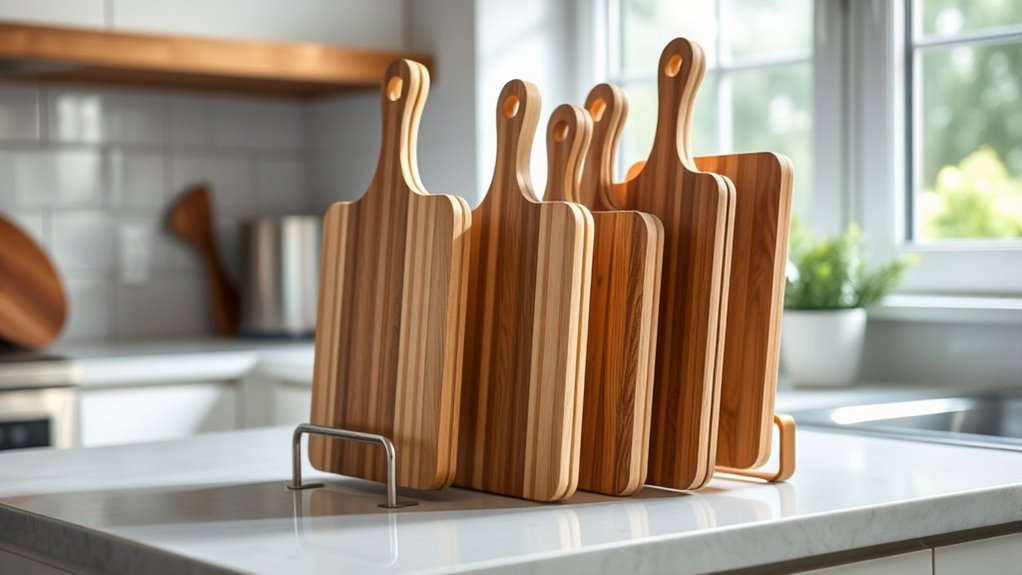
Avoid stacking boards tightly, which traps humidity and encourages deterioration. Instead, store them upright or on a rack designed for cutting boards, ensuring each board has enough space to breathe. By selecting the right spot, you’ll protect your cutting boards from damage and extend their lifespan, keeping them ready for your next kitchen task without compromising hygiene or quality.
Keep Cutting Boards Dry to Prevent Warping and Bacteria
You should always dry your cutting boards thoroughly to stop warping and bacteria growth. Avoid leaving them in spots where moisture can get trapped, like stacked tightly or against damp surfaces.
Make sure there’s good air circulation around your boards to keep them completely dry.
Importance Of Thorough Drying
Because moisture can cause wood to warp and encourage bacterial growth, drying your cutting board thoroughly after each use is essential. After washing, wipe off excess water with a clean towel immediately. Then, let your board air dry completely before putting it away.
Make sure both sides dry evenly to prevent uneven swelling or cracking. Avoid stacking boards while they’re still damp, as trapped moisture can lead to damage and bacteria buildup. By taking these simple steps, you’ll extend your cutting board’s lifespan and keep it safe for food prep.
Avoiding Moisture Traps
Thorough drying sets the stage for preventing moisture traps that can damage your cutting board. When you store a damp board, water can get trapped between surfaces or in crevices, creating an environment where bacteria thrive and wood warps.
To avoid this, always wipe your board dry immediately after washing, paying close attention to edges and any grooves. Don’t stack boards directly on top of each other while damp, as this seals in moisture. Instead, separate them with a dry cloth or store them upright.
Avoid placing your cutting board in enclosed spaces where residual moisture lingers. By keeping your cutting board dry and free from moisture traps, you’ll maintain its integrity and ensure a safer, more hygienic surface for food prep.
Proper Air Circulation
How can proper air circulation keep your cutting board in top shape? When you store your board where air flows freely, it dries faster, preventing moisture buildup that leads to warping and bacteria growth. After washing, stand your cutting board upright or place it in a rack designed for boards, allowing air to circulate around all sides.
Avoid stacking boards flat or storing them in closed cabinets right after cleaning, as trapped moisture invites mold and odors. Good airflow also helps maintain the board’s integrity by reducing the risk of cracks caused by uneven drying. By giving your cutting board room to breathe, you extend its lifespan and keep it safer for food prep.
Avoid Damp or Enclosed Spaces for Cutting Board Storage
When you store cutting boards in damp or enclosed spaces, they’re more likely to develop mold and retain unpleasant odors. Moisture gets trapped, creating the perfect environment for bacteria and mildew to thrive.
To keep your cutting boards fresh and safe, avoid these storage spots:
- Inside a closed cabinet right next to the sink, where steam often builds up.
- Under the kitchen counter in a drawer without ventilation.
- On a damp countertop after washing without letting it dry completely.
- In a plastic bag or airtight container immediately after use.
Instead, let your cutting boards air dry completely in a well-ventilated area before storing. This helps prevent mold growth and keeps your boards smelling clean.
Store Wooden and Bamboo Cutting Boards Upright for Airflow
You should store wooden and bamboo cutting boards upright to promote airflow around them. This helps prevent moisture buildup and speeds up drying after washing.
Keeping them upright also reduces the chance of mold growth, keeping your boards safer to use.
Prevent Moisture Buildup
Although wooden and bamboo cutting boards are durable, storing them improperly can trap moisture and cause damage over time. To prevent this, you need to guarantee proper airflow around your boards.
Here’s how you can prevent moisture buildup effectively:
- Store boards upright with space between each to allow air circulation.
- Avoid stacking boards flat on top of each other where moisture can get trapped.
- Keep boards in a dry area away from sinks or dishwashers to reduce humidity exposure.
- Use a rack or stand designed for cutting boards to keep them off damp surfaces.
Enhance Drying Efficiency
Since proper airflow speeds up drying, storing wooden and bamboo cutting boards upright is essential. When you position them on their edges, air circulates around every surface, helping moisture evaporate quickly. Lay them flat, and moisture can get trapped underneath, slowing drying time.
Use a rack or a designated slot that keeps boards standing securely without leaning too much, which could cause warping. Upright storage also prevents water pooling, especially after washing, so your boards dry evenly and maintain their shape longer. By enhancing drying efficiency this way, you’ll keep your cutting boards in better condition and ready for use.
Always guarantee the storage area itself is well-ventilated to maximize airflow and speed up the drying process even further.
Reduce Mold Growth
How can storing wooden and bamboo cutting boards upright help prevent mold growth? When you store these boards upright, you allow air to circulate freely around them, speeding up the drying process and reducing trapped moisture, which mold loves. This simple habit keeps your boards dry and mold-free.
Here’s how storing upright helps:
- Promotes even airflow around all surfaces
- Prevents water from pooling on flat surfaces
- Speeds up evaporation of residual moisture
- Discourages mold spores from settling in damp spots
Clean and Oil Wooden Boards to Protect Them Before Storage
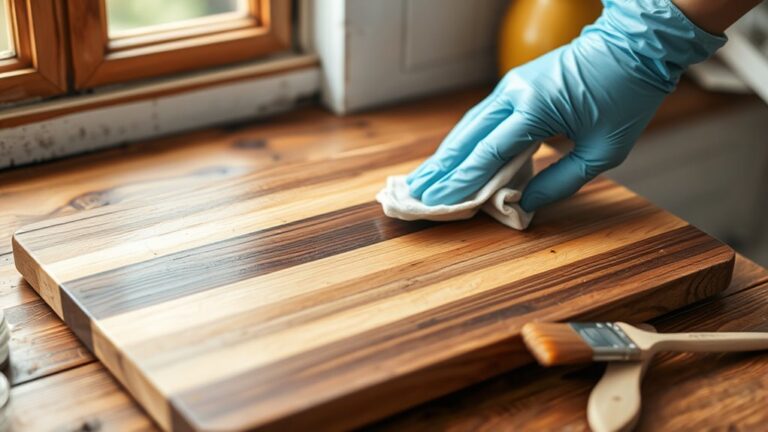
Before storing your wooden cutting boards, you should thoroughly clean them to remove any food residue and bacteria. Use warm, soapy water and scrub gently with a sponge or brush. Avoid soaking the board, as excess water can cause warping.
After rinsing, dry it completely with a clean towel. Once dry, apply a food-safe mineral oil or cutting board oil evenly across the surface. This helps prevent the wood from drying out, cracking, and absorbing moisture.
Let the oil soak in for several hours or overnight, then wipe off any excess. Regular cleaning and oiling keep your wooden boards in great condition and ready for use, while protecting them from damage during storage. This simple routine extends their lifespan and maintains hygiene.
Keep Different Materials Separate to Prevent Cross-Contamination
To prevent cross-contamination, you should always store cutting boards made from different materials separately. This keeps harmful bacteria from spreading between boards used for raw meat, vegetables, or cooked foods. Here’s how to organize them effectively:
- Keep plastic boards used for raw meats in one designated spot.
- Store wooden boards meant for fruits and vegetables in a different area.
- Place bamboo or composite boards for bread and cooked food far from others.
- Avoid stacking boards of different materials directly on top of each other to reduce contact.
Use Racks or Dividers to Keep Boards Organized and Accessible
Although cutting boards come in various materials and sizes, using racks or dividers helps you keep them neatly organized and easy to grab when needed. These storage tools prevent boards from piling up, which can cause damage or make them harder to find.
When choosing racks or dividers, consider the size and thickness of your boards to guarantee a snug fit. Wall-mounted racks save counter space, while drawer dividers keep boards separated and accessible.
Here’s a quick guide to help you pick the right storage based on board type and kitchen setup:
| Board Material | Suggested Rack Type | Ideal Placement |
|---|---|---|
| Wood | Vertical divider | Cabinet or drawer |
| Plastic | Wall-mounted rack | Near prep area |
| Bamboo | Adjustable dividers | Under sink cabinet |
| Composite | Freestanding rack | On countertop |
| Glass | Horizontal rack | Display shelf |
Frequently Asked Questions
How Often Should I Replace My Cutting Boards?
You should replace your cutting boards once they develop deep grooves, cracks, or excessive wear that harbor bacteria. Regularly inspect them and switch out boards every 1-2 years, or sooner if they become damaged or warped.
Can Cutting Boards Be Safely Cleaned in a Dishwasher?
You can, but beware. Plastic boards handle dishwashers well, but wooden ones don’t—they can warp or crack.
What Types of Oils Are Best for Conditioning Wooden Boards?
You’ll want to use food-safe oils like mineral oil, beeswax, or coconut oil to condition wooden boards. These oils won’t go rancid and help keep your board hydrated and protected from cracking or warping.
Are Plastic Cutting Boards Safer Than Wooden Ones?
Wondering which’s safer for your kitchen? You’ll find plastic boards easier to sanitize, but wooden ones naturally resist bacteria when cared for.
You just need to clean and oil wooden boards properly to keep them safe.
How Do I Remove Deep Stains or Odors From Cutting Boards?
You can remove deep stains and odors by scrubbing your cutting board with a paste of baking soda and water, then rinsing.
For odors, rub lemon juice or vinegar on the surface, let it sit, and rinse well.
Conclusion
Properly storing your cutting boards not only keeps them in great shape but also helps prevent bacteria buildup. Did you know that 60% of kitchen cross-contamination comes from improperly cleaned or stored cutting boards? By choosing a dry, well-ventilated spot, keeping boards upright, and using racks or dividers, you’ll extend their life and keep your kitchen safer.
Remember to clean and oil wooden boards regularly to protect them and keep everything organized. Following these tips for storing cutting boards properly will ensure hygiene and longevity. Proper storage is essential for maintaining your cutting boards and a healthy kitchen environment.