10 Steps to Get Stains Off Plastic Cutting Boards
Start by cleaning your plastic cutting board with warm, soapy water and drying it well. Removing stains from plastic cutting boards is essential for maintaining hygiene and extending their lifespan.
Sprinkle baking soda on stains, scrub gently, and rinse.
Apply white vinegar or lemon juice to lift stains and disinfect.
For tough spots, make a paste from cream of tartar and water, scrub, then rinse thoroughly.
Always dry your board completely to prevent bacteria.
Avoid harsh chemicals to keep it safe and long-lasting.
Stick with these tips, and you’ll uncover even more ways to keep your board spotless.
Key Takeaways
- Clean the board with hot, soapy water and rinse thoroughly before stain treatment.
- Apply a paste of baking soda and water to stains, scrub gently, let sit, then rinse and dry.
- Use undiluted white vinegar on stains, let sit 5 minutes, scrub gently, rinse, and dry completely.
- Treat tough stains with a cream of tartar and water paste, let sit 10-15 minutes, then scrub and rinse.
- Always rinse thoroughly and dry completely to prevent bacteria and odors after cleaning.
How to Prep Your Plastic Cutting Board for Stain Removal
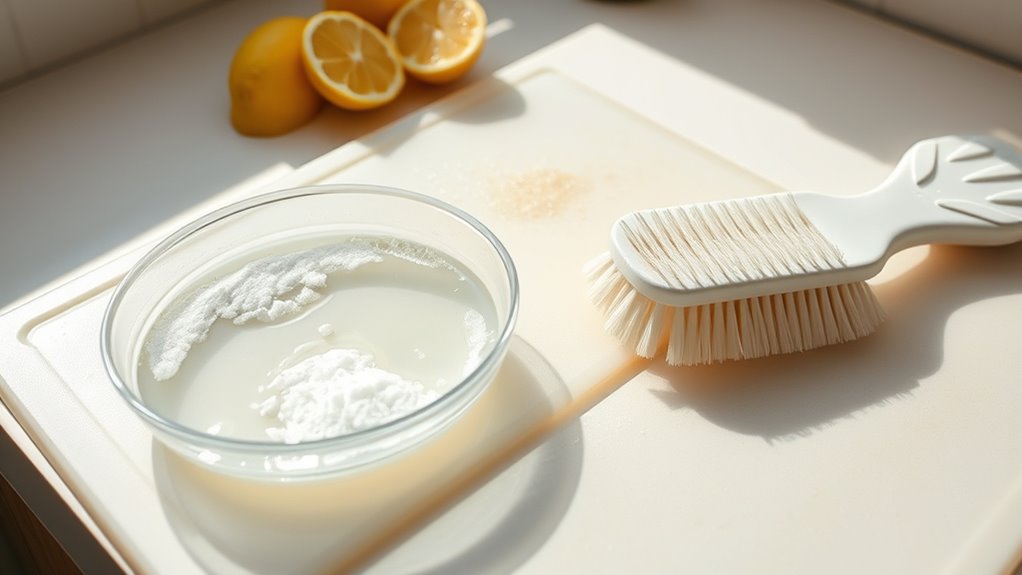
Before you tackle the stains, make sure to clean your plastic cutting board thoroughly with hot, soapy water. This initial step removes surface dirt and food particles, preventing them from interfering with stain removal. After washing, rinse well to eliminate soap residue, then dry the board completely using a clean towel or let it air dry.
Moisture can dilute cleaning agents, so a dry surface helps treatments work better. Next, inspect your board closely under good lighting to identify all stained areas. This way, you can target problem spots effectively.
Finally, place your board on a stable, flat surface to keep it steady during treatment. Taking these prep steps guarantees your stain removal methods are more efficient and successful.
Clean With Dish Soap and Warm Water Before Treating Stains
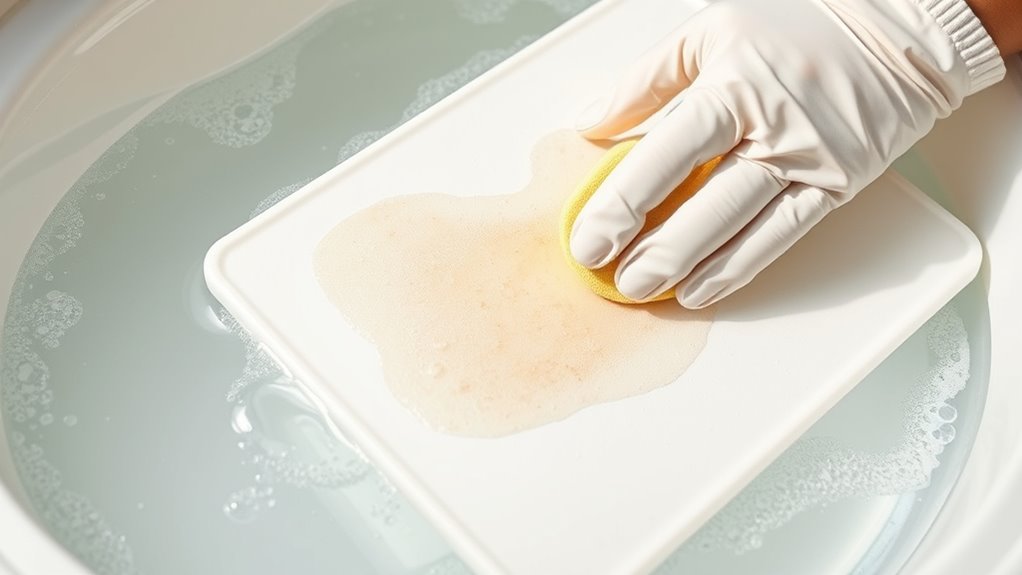
Although you’ve prepped your board, giving it another wash with dish soap and warm water helps break down any lingering grease or grime that might hold onto stains. This step guarantees your cutting board is as clean as possible before you tackle stubborn marks. Use a soft sponge, avoiding abrasive scrubbers that could damage the surface.
Rinse thoroughly to remove soap residue, which can interfere with stain removal methods.
| Step | Purpose |
|---|---|
| Apply dish soap | Break down grease and dirt |
| Use warm water | Loosen stuck-on grime |
| Rinse thoroughly | Remove soap and residue |
Completing this cleaning step sets the stage for effective stain treatment.
Use Baking Soda to Lift Stains on Plastic Cutting Boards
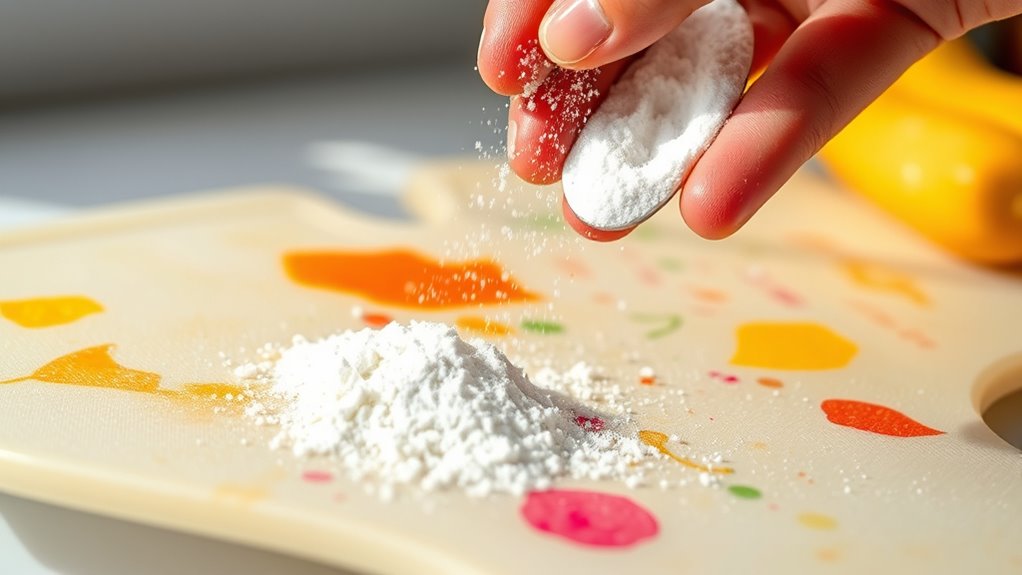
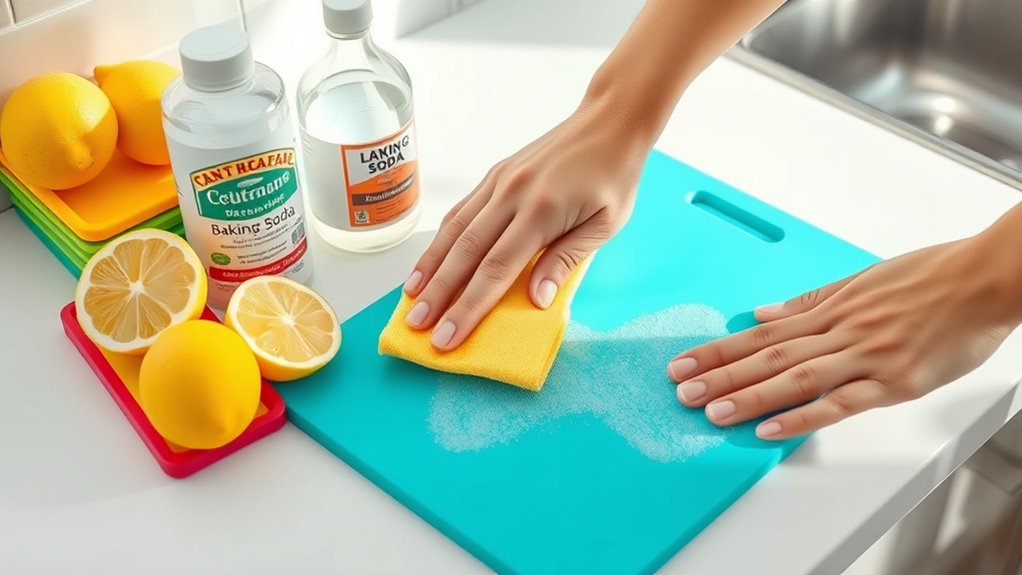
One simple yet effective way to tackle stains on your plastic cutting board is by using baking soda. Sprinkle a generous amount directly onto the stained areas. Next, add a few drops of water to form a paste.
Use a soft sponge or cloth to gently scrub the paste into the stains, applying firm circular motions. Baking soda’s mild abrasiveness helps lift stubborn discolorations without damaging the surface. After scrubbing for a few minutes, let the paste sit for 10 to 15 minutes to break down the stains further.
Finally, rinse the board thoroughly with warm water and dry it with a clean towel. Repeat this process if any stains remain, but usually, one treatment is enough to brighten your cutting board effectively.
Apply White Vinegar to Clean and Disinfect Plastic Cutting Boards
You’ll find white vinegar is a natural and effective way to clean and disinfect your plastic cutting boards. Simply apply it directly or soak a cloth to wipe down the surface for quick stain removal and germ-killing power.
This easy step helps keep your boards both spotless and safe for food prep.
Benefits of White Vinegar
When you apply white vinegar to your plastic cutting boards, it naturally kills bacteria and removes stubborn stains without harsh chemicals. This makes it a safe, effective choice for keeping your kitchen hygienic. You’ll appreciate how vinegar:
- Acts as a powerful disinfectant, reducing harmful germs.
- Breaks down tough stains from foods like beets and turmeric.
- Deodorizes, eliminating lingering smells from fish or garlic.
- Is environmentally friendly, non-toxic, and inexpensive.
Using white vinegar helps you maintain clean cutting boards while avoiding chemical residue that could affect your food’s taste or safety.
Plus, it’s readily available and easy to use, making it a smart addition to your cleaning routine. This natural solution supports a healthier kitchen environment without compromising on cleanliness or convenience.
Application Techniques
Although white vinegar is a gentle cleaner, applying it correctly guarantees your plastic cutting boards get thoroughly disinfected and stain-free. Start by pouring undiluted white vinegar directly onto the stained areas. Use a clean cloth or sponge to spread the vinegar evenly over the surface, ensuring it covers all marks and crevices.
Let it sit for at least 5 minutes to allow the vinegar’s natural acidity to break down stains and bacteria. For tougher spots, you can sprinkle baking soda on the board before applying vinegar, creating a fizzing action that lifts grime. After soaking, scrub gently with a brush or sponge, then rinse thoroughly with warm water.
Dry your board completely before storing to prevent moisture buildup and maintain cleanliness.
Disinfection Effectiveness
After applying white vinegar to remove stains, you’ll also benefit from its powerful disinfecting properties. White vinegar naturally kills many bacteria and viruses, making it a safe and effective option for sanitizing your plastic cutting boards. To guarantee maximum disinfection:
- Apply undiluted white vinegar directly to the board’s surface.
- Let it sit for at least 5 minutes to penetrate and kill germs.
- Rinse thoroughly with hot water to remove residue.
- Dry completely to prevent bacterial growth.
Using white vinegar regularly not only keeps your cutting board looking clean but also protects your kitchen from harmful pathogens. This method is an easy and eco-friendly way to maintain both cleanliness and hygiene without harsh chemicals. You’ll find it’s a reliable step in your stain removal routine that doubles as a disinfectant.
Scrub Plastic Cutting Boards With Lemon Juice to Remove Stains
You can use lemon juice as a natural way to lift stains from your plastic cutting board. Simply cut a lemon in half and scrub the stained areas directly with the juice.
Let it sit for a few minutes before rinsing to get the best results.
Natural Stain Removal
When stains cling stubbornly to your plastic cutting board, lemon juice offers a natural and effective solution. Its acidity breaks down stubborn discoloration without harsh chemicals, making it a safe choice for your kitchen. To use lemon juice for stain removal, simply apply it directly to the stained areas and scrub gently.
This method not only lifts stains but also helps deodorize your cutting board. Keep in mind these benefits of using lemon juice:
- Non-toxic and food-safe
- Naturally antibacterial properties
- Eco-friendly and biodegradable
- Readily available and inexpensive
Lemon Juice Application Tips
Although lemon juice works wonders on stains, applying it correctly can make all the difference in restoring your plastic cutting board’s appearance. Start by cutting a fresh lemon in half and rubbing the cut side directly onto the stained areas. Let the juice sit for at least 5 minutes to break down the discoloration.
For tougher stains, sprinkle coarse salt over the lemon juice before scrubbing; the salt acts as a gentle abrasive without damaging the board. Use a sponge or a clean cloth to scrub in circular motions, focusing on problem spots. Rinse thoroughly with warm water and dry completely to prevent any lingering sour smell.
Repeat the process if necessary, but avoid over-saturating the board to maintain its longevity.
Try Hydrogen Peroxide for Whitening Plastic Cutting Boards
Since plastic cutting boards often develop stubborn stains, hydrogen peroxide offers a powerful yet gentle way to brighten them up. You can use it as a mild bleaching agent without worrying about damaging your board. Here’s how you do it:
- Pour enough 3% hydrogen peroxide to cover the stained area.
- Let it sit for 10-15 minutes to break down discoloration.
- Scrub gently with a soft brush or sponge to lift stains.
- Rinse thoroughly with warm water and dry completely.
Hydrogen peroxide not only whitens but also disinfects, making it a smart choice for kitchen hygiene. Avoid using higher concentrations, as they may degrade the plastic. This method is safe, effective, and quick—perfect when lemon juice alone doesn’t cut it.
Mix Cream of Tartar Paste to Tackle Tough Plastic Cutting Board Stains
You can use cream of tartar to create a powerful paste that lifts stubborn stains from your plastic cutting board. Just mix it with water to form a thick paste and apply it directly to the stained areas.
Let it sit for a bit, then scrub gently to see the difference.
Cream Of Tartar Benefits
When tough stains refuse to budge from your plastic cutting board, mixing a paste with cream of tartar can be a game-changer. This natural ingredient offers several benefits that make stain removal easier and more effective. Cream of tartar acts as a mild abrasive, gently scrubbing away residues without damaging the board’s surface.
It also has natural acidic properties that help break down stubborn stains and discoloration. Plus, it’s non-toxic and safe to use in your kitchen, ensuring no harmful chemicals come into contact with your food prep area. Here’s why you’ll want to use cream of tartar for tough stains:
- Mild abrasive action
- Natural acidity aids stain breakdown
- Non-toxic and safe for kitchen use
- Helps restore your cutting board’s look
How To Make Paste
Two simple ingredients create an effective cream of tartar paste that tackles tough stains on plastic cutting boards. You’ll need cream of tartar and water. Start by scooping two tablespoons of cream of tartar into a small bowl.
Then, slowly add one tablespoon of water, mixing steadily until you get a thick, spreadable paste. If the paste feels too runny, add a little more cream of tartar; if it’s too thick, add a few drops of water to reach the right consistency. This paste clings well to stains, allowing the cream of tartar to work its magic.
Making it fresh guarantees maximum potency, so prepare just enough for your cleaning needs each time.
Applying Paste Effectively
Although it may seem simple, applying the cream of tartar paste correctly can make all the difference in removing stubborn stains from your plastic cutting board. To get the best results, you’ll want to:
- Spread the paste evenly over the stained areas, covering them completely.
- Use a soft cloth or sponge to gently rub the paste in circular motions.
- Let the paste sit for 10-15 minutes to break down the stains effectively.
- Rinse thoroughly with warm water and dry with a clean towel.
Rinse and Dry Your Plastic Cutting Board Properly After Cleaning
After scrubbing away stains, you’ll want to rinse your plastic cutting board thoroughly with hot water to remove any lingering residue or cleaning agents. Make certain to rinse both sides, paying close attention to any grooves or cuts where debris might hide. Using hot water helps break down oils and residues more effectively than cold water.
Once rinsed, shake off excess water and dry your board completely with a clean towel or let it air dry upright. Proper drying prevents moisture buildup, which can lead to bacteria growth or unpleasant odors.
Avoid Harsh Chemicals That Damage Your Cutting Board
When you clean your plastic cutting board, steer clear of harsh chemicals that can eat away at its surface and shorten its life. Avoid products with strong abrasives or bleach, as they can cause your board to develop cracks or discoloration.
Instead, opt for gentler options to keep your cutting board safe and clean.
Here are some chemicals to avoid:
- Chlorine bleach, which can degrade plastic fibers
- Ammonia-based cleaners that may leave harmful residues
- Harsh abrasives that scratch and weaken the surface
- Solvent-based degreasers that strip protective layers
Maintain Your Cutting Board to Stay Stain-Free Longer
To keep your plastic cutting board looking fresh and stain-free, you need to clean and care for it regularly. After each use, wash it thoroughly with warm, soapy water and rinse well. Avoid letting stains set by tackling spills immediately.
Periodically, disinfect your board with a solution of white vinegar or diluted bleach to kill lingering bacteria and prevent discoloration. Use a gentle scrub brush to remove residue without damaging the surface. Store your cutting board upright or in a dry place to prevent moisture buildup, which can cause stains and odors.
Finally, replace your cutting board once deep grooves become too prominent, as they trap stains and bacteria, making maintenance less effective. Consistency in care extends your board’s life and keeps it looking clean.
Frequently Asked Questions
Can Plastic Cutting Boards Be Safely Cleaned in a Dishwasher?
Yes, you can safely clean plastic cutting boards in a dishwasher. Just make sure to place them securely on the top rack to avoid warping, and use a hot water cycle for effective sanitizing and stain removal.
How Often Should I Replace My Plastic Cutting Board?
You should replace your plastic cutting board when it’s cracked, deeply scored, or stained beyond cleaning.
Replace it regularly, replace it wisely, replace it promptly to keep your kitchen safe and your food uncontaminated.
Are Plastic Cutting Boards Safer Than Wooden Ones?
Yes, plastic cutting boards are generally safer because you can sanitize them more easily and they don’t absorb bacteria like wood.
Just make sure you replace them once they get too scratched or worn to avoid contamination.
Can Staining Affect Food Safety on Cutting Boards?
Doesn’t it worry you that stains might hide harmful bacteria? Yes, staining can affect food safety on cutting boards because bacteria can linger in stained grooves, so you should clean and replace boards regularly to keep your food safe.
What’s the Best Way to Prevent Cross-Contamination on Cutting Boards?
You prevent cross-contamination by using separate cutting boards for raw meat, vegetables, and cooked foods. Always wash boards thoroughly with hot, soapy water between uses, and consider sanitizing them regularly to keep bacteria at bay.
Conclusion
Don’t worry if you think stain removal sounds like a big hassle—it’s easier than you might expect! By following these simple steps, you’ll keep your plastic cutting board looking fresh without harsh chemicals or scrubbing forever.
Just a little regular care and natural ingredients can do the trick, saving you time and frustration. Stick with it, and you’ll enjoy a cleaner, more hygienic kitchen space every day!
Using these 10 steps to get stains off plastic cutting boards will help maintain your kitchen tools efficiently. Embrace this easy routine for stain removal and keep your cutting boards looking like new. A clean cutting board means a safer and more pleasant cooking experience!