
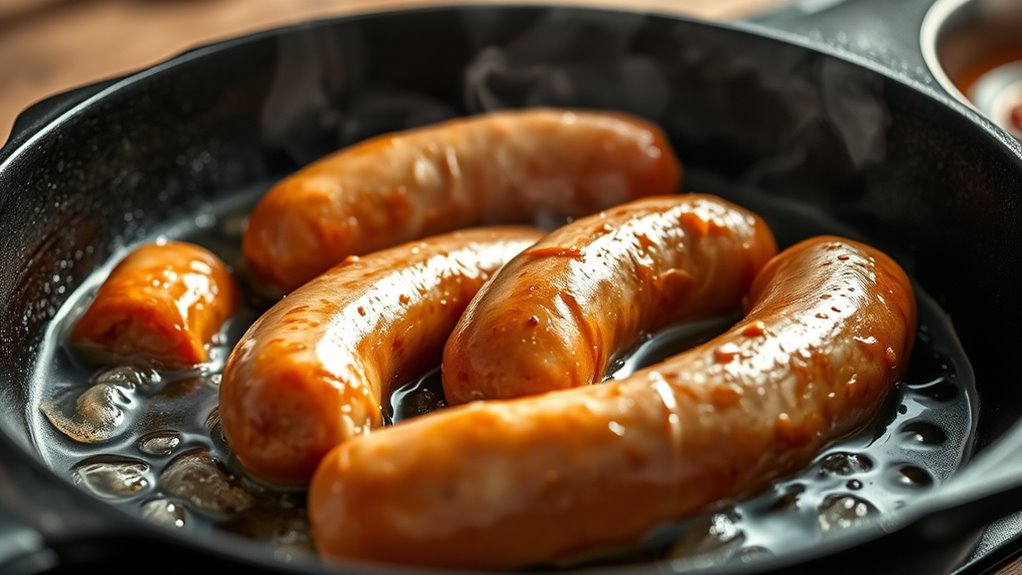
How to Cook Sausage in Skillet
To cook sausage in a skillet, start by selecting quality links and letting them warm to room temperature. Cooking sausage in a skillet is a simple and delicious way to prepare this versatile ingredient.
Use a cast iron or stainless steel pan over medium heat, adding a little oil if needed.
Cook sausages whole or sliced, turning often for even browning and a juicy interior. Avoid high heat to prevent burning or drying out.
Check for 160°F inside and let rest before serving.
Keep going to discover expert tips and flavor tricks that will elevate your skillet-cooked sausage to the next level.
Key Takeaways
- Preheat a cast iron or stainless steel skillet over medium heat with a little oil for even cooking and a golden-brown crust.
- Pat sausages dry and prick lightly to release fat and prevent bursting during cooking.
- Cook sausages whole or sliced, turning frequently to brown all sides evenly without overcrowding the pan.
- Use a meat thermometer to ensure an internal temperature of 160°F for pork and beef sausages.
- Let sausages rest off heat after cooking to retain juices and improve flavor and texture.
Choose the Right Sausage for Skillet Cooking
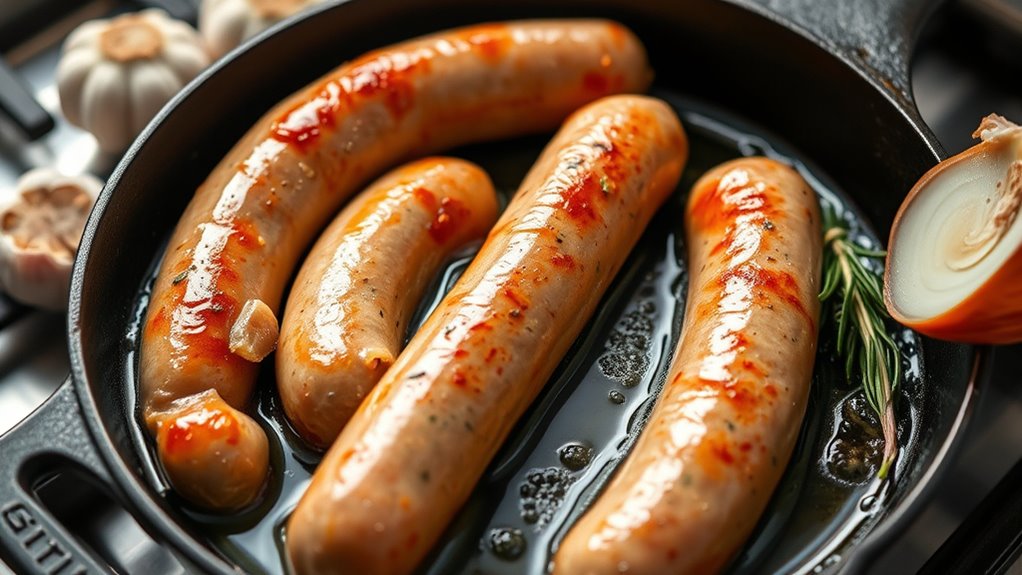
Before you start cooking, you need to choose the right sausage for your skillet. Not all sausages cook the same, so pick one that suits your taste and cooking style. Fresh sausages like Italian or breakfast varieties work well because they release flavorful juices as they cook.
Pre-cooked sausages, like smoked links, can be reheated quickly but need less time to avoid drying out. Consider the thickness, too; thinner sausages cook faster and more evenly, while thicker ones require more attention. Also, think about fat content—higher fat sausages stay juicy but can splatter more.
Choose a sausage with natural casings if you want a nice snap when you bite into it. Your choice sets the foundation for a delicious skillet meal.
Prep Sausages Before Cooking
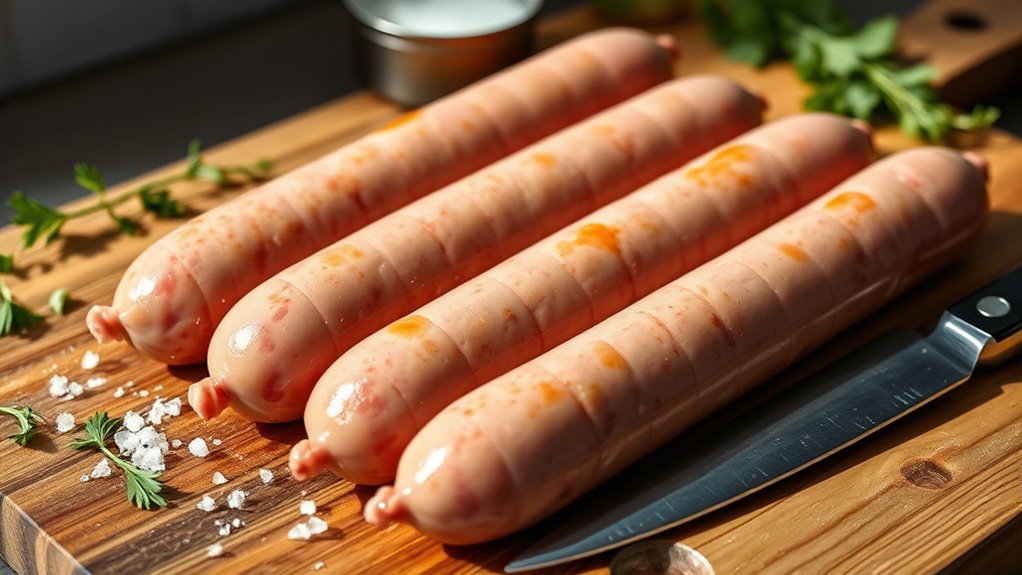
Before you start cooking, make sure you pick quality sausages for the best flavor. Take a moment to prepare them properly by checking for any casing issues and deciding if you want to slice or cook them whole.
These simple steps will help your sausages cook evenly and taste great.
Choose Quality Sausages
When you choose sausages, picking high-quality options makes all the difference in flavor and texture. Look for sausages made with fresh, natural ingredients and avoid those with excessive fillers or artificial additives. Check the label for meats like pork, chicken, or beef that are clearly named.
Opt for sausages with a balanced fat content—too little fat can make them dry, while too much can cause flare-ups in the skillet. If possible, buy from local butchers or trusted brands that prioritize quality. Fresh sausages should feel firm and slightly plump, not slimy or overly dry.
Also, consider the flavor profile you want, whether mild, spicy, or herb-infused. Choosing well-made sausages sets you up for a delicious skillet meal every time.
Prepare Sausages Properly
Although sausages come ready to cook, you’ll want to prepare them properly to guarantee even cooking and the best flavor. Start by letting your sausages sit at room temperature for about 15 minutes. This helps them cook evenly without the outside burning while the inside stays undercooked.
Next, prick the sausages lightly with a fork to release excess fat and prevent bursting during cooking. Avoid over-pricking to keep juices inside.
| Step | Purpose |
|---|---|
| Bring to room temp | Ensures even cooking |
| Prick lightly | Prevents bursting, releases fat |
| Pat dry if needed | Helps with browning and crispness |
Proper prep sets you up for juicy, perfectly cooked sausages every time.
Choosing the Best Skillet for Cooking Sausage
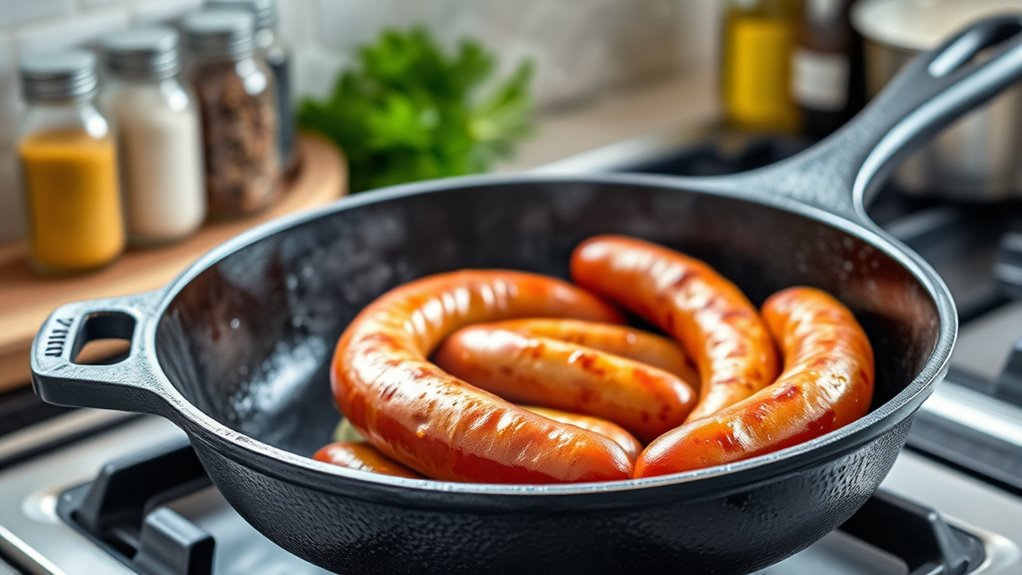
You’ll want to pick a skillet that heats evenly to cook your sausages perfectly. Cast iron and stainless steel each offer different benefits depending on your stove and cooking style.
Also, choosing the right size guarantees your sausages cook evenly without overcrowding the pan.
Material Types Comparison
Since the skillet you choose directly affects how evenly your sausage cooks and how easily it browns, selecting the right material is essential. Cast iron skillets retain heat exceptionally well, giving your sausage a perfect sear and consistent cooking. They’re a bit heavy but worth it for flavor.
Stainless steel pans heat quickly and handle high temperatures, but you’ll need to manage sticking carefully. Non-stick skillets make cleanup a breeze and require less oil, but they don’t achieve the same crust as cast iron. Aluminum pans heat fast but may warp under high heat and often lack durability.
Ultimately, cast iron offers the best balance for sausage cooking, but your choice depends on what features matter most to you—whether it’s heat retention, ease of use, or maintenance.
Size and Heat Distribution
When choosing the right skillet size for cooking sausage, you want one that comfortably fits the number of links or patties without crowding. Proper spacing ensures even cooking and browning, preventing sausages from steaming or sticking together.
Heat distribution is just as important; a skillet that heats evenly avoids hot spots where sausages might burn or remain undercooked.
Look for these features when selecting your skillet:
- Diameter that suits your usual batch size without overcrowding
- Thick, heavy-bottomed construction to promote uniform heat
- A flat surface that allows sausages to lie evenly for consistent contact with heat
With the right size and heat distribution, you’ll cook sausages perfectly every time, juicy inside with a crisp exterior.
Set the Stove and Pan to the Right Temperature
Although it might seem simple, setting the stove and pan to the right temperature is essential for cooking sausage evenly without burning the outside. You want a medium to medium-low heat so the sausages cook through gently while developing a golden-brown crust.
Too high, and the skin will char before the inside is done; too low, and the sausages won’t brown properly.
Here’s a quick guide to help you dial in the heat:
| Stove Setting | Pan Temperature (°F) | Result |
|---|---|---|
| Low | 250–300 | Slow cooking, no browning |
| Medium-Low | 300–325 | Even cooking, light browning |
| Medium | 325–375 | Perfect browning, cooked inside |
| High | 375+ | Burns outside, raw inside |
Keep this table handy to get your skillet just right.
Cook Sausage in a Skillet: Step-by-Step
Now that your pan is ready, it’s time to prepare the sausage for cooking. You’ll learn the best techniques to cook it evenly and keep it juicy.
Follow these simple steps and tips to get perfect results every time.
Preparing The Sausage
Before you start cooking, make sure to pat your sausages dry with a paper towel to remove any excess moisture. This step helps the sausages brown evenly and prevents splattering.
Next, decide whether you want to cook them whole or slice them into pieces. If you prefer smaller bites, cutting them into ½-inch rounds works well.
Here are a few key points to keep in mind when preparing your sausages:
- Let sausages come to room temperature for about 10 minutes to guarantee even cooking.
- Avoid poking holes in the casing, as this can release flavorful juices.
- If using link sausages, separate them gently without tearing the casing.
These simple steps set you up for perfectly cooked sausages in your skillet.
Cooking Techniques And Tips
Once your sausages are prepped and ready, heating the skillet properly is the next step to achieve that perfect sear. Use medium heat and add a little oil to prevent sticking. Place the sausages in the skillet without overcrowding—they need space to brown evenly.
Turn them frequently to cook all sides and avoid burning. Lower the heat once they’re browned to let them cook through gently, ensuring juicy interiors. Use a lid occasionally to trap heat and speed up cooking without drying out the sausages.
If you’re unsure about doneness, check the internal temperature; it should reach 160°F for pork or beef sausages. Let them rest a few minutes before serving to lock in juices. Following these tips guarantees flavorful, well-cooked sausages every time.
Should You Cook Sausage Whole or Sliced?
Although cooking sausage whole or sliced depends on your recipe and preference, each method offers distinct benefits. Cooking sausage whole helps retain juices, giving you a moist interior, while slicing allows more surface area to crisp up and brown. Consider these points when deciding:
Cooking sausage whole retains moisture, while slicing increases browning and crispiness for different texture benefits.
- Whole sausages take longer to cook evenly but stay juicy inside.
- Sliced sausage cooks faster and crisps nicely, ideal for mixing into dishes.
- Slicing before cooking gives you control over portion sizes and texture.
If you want tender sausage with a juicy bite, keep it whole. For a caramelized exterior and quicker cooking, slice before placing in the skillet. Choose the technique that best suits your desired texture and recipe needs.
How to Brown Sausage Perfectly Without Burning
If you want to brown sausage perfectly without burning it, controlling the heat and timing is key. Start by heating your skillet over medium to medium-low heat—too high, and the outside will burn before the inside cooks. Add a small amount of oil if the sausage is lean, or skip it if the sausage has enough fat.
Place the sausage in the pan without crowding it, allowing even heat distribution. Let it cook undisturbed for a few minutes to develop a golden-brown crust, then turn it gently using tongs. Keep an eye on the color; if it’s browning too fast, lower the heat.
Patience pays off here—slow, steady cooking leads to that perfect, appetizing brown without charring.
Tell When Sausage Is Fully Cooked
After achieving a perfect brown on your sausage, the next step is making certain it’s fully cooked through. Undercooked sausage can be unsafe and unappetizing, so you need to check carefully.
Here’s how to tell when your sausage is done:
- Use a meat thermometer: Insert it into the thickest part; 160°F (71°C) is ideal for pork and beef sausages.
- Check the juices: When you pierce the sausage, clear juices indicate doneness; pink or red juices mean it needs more time.
- Observe texture: Fully cooked sausage feels firm but not hard; if it’s still soft or squishy, keep cooking.
Following these steps ensures your sausage is safe and delicious every time you cook it in a skillet.
Tips for Cooking Pork, Chicken, and Beef Sausages
When cooking pork, chicken, and beef sausages, you’ll want to adjust your technique slightly to match each type’s unique texture and fat content. Pork sausages have more fat, so cook them over medium heat to render fat without burning.
Chicken sausages are leaner, so keep the heat lower and add a bit of oil to prevent sticking. Beef sausages fall in between, so moderate heat works best.
| Sausage Type | Cooking Tip |
|---|---|
| Pork | Medium heat, no added oil |
| Chicken | Low heat, add a splash of oil |
| Beef | Medium-low heat, monitor closely |
These tweaks help you get juicy, well-cooked sausages every time without drying them out or burning the casing.
Avoid Common Sausage Cooking Mistakes
Although cooking sausages might seem straightforward, many people make avoidable mistakes that affect flavor and texture. To get perfect results every time, watch out for these common pitfalls:
- Cooking at too high heat: This can burn the outside while leaving the inside undercooked. Use medium or medium-low heat for even cooking.
- Skipping the pre-cook step: If your sausages are thick, gently simmering them in water before frying helps cook them through without drying out.
- Overcrowding the skillet: Crowding traps steam, preventing browning and causing soggy sausages. Cook in batches if needed to maintain a crispy exterior.
Flavor Boosts When Cooking Sausage
Mastering sausage cooking techniques sets a solid foundation, but enhancing their flavor takes your dish to the next level. Start by adding aromatics like garlic, onions, or shallots to the skillet before cooking. These ingredients infuse the sausage with extra depth.
You can also toss in herbs such as rosemary, thyme, or sage for a fresh, earthy note. For a subtle kick, sprinkle in crushed red pepper flakes or black pepper. Deglaze the pan with a splash of wine, beer, or broth to lift the flavorful browned bits and create a tasty glaze.
Avoid overpowering the sausage; instead, aim to complement its natural taste. By incorporating these simple boosts, you’ll elevate your skillet-cooked sausage into a more vibrant and memorable meal.
Serve and Store Sausage Cooked in a Skillet
After cooking your sausage in a skillet, it’s important to serve it promptly to enjoy its best flavor and texture. Serve the sausage hot alongside your favorite sides, like sautéed vegetables or a fresh salad, to create a balanced meal.
If you have leftovers, store them properly to maintain quality and safety. Follow these tips for serving and storing:
- Let the sausage rest for a few minutes before slicing to retain juices.
- Refrigerate leftovers in an airtight container within two hours of cooking.
- Reheat gently on the skillet or microwave to avoid drying out.
Frequently Asked Questions
Can I Cook Frozen Sausage Directly in the Skillet?
Yes, you can cook frozen sausage directly in the skillet. Just start on low heat to thaw it slowly, then increase the heat to cook through evenly.
Be patient to avoid burning the outside while raw inside.
What Side Dishes Pair Best With Skillet-Cooked Sausage?
You might think sausages overpower sides, but roasted potatoes, sautéed peppers, or a fresh salad balance their richness perfectly. Don’t forget tangy mustard or applesauce—they add a bright, tasty contrast you’ll love.
Is It Safe to Reuse Oil After Cooking Sausage?
Yes, you can reuse oil after cooking sausage, but make sure to strain out any bits and store it properly.
However, don’t reuse it too many times, as the oil degrades and can affect flavor and safety.
How Long Can Cooked Sausage Be Stored in the Fridge?
You can store cooked sausage in the fridge for 3 to 4 days. Make sure to keep it in an airtight container to maintain freshness and prevent any odors from affecting other foods around it.
Can I Use Turkey Sausage in Place of Pork Sausage?
Absolutely, you can swap turkey sausage for pork sausage! Just remember, turkey cooks faster and is leaner, so keep an eye on it.
Your dish will stay flavorful, but healthier and lighter on your palate.
Conclusion
You might think cooking sausage in a skillet is tricky, but it’s actually simple and satisfying. While raw sausages seem delicate and risky, a hot skillet transforms them into golden, juicy perfection.
By choosing the right sausage, prepping properly, and cooking at the right temperature, you turn a basic ingredient into a flavorful meal. Don’t overthink it—just follow the steps, and you’ll enjoy delicious, perfectly cooked sausage every time.
To master how to cook sausage in skillet, remember these tips for even cooking and maximum flavor. With practice, skillet-cooked sausage will become a go-to meal for any occasion. Enjoy the ease and taste of cooking sausage in skillet perfectly each time.