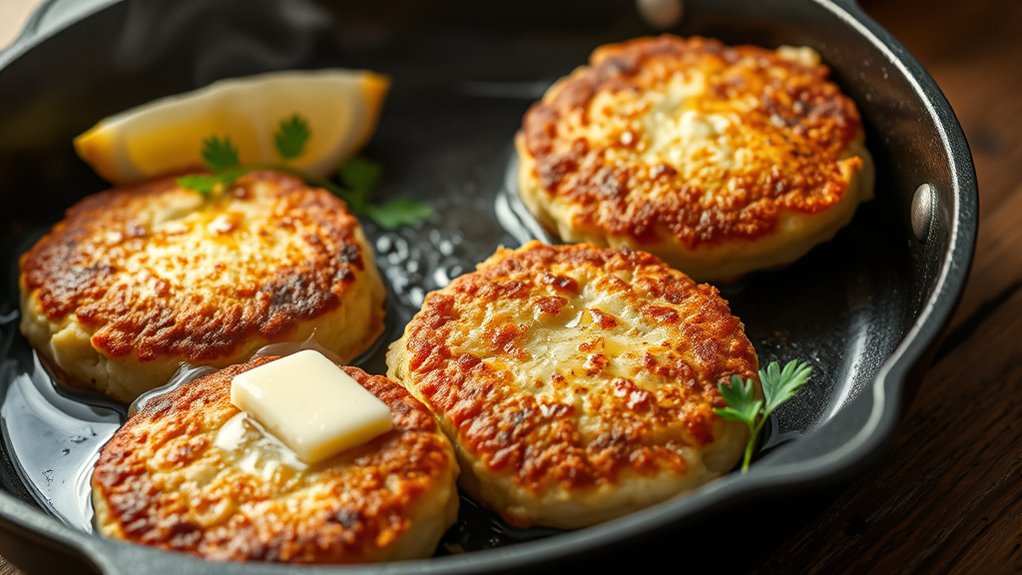
How to Pan Fry Crab Cakes
To pan fry crab cakes perfectly, start by selecting fresh lump crab meat, which is essential for the best flavor and texture.
Gently combine the crab meat with flavorful ingredients such as breadcrumbs, mustard, and seasonings, taking care not to overwork the mixture. This careful preparation helps maintain the delicate texture of the cakes.
Shape your crab cakes about an inch thick and chill them in the refrigerator to help them hold their form during cooking.
Heat oil in a heavy skillet over medium heat. Fry the crab cakes until they turn golden brown and firm, about 3-4 minutes per side.
Avoid overcrowding the pan to ensure even cooking and achieve a crispy exterior.
Once cooked, keep the crab cakes warm on a wire rack to maintain their crispiness.
Stick around for tips on perfect seasoning and frying techniques to elevate your crab cakes to the next level.
Key Takeaways
- Use fresh lump crab meat and gently mix with binders and seasonings to maintain delicate texture and flavor.
- Shape crab cakes about 1-inch thick, chill for 30 minutes to help hold form during cooking.
- Heat a heavy skillet with high smoke point oil to medium heat, around 325°F to 375°F for even cooking.
- Fry crab cakes without overcrowding, flipping once edges are golden brown and cakes release easily from the pan.
- Keep cooked crab cakes warm and crispy in a low oven on a wire rack, avoiding stacking or covering tightly.
Choose the Best Crab Meat for Pan Frying
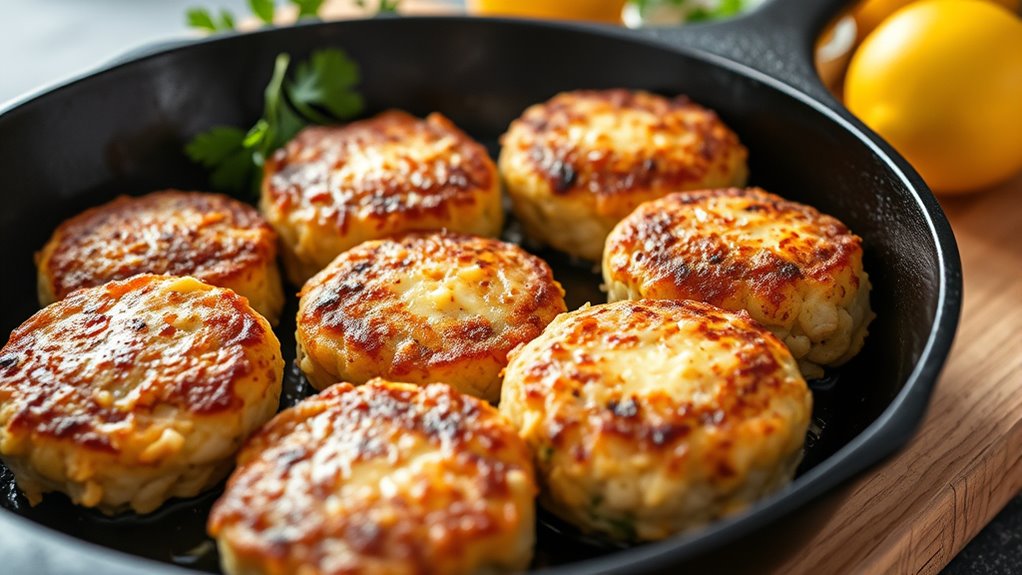
When you choose the best crab meat for pan frying, focus on freshness and texture. Opt for lump crab meat, as it’s firm and holds together well, giving your crab cakes a satisfying bite. Avoid claw meat if you want a more delicate texture and fewer fillers.
Fresh crab meat from a trusted fishmonger beats canned every time, but if you use canned, pick the “lump” variety in water, not oil or syrup. You’ll want meat that’s moist but not mushy, with a clean, briny aroma—any off smell means it’s best to pass. Handle the crab meat gently; it’s fragile and should stay in chunks rather than breaking down.
This way, your pan-fried crab cakes will have the perfect texture and flavor foundation.
Gather Key Ingredients for Flavorful Crab Cakes
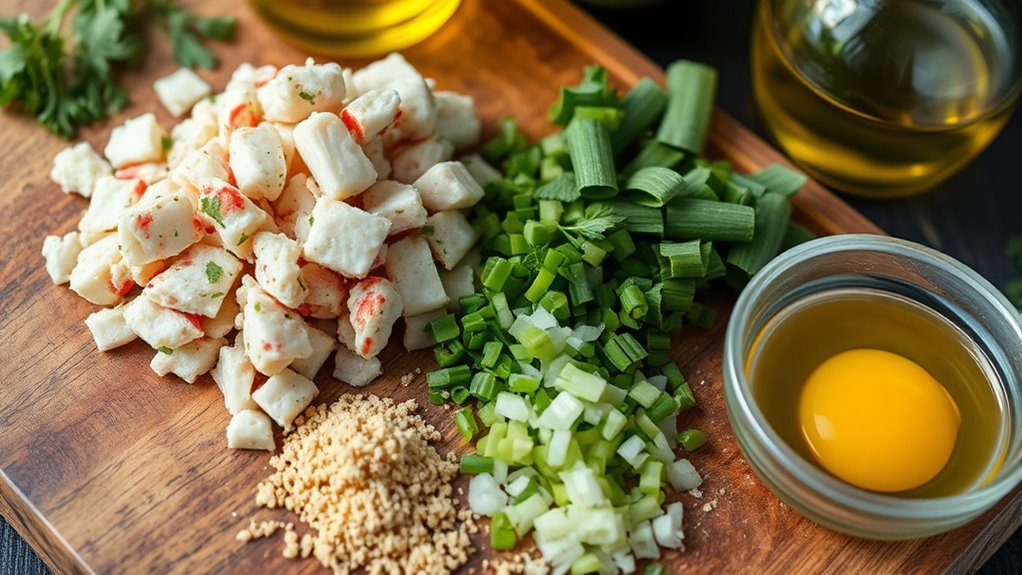
Selecting high-quality crab meat sets the stage, but gathering the right ingredients brings those crab cakes to life. You’ll want fresh breadcrumbs or crushed crackers to add just the right texture without overpowering the delicate crab flavor. Include finely chopped celery and green onions for a subtle crunch and freshness.
A touch of Dijon mustard and Worcestershire sauce provides a savory depth, while a dash of Old Bay seasoning gives that classic seafood spice. Don’t forget mayonnaise; it helps bind the ingredients and keeps the cakes moist. A beaten egg acts as a natural glue to hold everything together during frying.
Finally, a squeeze of lemon juice brightens the overall taste. Each component plays an essential role in crafting crab cakes that are flavorful and perfectly balanced.
Mix Crab Cake Ingredients Without Overworking
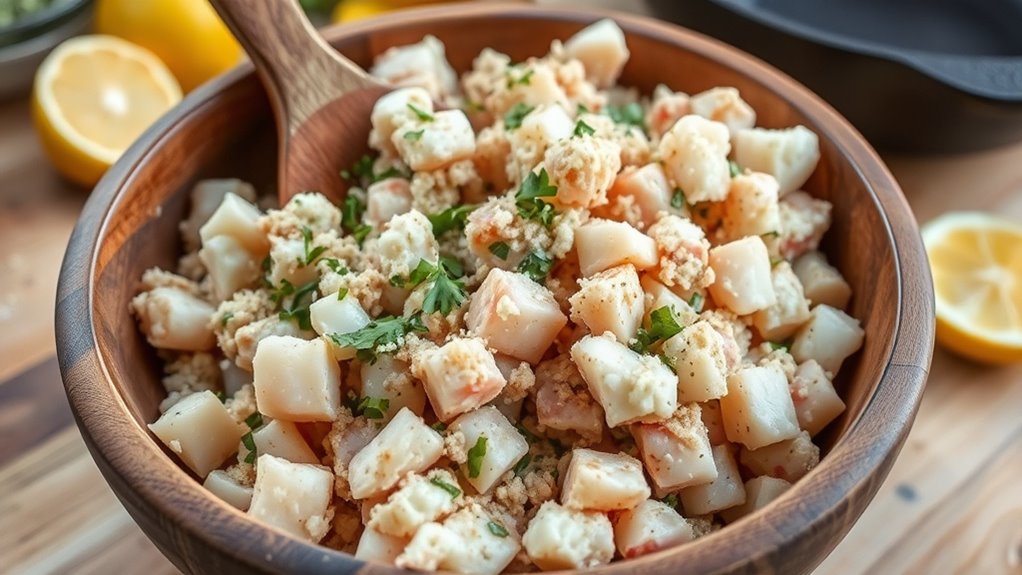
Although it might be tempting to mix the ingredients thoroughly, you should combine them gently to preserve the crab’s delicate texture. Start by folding the binding ingredients—like mayonnaise, mustard, and egg—into the crab meat with a spatula or your hands. Use slow, deliberate motions to avoid breaking up the lumps of crab.
Overmixing can make your crab cakes dense and rubbery, detracting from their light, flaky quality. Incorporate the breadcrumbs last, just enough to hold the mixture together without drying it out. If the mixture feels too wet, add a bit more breadcrumbs, but don’t go overboard.
When done right, you’ll have a tender, moist crab cake that holds its shape without losing that signature crab flavor.
Shape Crab Cakes for Even Cooking and Hold
Once you’ve gently mixed your crab cake ingredients, it’s time to shape them for even cooking and a firm hold. Use your hands to form cakes about 1-inch thick and 3 inches wide. Press gently but firmly to avoid crumbling.
If you want consistent sizes, use a measuring cup or a mold. Chill them for at least 30 minutes before frying—this helps them hold their shape in the pan. Here’s a quick guide to shaping emotions and expectations as you prepare:
| Feeling | Action | Result |
|---|---|---|
| Confidence | Firm, even shaping | Cakes hold shape |
| Satisfaction | Consistent sizes | Even cooking |
| Anticipation | Chilling the cakes | Less breakage |
| Comfort | Gentle pressing | Fluffy texture |
| Pride | Perfect form | Delicious outcome |
Season Crab Cakes for Pan Frying Flavor
To bring out the best flavor in your crab cakes, you’ll want to season them thoughtfully before pan frying. Start with salt and freshly ground black pepper to enhance the natural sweetness of the crab meat. Add a pinch of Old Bay seasoning or paprika for a subtle, smoky kick.
Fresh herbs like parsley or chives brighten the flavor without overpowering it. Don’t forget a dash of garlic powder or onion powder for depth. If you like a little heat, a touch of cayenne pepper works wonders.
Mix your seasonings gently into the crab mixture to distribute flavor evenly without breaking up the lumps. This careful seasoning guarantees each bite is flavorful and balanced, making your pan-fried crab cakes truly delicious.
Pick the Best Oils for Frying Crab Cakes
With your crab cakes perfectly seasoned, the next step is choosing the right oil to fry them. You want an oil with a high smoke point to avoid burning and off-flavors. Oils like canola, vegetable, or peanut oil work great because they handle heat well and have neutral flavors that won’t overpower your crab cakes.
If you prefer a touch of extra flavor, light olive oil or avocado oil are good options, but make sure they’re labeled as refined to withstand frying temperatures. Avoid butter alone since it burns quickly, but you can mix it with oil for richness once the cakes are nearly done. Picking the right oil helps you get that crispy, golden crust without any bitterness or smoke clouding your kitchen.
Get Your Pan and Oil Ready for Frying
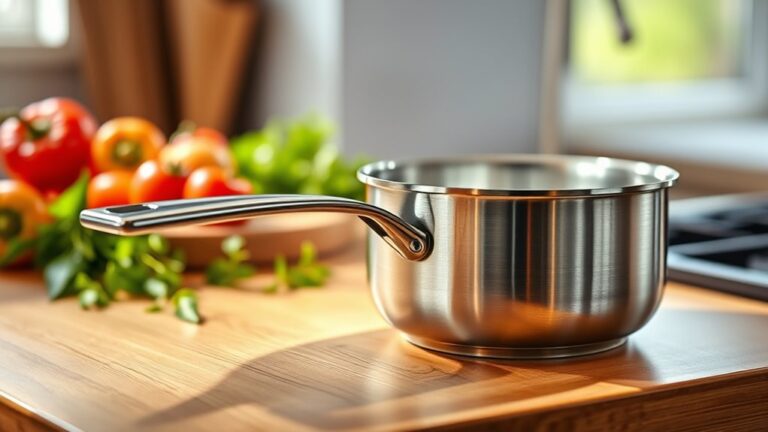
You’ll want to choose a sturdy pan that heats evenly to get the best crisp on your crab cakes. Pick an oil with a high smoke point to avoid burning and maintain flavor.
Finally, make sure you preheat the pan and oil properly before adding your crab cakes for perfect frying.
Choosing The Right Pan
Although any skillet might seem suitable, selecting the right pan guarantees your crab cakes cook evenly and develop a perfect golden crust. You’ll want a pan that distributes heat uniformly to avoid hot spots that can burn or undercook your cakes. Consider the following when choosing:
- Use a heavy-bottomed skillet, like cast iron or stainless steel, for consistent heat retention.
- Opt for a pan with low sides to easily flip your crab cakes without breaking them.
- Confirm the pan size fits your crab cakes comfortably without overcrowding.
- A non-stick surface can help prevent sticking, but seasoned cast iron also works well.
With the right pan, you set the stage for crispy, delicious crab cakes every time.
Selecting The Best Oil
How do you choose the best oil for pan frying crab cakes? You want an oil with a high smoke point that won’t burn or impart unwanted flavors. Oils like canola, vegetable, or peanut oil are great choices because they handle heat well and keep your crab cakes crispy without smoking up your kitchen.
Avoid olive oil or butter alone since their lower smoke points can cause burning. You can use a small amount of butter combined with a high smoke point oil to add flavor and still maintain control over the heat. Make sure you have enough oil to cover the bottom of the pan in a thin, even layer—this helps the crab cakes cook evenly and develop that perfect golden crust.
Preheating Techniques For Frying
Before adding your crab cakes to the pan, make sure both the pan and oil are properly preheated to guarantee even cooking and a crispy crust. Start by heating the pan over medium heat to allow gradual warming, preventing hot spots that can burn your cakes.
Then, add your chosen oil and let it heat until it shimmers but doesn’t smoke. This indicates the oil is hot enough for frying. To confirm readiness, drop a small piece of crab cake batter into the oil; if it sizzles immediately, you’re good to go.
Keep these tips in mind:
- Use a heavy-bottomed pan for even heat distribution
- Avoid overcrowding the pan to maintain temperature
- Adjust heat as needed to prevent burning
- Always monitor oil temperature throughout cooking
Pan Fry Crab Cakes for a Crispy Golden Crust
To get that perfect crispy golden crust, choose a heavy-bottomed pan that heats evenly. Keep your oil at a medium-high temperature—too hot, and the cakes burn; too low, and they’ll soak up oil.
You’ll want to maintain this balance as you fry each crab cake to perfection.
Choosing The Right Pan
Although many pans can cook crab cakes, selecting the right one makes all the difference in achieving a crispy, golden crust. You want a pan that distributes heat evenly and holds it well, so your crab cakes cook uniformly without burning.
Here are some ideal options:
- Cast iron skillet: Excellent heat retention and even cooking.
- Non-stick pan: Easy release, preventing sticking and breaking apart.
- Stainless steel pan: Provides good sear if preheated properly.
- Copper pan: Superb heat conductivity for precise temperature control.
Avoid pans with thin bottoms that heat unevenly. Whichever you pick, guarantee it’s large enough to avoid crowding, so each crab cake crisps beautifully. Choosing wisely sets you up for a perfect crust every time.
Optimal Cooking Temperature
When you control your pan’s temperature carefully, you’ll achieve that perfect crispy, golden crust on your crab cakes without burning them. Aim for medium to medium-high heat—around 325°F to 375°F. This range allows the cakes to cook through evenly while forming that desirable crust.
Too hot, and the exterior will burn before the inside cooks; too low, and the crab cakes will become greasy and soggy. Use a thermometer if you have one or test by dropping a small bit of batter first—it should sizzle gently, not aggressively. Adjust the heat as needed while cooking.
Know When Pan Fried Crab Cakes Are Done
As you cook your crab cakes, you’ll notice their edges turning a rich golden brown—that’s a key sign they’re nearly done. To be sure, keep an eye on these indicators:
- Firm texture: Gently press the cake; it should feel solid, not mushy.
- Internal temperature: Aim for 165°F (74°C) with a food thermometer.
- Even color: Both sides should have a consistent golden crust.
- Slight resistance when flipped: The cake should release easily from the pan without sticking.
Avoid guessing by sight alone; relying on these cues guarantees your crab cakes are cooked through without drying out. Once these signs align, remove them promptly and let them rest briefly before serving.
This guarantees a perfect balance of crispiness and tender crab inside.
Avoid These Common Pan Frying Mistakes
If you want your crab cakes to turn out perfectly crispy and flavorful, you need to steer clear of some common pan frying mistakes. First, don’t overcrowd the pan; it lowers the temperature, causing soggy cakes instead of a golden crust. Avoid flipping the crab cakes too soon—wait until the edges are firm and golden to prevent them from falling apart.
Don’t use too high heat; it’ll burn the outside while leaving the inside undercooked. Also, resist pressing the crab cakes down with a spatula, which squeezes out moisture and makes them dry. Finally, make sure your crab cakes are well chilled before frying; this helps them hold together better during cooking.
Follow these tips, and you’ll pan fry crab cakes like a pro.
Keep Crab Cakes Warm and Crispy
Although crab cakes are best served fresh, you can keep them warm and crispy by placing them on a wire rack set over a baking sheet in a low oven. This method prevents sogginess and maintains their golden crust. To do it right, follow these tips:
Keep crab cakes warm and crispy by using a wire rack over a baking sheet in a low oven.
- Set your oven to 200°F (93°C) to avoid overcooking.
- Use a wire rack to allow air circulation around the crab cakes.
- Avoid stacking crab cakes; keep them in a single layer.
- Keep the crab cakes covered loosely with foil to retain warmth without trapping steam.
This simple technique ensures your crab cakes stay perfectly crisp and warm while you finish cooking or wait to serve. Remember, this step is key to preserving their delightful texture.
Serve Crab Cakes With These Sauces and Sides
You’ll want to serve your crab cakes with sauces that complement their flavor, like tangy remoulade or classic tartar sauce. Pair them with sides such as fresh salads or roasted vegetables to balance the meal.
Let’s explore the best options to make your dish shine.
Popular Dipping Sauce Options
What makes crab cakes even better? The perfect dipping sauce can elevate their flavor and add a delightful twist. When you pan fry crab cakes, consider these popular sauce options to complement their crispy exterior and tender inside:
- Remoulade: A zesty, tangy sauce with mustard, pickles, and herbs that adds a creamy kick.
- Tartar Sauce: Classic and creamy with pickles and capers, balancing the crab’s sweetness.
- Spicy Aioli: Mayonnaise blended with garlic and a touch of hot sauce for a bold, smooth dip.
- Lemon Herb Yogurt: Light and refreshing, combining Greek yogurt with lemon juice and fresh herbs.
Try these sauces to find your favorite pairing and enhance every bite of your pan-fried crab cakes.
Best Side Dish Pairings
Pairing your pan-fried crab cakes with the right sides can turn a simple meal into a memorable feast. Start with a light, invigorating salad—think mixed greens tossed with a lemon vinaigrette. Roasted asparagus or sautéed green beans add a crisp, healthy touch that balances the richness of the crab cakes.
For a heartier option, creamy coleslaw or garlic mashed potatoes work beautifully. You can also serve your crab cakes alongside a tangy mango salsa or corn relish to add a burst of flavor. Don’t forget warm, crusty bread or garlic butter rolls to soak up any leftover sauce.
These sides complement the crab cakes without overshadowing their delicate flavor, making your meal both satisfying and well-rounded.
Frequently Asked Questions
Can Crab Cakes Be Made Ahead and Frozen Before Pan Frying?
Yes, you can make crab cakes ahead and freeze them before pan frying. Just shape the cakes, freeze on a tray, then store in an airtight container.
When ready, pan fry them straight from the freezer for best results.
What Type of Crab Is Best for Allergy-Sensitive Individuals?
When it comes to allergy-sensitive folks, blue crab’s your best bet—it’s less likely to cause issues compared to others.
But don’t put all your eggs in one basket; always test small amounts first to be safe.
How Do You Store Leftover Pan-Fried Crab Cakes Properly?
You should let leftover crab cakes cool completely, then wrap them tightly in plastic wrap or foil. Store them in an airtight container and place them in the fridge.
Eat within 2-3 days for best taste and safety.
Are There Gluten-Free Options for Breading Crab Cakes?
You might think breadcrumbs are a must, but you don’t have to stick with gluten. Try crushed gluten-free crackers or almond flour instead.
They’ll give your crab cakes a crispy, delicious crust without the gluten!
Can I Use an Air Fryer Instead of Pan Frying Crab Cakes?
Yes, you can use an air fryer to cook crab cakes. It crisps them nicely with less oil and mess.
Just preheat, spray the cakes lightly with oil, and air fry at 375°F for about 10-12 minutes.
Conclusion
Now that you’ve mastered pan frying crab cakes, you’re ready to impress like a true 1950s diner chef with a modern twist. Remember, gentle handling and proper seasoning make all the difference.
Keep your cakes warm and crispy while avoiding common pitfalls. Serve with your favorite sauces and sides to elevate the experience.
So, put on your apron, channel that retro vibe, and enjoy crispy, golden crab cakes that’ll have everyone asking for seconds!
With these pan frying crab cakes tips, you’ll create delicious, perfectly cooked crab cakes every time.