Are Metal Cutting Boards Good
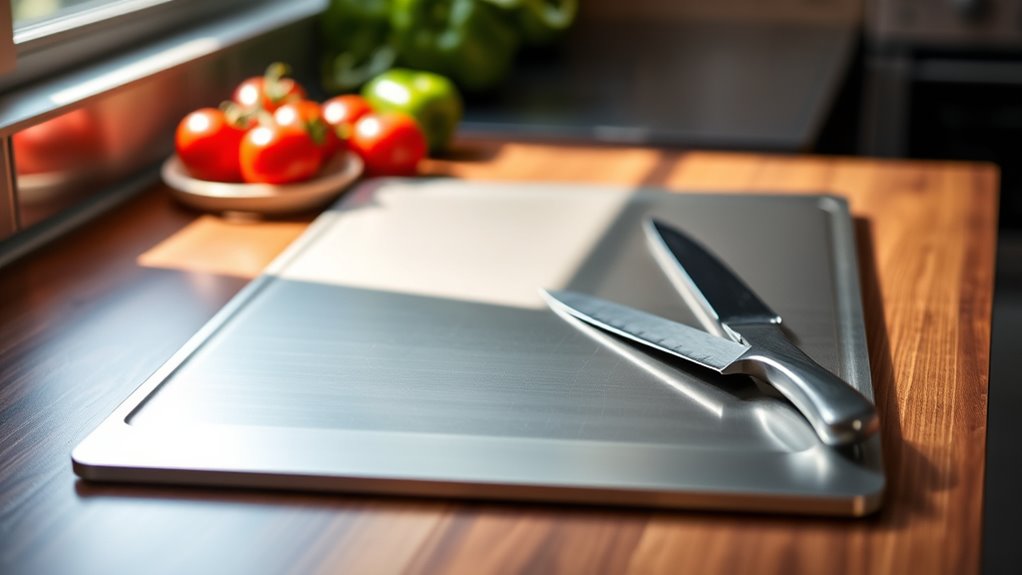
You’ll find metal cutting boards highly durable, stain-resistant, and very easy to sanitize, making them great for heavy kitchen use. Their robust nature means they won’t warp or crack like wood, providing long-lasting performance in busy kitchens.
Metal cutting boards are especially popular for their resistance to odors and stains, which helps maintain a clean and hygienic workspace.
However, the hard surface of metal can dull your knives faster compared to softer materials. While they handle meats and veggies well, metal boards can become slippery when wet, requiring extra caution during use.
If you want to understand how this impacts your kitchen routine and maintenance, there’s more to explore.
Key Takeaways
- Metal cutting boards are highly durable, resistant to stains, odors, warping, and cracking, making them ideal for long-term use.
- They are easy to clean and sanitize, promoting better hygiene compared to wood and plastic boards.
- Metal surfaces can dull knives faster due to their hardness, requiring more frequent sharpening.
- Non-porous metal boards resist bacterial growth and do not absorb liquids or odors, enhancing food safety.
- They can be heavier and noisier than other boards, but their durability and sanitary benefits often outweigh these drawbacks.
Should You Consider a Metal Cutting Board?
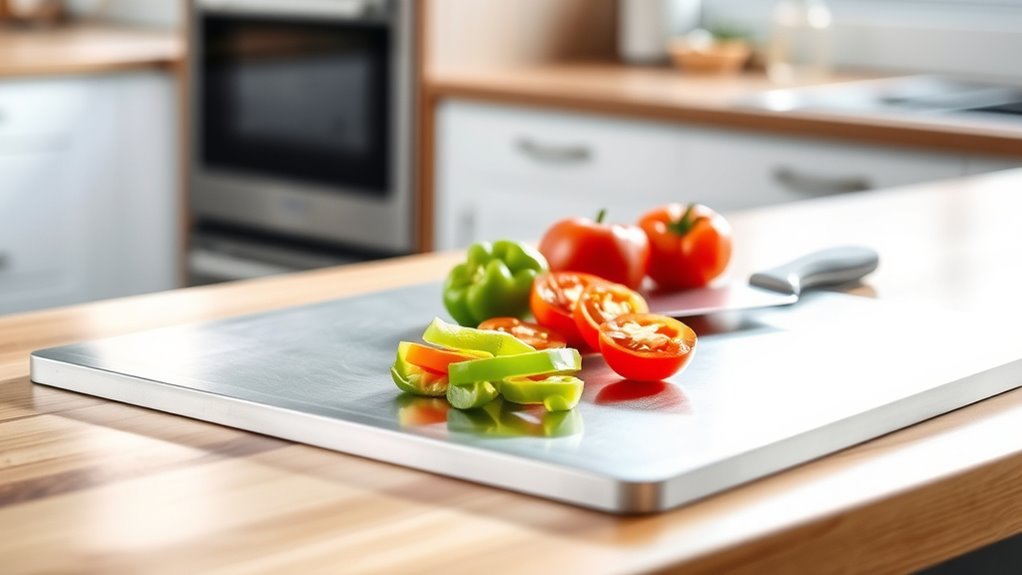
Why should you consider a metal cutting board? If you want something durable and easy to clean, metal cutting boards fit the bill. They resist stains and odors better than many other materials, so you won’t worry about lingering smells after cutting garlic or onions.
Plus, they won’t warp or crack over time, which means they stay flat and stable for safer chopping. You’ll appreciate how quickly they sanitize—just a simple wipe or rinse, and you’re done. If you use sharp knives, though, keep in mind metal boards might dull them faster.
But if toughness and hygiene top your priority list, metal cutting boards are worth a try. They offer a sleek, modern look while standing up to heavy daily use without much fuss.
What’s a Metal Cutting Board Made Of?

Although metal cutting boards come in various types, most are made from stainless steel, aluminum, or sometimes titanium. Each metal offers unique benefits that can impact your kitchen experience. When choosing a metal cutting board, consider these common materials:
- Stainless Steel: Known for its resistance to rust and corrosion, it’s durable and easy to clean. It’s ideal if you want a hygienic surface.
- Aluminum: Lightweight and affordable, aluminum boards are less durable than stainless steel but still resist corrosion well.
- Titanium: The most expensive option, titanium is incredibly strong, lightweight, and corrosion-resistant, perfect if you want a premium cutting board.
Understanding what your metal cutting board is made of helps you pick one that fits your needs best.
Are Metal Cutting Boards More Durable Than Wood or Plastic?
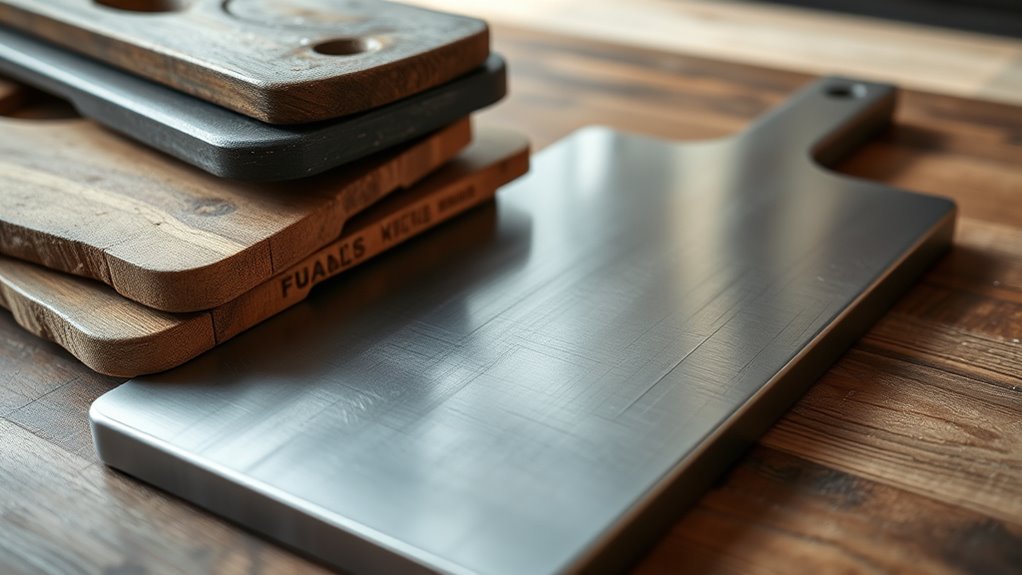
You’ll find that metal cutting boards often outlast wood and plastic when it comes to strength. Their durability depends on factors like material thickness and how you maintain them.
Let’s compare these elements to see which board holds up best over time.
Strength Comparison
How well a cutting board holds up over time depends largely on the material’s strength and resistance to wear. When comparing metal cutting boards to wood and plastic, you’ll notice some clear differences:
- Metal: Extremely strong and resistant to deep cuts or gouges, metal boards won’t crack or warp. However, they can dull knives faster due to their hardness.
- Wood: Though softer, wood offers a balance of durability and self-healing properties, as minor cuts can close up over time, but it’s prone to cracking and warping if not cared for.
- Plastic: Less durable than metal or wood, plastic boards get cut up easily but resist cracking and are lightweight and affordable.
In strength alone, metal cutting boards often outlast wood and plastic but may impact your knives more.
Longevity Factors
Metal cutting boards stand out for their impressive strength, but durability goes beyond just resisting cuts and warps. When you compare them to wood and plastic, metal boards won’t crack or splinter over time, which means they can last for years with proper care. Unlike plastic, they don’t absorb odors or stains, so they stay cleaner longer.
However, metal can scratch and show wear, especially stainless steel, which might impact appearance but not functionality. Wood boards, while gentle on knives, require regular oiling to prevent drying and cracking. Plastic boards wear down faster, developing grooves that can harbor bacteria.
If you want a cutting board that withstands heavy use without much maintenance, metal is a solid choice, but you’ll need to accept some surface marks over time.
Do Metal Cutting Boards Dull Your Knives Faster?
Although metal cutting boards might seem durable, they can cause your knives to dull faster than softer surfaces like wood or plastic. When you cut on metal, your knife’s edge meets a hard, unyielding surface that quickly wears down its sharpness. Here’s why:
- Hard Surface Impact: Metal doesn’t absorb the blade’s force, causing more friction and edge damage.
- Edge Chipping: The rigid surface can chip or nick fine knife edges, especially delicate or high-carbon steel blades.
- Increased Sharpening Frequency: You’ll need to sharpen your knives more often, which can shorten their overall lifespan.
If you want your knives to stay sharp longer, consider avoiding metal cutting boards for regular use and opt for gentler materials instead.
Are Metal Cutting Boards More Hygienic Than Other Materials?
You’ll want to think about how metal cutting boards resist bacteria compared to wood or plastic. Think about how easy they are to clean and maintain, since that affects hygiene too.
Plus, their durable surface plays a role in keeping bacteria from hiding in scratches.
Bacteria Resistance Comparison
How well do different cutting board materials stand up to bacteria? When you’re choosing a cutting board, bacteria resistance is key for food safety. Here’s a quick comparison to help you decide:
- Metal: Non-porous and smooth, metal boards don’t harbor bacteria easily. Their surface resists cuts where bacteria can hide, making them highly hygienic.
- Plastic: Also non-porous but prone to deep knife grooves over time, plastic boards can trap bacteria if not replaced regularly.
- Wood: Naturally antimicrobial but porous, wood can absorb moisture and bacteria, especially if poorly maintained.
Cleaning and Maintenance Ease
Metal cutting boards stand out not just for their bacteria resistance but also for how easy they are to clean and maintain. You can quickly wash metal boards with hot, soapy water, and unlike wood, they won’t absorb liquids or odors. Most metal cutting boards are dishwasher safe, saving you time and effort.
Because they don’t develop deep grooves like plastic or wood, bacteria have fewer places to hide, making routine cleaning more effective. You won’t need harsh chemicals or special treatments to keep them sanitary. Just a simple scrub and rinse will do.
If you prioritize hygiene and convenience, metal cutting boards offer a straightforward cleaning process that helps you maintain a safer kitchen environment with minimal hassle.
Surface Durability Impact
Although durability varies among cutting board materials, metal boards often outperform others in resisting surface damage that can harbor bacteria. When you use a metal cutting board, you benefit from a surface that’s less prone to deep cuts and grooves where germs typically hide. This means you can keep your board cleaner and safer over time.
Here’s why metal boards stand out:
- Scratch Resistance: Metal resists knife marks better, preventing bacteria from nesting in scratches.
- Non-Porous Surface: Unlike wood or plastic, metal doesn’t absorb liquids, reducing bacterial growth.
- Ease of Sterilization: You can safely sanitize metal boards at high temperatures without damage.
Choosing metal means you’re prioritizing a hygienic, long-lasting cutting surface.
Are Metal Cutting Boards Noisy to Use?
While using cutting boards, you might notice that some materials produce more noise than others. Metal cutting boards tend to be noisier compared to wood or plastic because metal surfaces amplify the sound of your knife striking them. Each cut can produce a sharp, metallic clinking that might be distracting, especially in quiet kitchens.
If you’re sensitive to noise or prefer a quieter cooking environment, this could be a downside. However, the noise level also depends on the type of metal and its thickness; thinner metals tend to resonate more. Despite the noise, many find it manageable once they get used to it.
If noise bothers you, consider placing a damp cloth underneath the board to help absorb some sound and reduce the clatter.
Best Metals for Cutting Boards in Your Kitchen
If you want a cutting board that lasts and resists damage, you’ll want to pick the right type of metal. Not all metals are created equal when it comes to durability, maintenance, and food safety. Here are the best metals for cutting boards in your kitchen:
Choosing the right metal is key for a durable, low-maintenance, and safe cutting board.
- Stainless Steel – It’s highly durable, resists rust, and won’t absorb odors or stains. Plus, it’s easy to sanitize, making it ideal for food prep.
- Aluminum – Lightweight and corrosion-resistant, aluminum offers a good balance between sturdiness and ease of handling, though it’s softer than stainless steel.
- Copper – Known for its antimicrobial properties, copper cutting boards can help reduce bacteria, but they require more care to prevent tarnishing.
Selecting the right metal ensures your cutting board stays functional and hygienic for years.
How to Clean and Maintain Metal Cutting Boards
You’ll want to clean your metal cutting board thoroughly after each use to keep it in top shape. Preventing rust is key, so drying it completely and applying a light coat of oil can help.
Finally, store your board in a dry place to avoid moisture buildup and prolong its life.
Daily Cleaning Techniques
Because metal cutting boards resist stains and odors, cleaning them daily is straightforward and quick. You don’t need harsh chemicals or prolonged scrubbing.
Just follow these simple steps to keep your board in top condition:
- Rinse Immediately: After use, rinse your board under warm water to remove food particles and prevent buildup.
- Use Mild Soap: Apply a small amount of dish soap and scrub gently with a non-abrasive sponge or cloth to avoid scratching the surface.
- Dry Thoroughly: Wipe the board dry with a clean towel or let it air dry completely to prevent water spots and maintain its sleek appearance.
Preventing Rust Formation
Keeping your metal cutting board clean daily helps, but preventing rust formation takes a bit more care. After washing, always dry your board thoroughly with a clean towel—moisture left on the surface invites rust. Avoid soaking it in water or placing it in a dishwasher, as prolonged exposure to water accelerates corrosion.
To add an extra layer of protection, apply a thin coat of food-safe mineral oil regularly; this seals the metal and repels moisture. If you spot any rust, scrub it gently with a paste of baking soda and water or a fine steel wool pad, then rinse and dry immediately.
Proper Storage Tips
Although metal cutting boards are durable, proper storage plays a crucial role in maintaining their quality and preventing damage. You’ll want to keep your board dry and away from moisture to avoid rust or corrosion. Storing it correctly also prevents scratches and dents that can affect its surface.
Here are three essential storage tips for your metal cutting board:
- Store it upright in a well-ventilated area to allow air circulation and prevent moisture buildup.
- Avoid stacking heavy items on top to protect the board from warping or damage.
- Use a protective cover or cloth to shield the surface from dust and scratches when not in use.
Following these steps will help your metal cutting board last longer and stay in top condition.
Can You Use Metal Cutting Boards for All Kinds of Food?
When deciding whether metal cutting boards fit all your food prep needs, you should consider how they interact with different ingredients. Metal boards handle meats and vegetables well since they’re easy to clean and durable. However, they might dull your knives faster and can cause slippery surfaces with wet foods.
Also, acidic fruits might react slightly with some metals, affecting taste.
| Food Type | Suitability | Notes |
|---|---|---|
| Meats | Excellent | Easy cleanup, durable |
| Vegetables | Good | Non-porous, but slippery when wet |
| Acidic Fruits | Fair | Possible metal taste reaction |
Use metal cutting boards selectively based on the food type to get the best experience.
Are Metal Cutting Boards Safe and Healthy for Daily Use?
Since metal cutting boards resist stains and bacteria better than some other materials, they can be a safe choice for daily use if you maintain them properly. To keep your metal cutting board safe and healthy, follow these essential tips:
Metal cutting boards resist stains and bacteria, making them a safe daily choice with proper maintenance.
- Clean thoroughly: Wash your board with hot, soapy water after each use and sanitize it regularly to prevent bacterial buildup.
- Avoid deep scratches: Metal boards can develop grooves where bacteria hide, so inspect and smooth out any deep cuts promptly.
- Dry completely: Always dry your board thoroughly after washing to prevent rust and maintain hygiene.
Pros and Cons of Metal Cutting Boards Compared to Others
While metal cutting boards offer unique durability and hygiene benefits, they also come with some drawbacks compared to wood or plastic options. You’ll appreciate that metal boards resist staining and don’t absorb odors, making them easy to clean and very sanitary. They’re also incredibly tough, so they won’t warp or crack over time.
However, metal boards can dull your knives faster due to their hard surface. Unlike wood, they lack natural antimicrobial properties and can be noisy when chopping. Plus, they may feel heavy and cold, which some find less comfortable to handle.
If you prioritize longevity and hygiene, metal boards work well, but if you want something gentler on knives or quieter, wood or plastic might suit you better.
Frequently Asked Questions
Can Metal Cutting Boards Be Used in Commercial Kitchens?
Yes, you can use metal cutting boards in commercial kitchens. They’re durable, easy to sanitize, and resist bacteria.
However, they can dull knives quickly, so you’ll need to sharpen blades more often to maintain efficiency.
Do Metal Cutting Boards Resist Stains and Odors?
Yes, metal cutting boards resist stains and odors really well because they’re non-porous. You won’t have to worry about bacteria lingering or colors soaking in, making them easier to clean and maintain freshness.
Are Metal Cutting Boards Microwave or Dishwasher Safe?
You shouldn’t microwave metal cutting boards—they can cause sparks. However, you can safely put them in the dishwasher. Just be aware that repeated washing might dull their finish over time, so hand washing is often better.
How Heavy Are Metal Cutting Boards Compared to Others?
Metal cutting boards feel like holding a small anchor compared to wood or plastic. You’ll notice they’re heavier and sturdier, giving you solid control but less easy-to-move convenience during busy kitchen moments.
Can Metal Cutting Boards Be Customized or Engraved?
Yes, you can customize or engrave metal cutting boards easily. They hold detailed designs well, letting you add logos, names, or patterns.
Just make sure the engraving method suits the metal type for the best results.
Conclusion
So, should you take the plunge with a metal cutting board? While they shine in durability and hygiene, they might dull your knives quicker and aren’t perfect for every task. Like a trusty but blunt sword, metal boards have their strengths and weaknesses.
If you want something tough and easy to clean, they’re worth a try—but keep your knives sharp and consider your cooking style before making the switch. Ultimately, metal cutting boards are good for those prioritizing durability and cleanliness but may not suit everyone’s knife care needs. Consider these factors carefully before choosing a metal cutting board.