How Long to Reheat Pizza in Oven
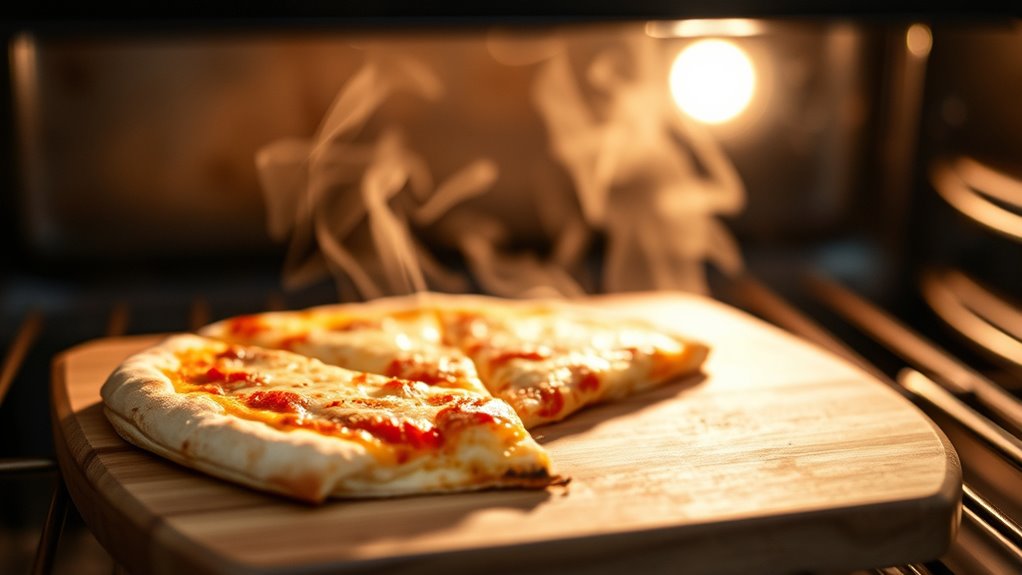
You should reheat your pizza in the oven at 375°F (190°C) for about 8 to 10 minutes to get a crispy crust and perfectly melted cheese. Reheating pizza in the oven is one of the best methods to maintain its original texture and flavor.
Make sure your oven is fully preheated before placing your pizza inside.
Place the pizza directly on the oven rack or a preheated baking sheet for even heating. This helps the crust stay crispy rather than becoming soggy.
Thicker or topping-heavy slices might need a couple of extra minutes to heat through properly.
Want to know how different pizzas and techniques affect the reheating process? Keep exploring for more tips to get the perfect slice every time.
Key Takeaways
- Reheat pizza at 375°F (190°C) for 8-10 minutes for optimal crust crispiness and cheese melting.
- Single slices typically require 7-8 minutes, while whole pizzas need 10-15 minutes for even warming.
- Thicker or topping-heavy pizzas may need an additional 2-3 minutes to heat thoroughly.
- Check for bubbly cheese and a warm, crispy crust to determine when the pizza is ready.
- Avoid overheating to prevent drying out the crust and toughening the cheese.
What’s the Best Oven Temperature to Reheat Pizza?
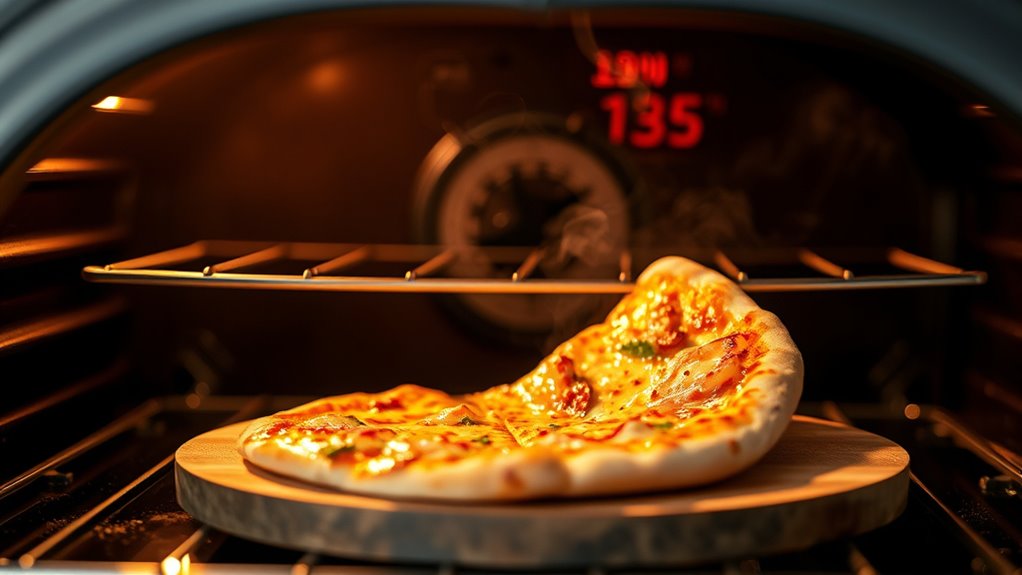
When reheating pizza, you want to use an oven temperature that crisps the crust without drying out the toppings. Setting your oven to around 375°F (190°C) hits that sweet spot. It’s hot enough to make the crust crispy again but gentle enough to keep the cheese melty and toppings juicy.
Preheat the oven fully before sliding your pizza in—that way, you get even heating. Avoid cranking the heat too high, as it can burn the crust before the inside warms properly. You also don’t want it too low, or the pizza ends up soggy and cold in spots.
Using a baking sheet or placing the pizza directly on the oven rack helps maintain that perfect texture while reheating.
How Long Should You Reheat Pizza in the Oven?
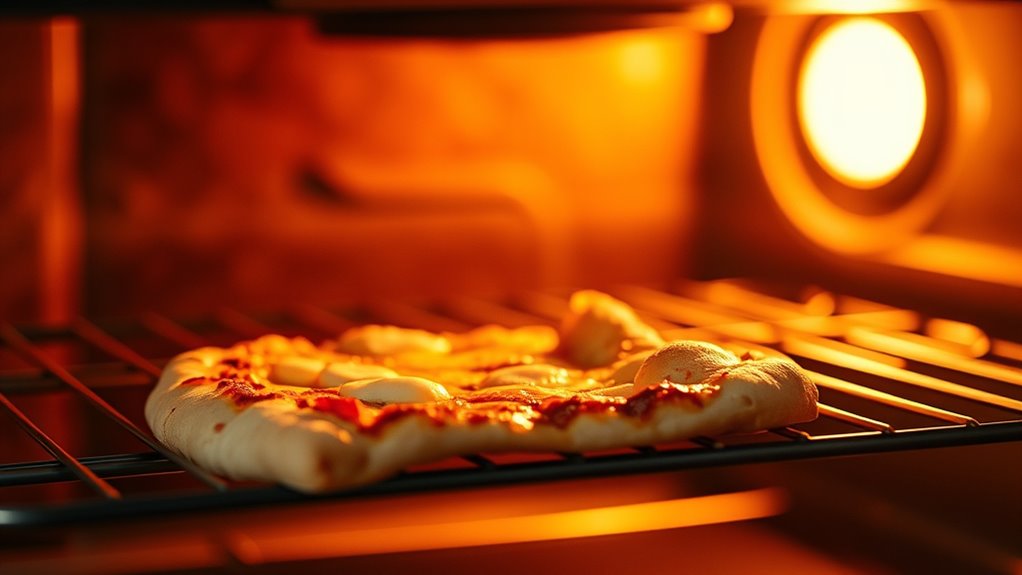
You’ll want to set your oven to the ideal temperature to reheat pizza evenly without drying it out. Typically, reheating for about 8 to 10 minutes works best to warm the crust and toppings thoroughly.
To keep the crust crispy, try placing the pizza directly on the oven rack or using a preheated baking sheet.
Ideal Oven Temperature
Although the ideal oven temperature for reheating pizza may vary slightly, setting your oven to 375°F (190°C) usually delivers the best balance between crispiness and thorough heating. This temperature guarantees the crust crisps up nicely without burning while warming the toppings evenly. If you set the oven too high, the crust might char before the cheese and toppings heat through.
On the other hand, a lower temperature can leave your pizza soggy or cold in the middle. Preheating the oven to 375°F gives you consistent results, allowing the heat to penetrate evenly. Using this temperature also helps retain the pizza’s original texture and flavor, making your leftover slice taste almost fresh.
Stick to 375°F for reliable, tasty reheated pizza every time.
Recommended Reheating Time
Setting your oven to the ideal temperature is just the first step; knowing how long to reheat your pizza guarantees it comes out perfectly heated without drying out or burning. Generally, you should reheat pizza at 375°F (190°C) for about 10 minutes. This timing works well for a regular slice, warming the cheese thoroughly and heating the toppings without overcooking.
If your pizza is thicker or loaded with extra toppings, you might need an extra 2-3 minutes. Keep an eye on the pizza during reheating to prevent burning. Avoid reheating for too long, as it can dry the crust and toughen the cheese.
Once the cheese bubbles slightly and the crust feels warm to the touch, your pizza is ready to enjoy.
Tips For Crispy Crust
When aiming for a crispy crust, reheating your pizza in the oven for about 8 to 10 minutes at 375°F (190°C) usually does the trick. To get that perfect crunch, place the pizza directly on the oven rack or a preheated baking sheet. Avoid using a microwave, as it often makes the crust soggy.
You can also lightly brush the crust with olive oil before reheating for extra crispiness. Keep an eye on the pizza after 8 minutes to ensure it doesn’t burn.
| Tip | Method | Result |
|---|---|---|
| Oven temperature | 375°F (190°C) | Crispy, evenly heated |
| Placement | Directly on rack | Crispy bottom crust |
| Preheat baking sheet | Yes | Even heat distribution |
| Olive oil | Light brush on crust | Enhanced crispiness |
How to Reheat a Single Slice vs. a Whole Pizza

When reheating a single slice, you’ll want to adjust the time and temperature to avoid drying it out. For a whole pizza, heating it evenly is key, so a slightly longer time at a moderate temperature works best.
Let’s explore the best methods for each to get your pizza tasting fresh again.
Reheating Single Slice
Although reheating a single slice might seem simpler than warming a whole pizza, it requires a slightly different approach to maintain the crust crisp and the toppings fresh. You want to avoid sogginess and uneven heating. Here’s how to do it right:
- Preheat your oven to 375°F (190°C). Place the slice directly on the oven rack or a baking sheet for even heat circulation.
- Heat for about 7-8 minutes. Keep an eye on it to prevent burning; the cheese should bubble slightly.
- Let it cool for a minute before eating, so the cheese sets and the slice preserves its texture.
This method guarantees your single slice tastes almost as good as when it was fresh, with a crispy crust and perfectly melted toppings.
Reheating Whole Pizza
Reheating a whole pizza requires a bit more attention than warming a single slice to guarantee every piece heats evenly without drying out. First, place the entire pizza directly on the oven rack or a preheated baking sheet to allow heat to circulate around the crust, ensuring it stays crispy. Avoid stacking slices or using a crowded pan, as this leads to uneven heating.
Keep the pizza uncovered so the crust doesn’t get soggy. Since the whole pizza takes longer to warm through, check periodically to prevent overcooking. Unlike a single slice that reheats quickly, the whole pizza demands patience and consistent heat distribution.
This approach helps you enjoy a reheated pie that tastes nearly as good as fresh.
Time and Temperature Tips
Since single slices and whole pizzas vary in size and thickness, you’ll need to modify the time and temperature accordingly to get the best results. Reheating a single slice requires less time and a slightly higher temperature to crisp the crust quickly without drying out the toppings. Whole pizzas need lower heat and more time to warm evenly without burning the edges.
Here are some tips to keep in mind:
- Single slice: Preheat your oven to 400°F (204°C) and heat for 5-7 minutes on a baking tray.
- Whole pizza: Set the oven to 350°F (177°C) and warm the pizza for 10-15 minutes.
- Check frequently: Keep an eye to avoid overcooking, adjusting time based on your oven’s performance.
These simple adjustments ensure your pizza tastes fresh and delicious every time.
Reheating Thin Crust vs. Deep-Dish Pizza: What’s Different?
When you heat thin crust and deep-dish pizza, you’ll notice they require different approaches to get the best results. Thin crust heats quickly and crisps up nicely, while deep-dish needs more time to warm evenly without drying out. Adjusting time and temperature is key.
| Aspect | Thin Crust |
|---|---|
| Oven Temp | 375°F (190°C) |
| Time | 5-7 minutes |
| Texture Goal | Crispy, slightly crunchy |
| Heating Focus | Quick, high heat |
| Cheese & Toppings | Reheat evenly, less time |
| Aspect | Deep-Dish |
| Oven Temp | 350°F (175°C) |
| Time | 10-15 minutes |
| Texture Goal | Warm inside, soft crust |
| Heating Focus | Slow, thorough heat |
| Cheese & Toppings | Avoid drying out |
How to Reheat Frozen Pizza Leftovers in the Oven
If you’ve stored leftover pizza in the freezer, you can bring it back to life with a few simple steps in the oven. First, preheat your oven to 375°F (190°C). This temperature heats the pizza evenly without drying it out.
Next, take the frozen slices out and place them directly on the oven rack or a baking sheet to allow the heat to circulate, ensuring a crispy crust. Finally, bake the pizza for about 10 to 15 minutes, checking halfway through to prevent burning. You’ll know it’s ready when the cheese is bubbly and the crust feels crisp.
This method keeps your frozen pizza tasty and fresh, saving you from soggy or unevenly reheated leftovers.
Should You Use Foil When Reheating Pizza?
You might wonder if using foil helps when reheating pizza in the oven. Foil can keep the crust soft and prevent toppings from drying out, but it can also trap steam and make the crust soggy.
Let’s weigh the benefits and drawbacks so you can decide what works best for your slice.
Benefits Of Using Foil
Although reheating pizza can sometimes dry it out, using foil can help maintain its moisture and improve the overall texture. When you wrap your pizza in foil, it traps steam, preventing the crust from becoming too hard or chewy.
Here are three key benefits of using foil when reheating pizza:
- Even Heating – Foil distributes heat evenly, so your pizza warms through without burning.
- Moisture Retention – It keeps the pizza moist, preserving the gooey cheese and tender toppings.
- Easy Cleanup – Using foil catches drips or melted cheese, making cleanup quicker and simpler.
Potential Drawbacks Of Foil
While foil offers clear benefits for reheating pizza, it’s important to take into account some potential drawbacks before deciding to use it every time. For one, foil can cause the crust to steam rather than crisp up, leaving your pizza less enjoyable if you prefer a crunchy base. Also, if you wrap the pizza too tightly, moisture gets trapped, making the slices soggy.
Another concern is environmental—foil isn’t the most eco-friendly option, so you might want to limit its use. Finally, if your oven uses microwaves or certain types of heating elements, foil can create sparks or damage the appliance, posing safety risks. Considering these points helps you decide when foil really works best for reheating your pizza.
How to Keep Your Pizza Crust Crispy When Reheating
If you want to enjoy leftover pizza without a soggy crust, reheating it properly is key. Here’s how to keep that crust crispy:
- Preheat your oven to 375°F (190°C). A hot oven helps crisp the crust quickly without drying out the toppings.
- Use a baking sheet or pizza stone. Place the pizza directly on it to allow heat to evenly crisp the bottom. Avoid foil, which traps moisture and softens the crust.
- Skip microwaving. It heats unevenly, making the crust chewy or soggy. If you must, use a skillet over medium heat instead.
How to Reheat Pizza With Extra Toppings Without Sogginess
When reheating pizza loaded with extra toppings, you’ll want to prevent moisture from making the crust soggy while ensuring the toppings heat evenly. Start by preheating your oven to 375°F (190°C). Place the pizza on a wire rack set over a baking sheet to allow air circulation under the crust, keeping it crisp.
If your toppings are particularly moist, like fresh tomatoes or mushrooms, gently pat them dry before reheating. Cover the pizza loosely with aluminum foil to retain heat without trapping steam, which causes sogginess. Heat the pizza for about 8-10 minutes, checking halfway to avoid overcooking.
This method keeps your crust crisp and toppings hot without turning your slice into a soggy mess.
Why Slow Reheating Beats High Heat for Pizza
Keeping your pizza crisp and evenly heated requires more than just high oven temperatures. When you reheat pizza slowly, you give the heat time to penetrate the crust and toppings without burning them. High heat might seem faster, but it often leaves you with a burnt crust and cold middle.
Here’s why slow reheating wins:
- Even Heating: Slow heat warms the pizza uniformly, preventing cold spots and soggy areas.
- Crispier Crust: Gradual warming dries out moisture gently, keeping the crust crunchy instead of tough or burnt.
- Better Flavor: Low heat preserves the toppings’ texture and taste, avoiding the rubbery or burnt flavors high heat can cause.
How to Tell When Your Reheated Pizza Is Perfectly Done
Although reheating pizza seems straightforward, knowing exactly when it’s perfectly done can make all the difference. You want crispy crust without drying out the toppings or cheese. Check for bubbling cheese and a golden crust as your first cues.
If the crust feels firm but not hard when you press it lightly, your pizza is ready to enjoy.
Here’s a quick guide to help you spot the perfect reheated slice:
| Indicator | What to Look For |
|---|---|
| Cheese | Melted, bubbly, slightly browned |
| Crust | Crispy edges, firm but not tough |
| Toppings | Warm throughout, no sogginess |
Use these signs to avoid over- or under-heating your pizza.
What to Avoid When Reheating Pizza in the Oven
Because reheating pizza in the oven seems simple, you might overlook common mistakes that ruin its texture and flavor. To enjoy your slice perfectly, avoid these pitfalls:
- Overheating: Turning the oven too high or leaving pizza in too long dries out the crust and burns toppings.
- Skipping Preheating: Not preheating the oven leads to uneven heating, making some parts soggy while others stay cold.
- Using Foil Directly on the Rack: Wrapping pizza tightly in foil traps steam, resulting in a limp crust instead of a crispy one.
Frequently Asked Questions
Can You Reheat Pizza in a Toaster Oven Instead of a Conventional Oven?
Yes, you can reheat pizza in a toaster oven. Just set it to 350°F, place the pizza inside, and heat for about 5-7 minutes.
It’ll crisp up nicely without drying out your slice.
Is It Safe to Reheat Pizza Multiple Times?
You shouldn’t reheat pizza multiple times because bacteria can double every 20 minutes in the danger zone. Doing it once is generally safe, but reheating repeatedly increases food poisoning risks, so avoid it to stay healthy.
How Does Reheating Pizza Affect Its Nutritional Value?
Reheating pizza slightly reduces some heat-sensitive nutrients, but you won’t lose much overall.
You’ll still get most of the calories, fats, and proteins, so reheating won’t drastically affect its nutritional value.
Can You Reheat Pizza Directly on the Oven Rack?
Yes, you can reheat pizza directly on the oven rack. You’ll get a crispier crust, a warmed-up topping, and melted cheese.
Just place it carefully, watch it closely, and enjoy that perfect texture and flavor!
What Are the Best Storage Methods Before Reheating Pizza?
You should store pizza in an airtight container or wrap it tightly with aluminum foil or plastic wrap. Keep it in the fridge to maintain freshness and prevent sogginess before reheating for the best taste and texture.
Conclusion
When reheating pizza, remember that slow and steady wins the race. Using a moderate oven temperature guarantees your crust stays crispy and your toppings don’t turn soggy. Whether it’s a single slice or a whole pie, taking your time brings out the best flavors.
Avoid rushing with high heat, and you’ll enjoy pizza that tastes fresh and delicious every time. So, heat it right, and savor every bite like it’s your first! For the best results, follow these tips on how long to reheat pizza in the oven to keep it crispy and flavorful.