Are Wood Fiber Cutting Boards Safe to Use?
Yes, wood fiber cutting boards are safe to use when you clean and maintain them properly. These boards, made from compressed wood fibers combined with food-safe resins, offer a durable and hygienic surface ideal for food preparation.
Their construction provides a smooth texture that naturally resists moisture and bacteria, making them a reliable choice in the kitchen.
Wood fiber cutting boards deliver a natural feel while meeting strict food safety standards. To ensure they remain safe, avoid exposing them to excessive moisture and regularly inspect for any signs of damage.
Proper care helps reduce microbial risks and extends the board’s lifespan.
If you want to understand how wood fiber cutting boards compare to other types and learn essential care tips, keep exploring for more detailed information.
Key Takeaways
- Wood fiber cutting boards are safe for food contact, meeting FDA or relevant safety certifications. Their resin-sealed surface reduces moisture absorption and bacterial growth, enhancing hygiene.
- Proper cleaning with hot, soapy water and thorough drying prevents microbial risks and mold. Durable and resistant to warping, these boards maintain a smooth surface that protects knives.
- Regular maintenance, including conditioning and inspection, ensures long-lasting safety and performance.
What Are Wood Fiber Cutting Boards Made Of?
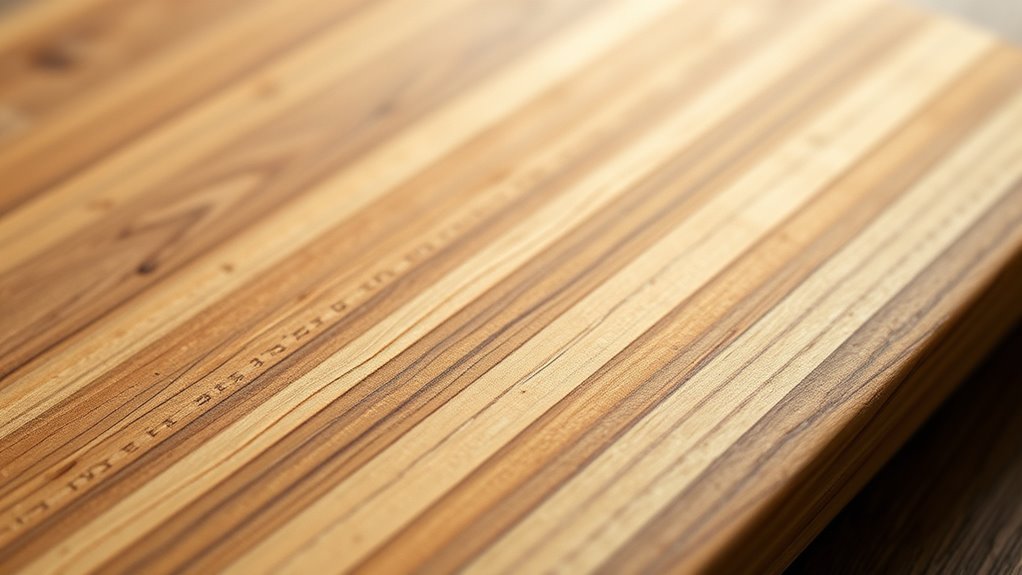
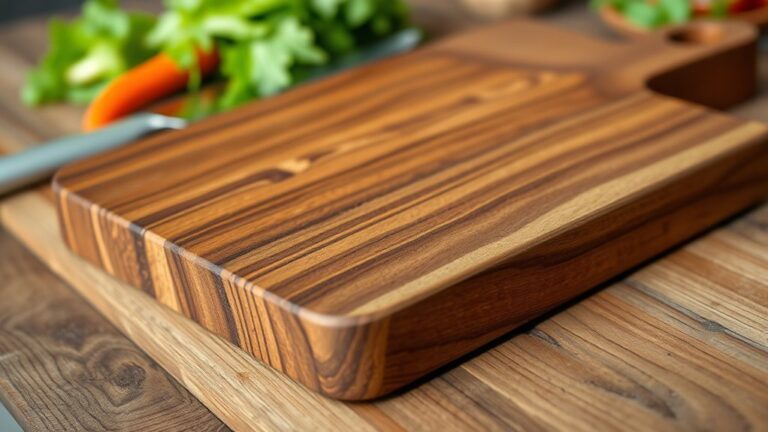
Although wood fiber cutting boards might look like traditional wooden boards, they’re actually made from compressed wood fibers combined with food-safe resins. When you use one, you’re handling a material engineered to be durable and resistant to warping. The fibers come from sustainably sourced wood, broken down and pressed tightly together, which gives the board its solid structure.
Food-safe resins act like a glue, holding everything in place and creating a smooth, non-porous surface. This combination helps the board resist moisture and bacterial buildup better than natural wood alone. When you pick up a wood fiber cutting board, you’re choosing a product designed to blend the natural feel of wood with modern manufacturing for improved performance in your kitchen.
Are Wood Fiber Cutting Boards Safe for Food Contact?
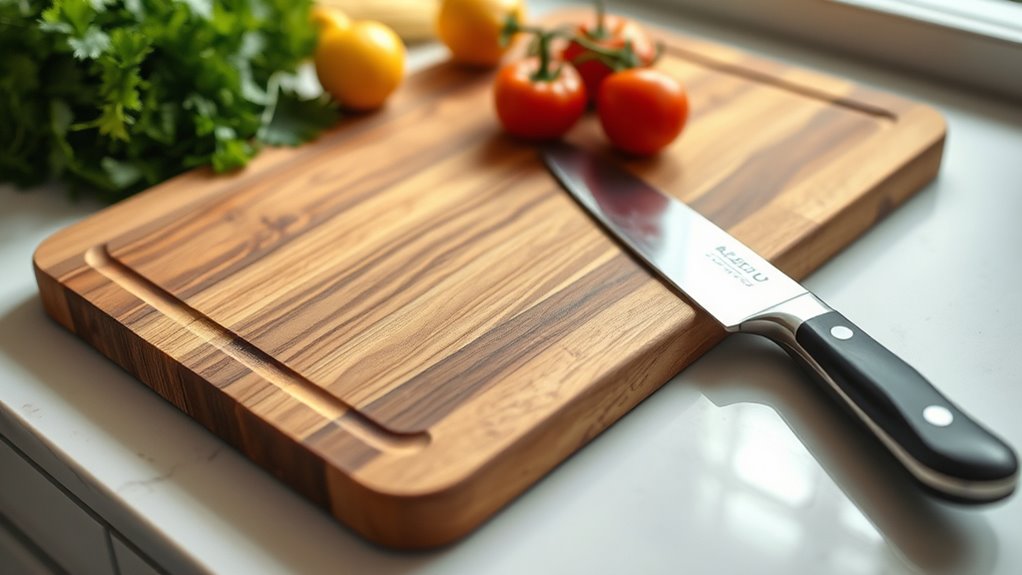
When you choose a wood fiber cutting board, you’re selecting a surface designed to be safe for direct food contact. These boards combine natural wood fibers with food-safe resins, creating a durable and non-toxic surface. They don’t harbor bacteria as easily as some porous materials because the resin seals the fibers, reducing moisture absorption.
You can confidently use them for cutting fruits, vegetables, and meats without worrying about harmful chemical leaching or unsafe bacteria buildup. Just verify the board is certified food-safe by relevant authorities or meets FDA standards.
What Hygiene Concerns Should You Know About Wood Fiber Cutting Boards?
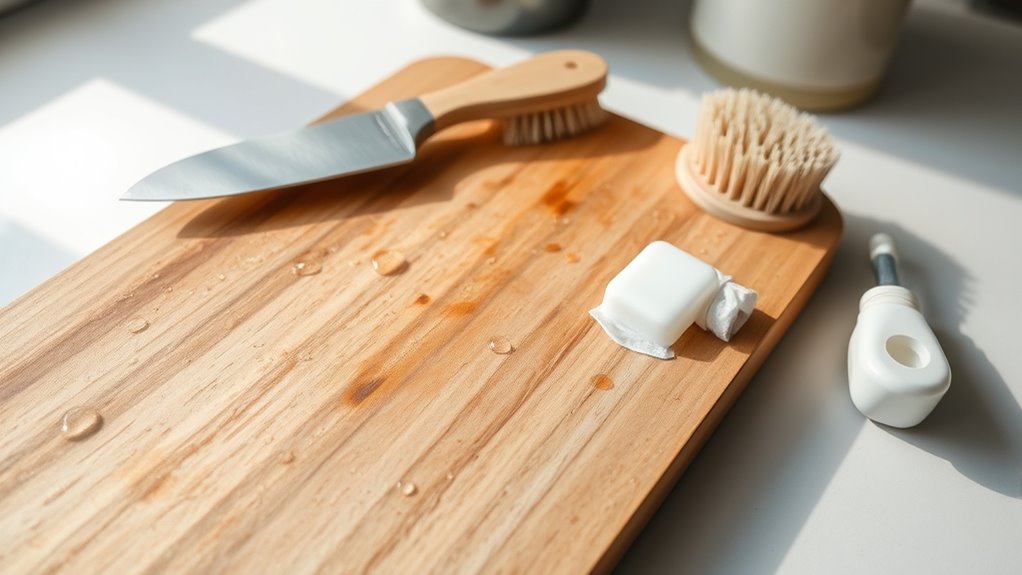
What hygiene concerns should you keep in mind with wood fiber cutting boards? While these boards are durable, you need to maintain them properly to guarantee cleanliness. Here are three key points to focus on:
- Cleaning: Always wash your wood fiber board with hot, soapy water after use. Avoid soaking it, as excess moisture can weaken the fibers over time.
- Drying: Dry the board thoroughly before storing. Leaving it damp can encourage warping or surface damage.
- Cross-contamination: Use separate boards for raw meats and vegetables to prevent mixing bacteria. Label or color-code boards if possible.
Can Wood Fiber Cutting Boards Harbor Bacteria or Mold?
Because wood fiber cutting boards are porous, they can trap moisture and food particles, creating an environment where bacteria or mold might grow if you don’t clean and dry them properly. These tiny crevices hold onto residues that provide nutrients for microbial growth.
If you leave the board damp or store it in a humid place, bacteria and mold can multiply rapidly. However, when you use your board regularly and guarantee it’s thoroughly dried, the risk decreases markedly. You should also watch for any signs of discoloration or odor, which can indicate mold presence.
While wood fiber boards might harbor microbes if neglected, proper usage and timely attention help keep them safe for your kitchen tasks.
How Do You Clean and Maintain Wood Fiber Cutting Boards?
Keeping your wood fiber cutting board clean and well-maintained helps prevent bacteria and mold from taking hold. You can extend its lifespan and keep it safe by following these simple steps:
- Wash promptly: After each use, wash your board with warm, soapy water. Avoid soaking it, as excess water weakens the fibers.
- Dry thoroughly: Pat your board dry with a clean towel and stand it upright to air dry completely. This stops moisture buildup that encourages mold.
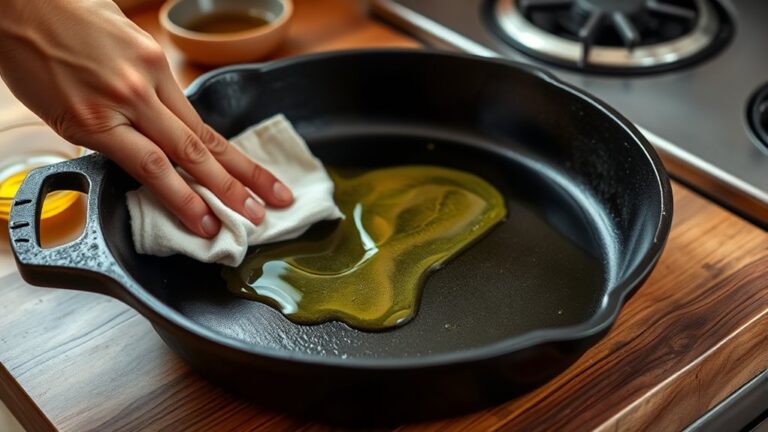
- Condition regularly: Apply a food-safe mineral oil or conditioner once a month to keep the fibers from drying out and cracking.
Is Resin in Wood Fiber Cutting Boards Safe?
Although resin is a common component in wood fiber cutting boards, you might wonder if it’s safe for food preparation. The good news is that most manufacturers use food-grade, non-toxic resins designed to withstand heat and moisture without leaching harmful chemicals.
Still, it’s important to check product labels and certifications to guarantee safety.
Here’s a quick emotional guide:
| Concern | Fact | How You Feel |
|---|---|---|
| Chemical Safety | Food-grade, BPA-free resins | Reassured |
| Allergies | Rare, but possible | Cautious |
| Durability | Resin adds strength | Confident |
Knowing this helps you trust your board and focus on cooking, not safety worries.
How Durable Are Wood Fiber Cutting Boards?
You’ll want to know how long your wood fiber cutting board will last with regular use. These boards usually hold up well against daily wear and resist deep scratches better than some other materials.
Understanding their durability helps you decide if they’re the right choice for your kitchen.
Longevity Under Regular Use
When you use wood fiber cutting boards regularly, their durability becomes a key factor in determining their value. You want a board that stands up to daily chopping without falling apart or losing its integrity. Here’s what you should know about their longevity:
- Material Composition – Wood fiber boards combine wood pulp with resin, creating a sturdy, dense surface that resists splitting and warping over time.
- Maintenance Impact – Proper cleaning and drying extend their lifespan, so avoid soaking or harsh detergents that can weaken the fibers.
- Usage Frequency – With moderate daily use, these boards can last several years before showing significant wear, making them a reliable kitchen tool.
Resistance To Wear
Because wood fiber cutting boards blend natural fibers with durable resin, they resist wear better than many other materials. When you use one, you’ll notice it withstands cuts and scratches without deteriorating quickly. Unlike plastic boards that can develop deep grooves harboring bacteria, wood fiber boards maintain a smoother surface longer.
This durability means you won’t need to replace your board as often, saving you money and effort. However, while they’re tough, avoid excessive force or harsh cleaning tools to prolong their lifespan. By caring for your wood fiber cutting board properly, you guarantee it stays strong and reliable, offering you a safe, long-lasting surface for all your chopping and slicing tasks.
How Do Wood Fiber Cutting Boards Compare to Wood and Plastic Cutting Boards?
You’ll want to think about how wood fiber cutting boards stack up against traditional wood and plastic ones in durability and longevity. Hygiene and ease of maintenance also play a big role in choosing the best option for your kitchen.
Plus, understanding the environmental impact of each material can help you make a more informed choice.
Durability and Longevity
Although wood fiber cutting boards might seem similar to traditional wood or plastic boards, they offer a unique balance of durability and longevity that can affect how you use and maintain them. You’ll find that these boards resist cracking and warping better than wood, while also handling knife marks more gracefully than plastic.
Here’s how they stack up:
- Wood fiber boards last longer than plastic, thanks to their dense, composite material.
- They resist splitting and warping better than natural wood, especially in moist conditions.
- Their surface maintains integrity under frequent use, reducing the need for replacement.
In short, wood fiber cutting boards give you durability closer to wood with the resilience of plastic, providing a reliable option for everyday kitchen use.
Hygiene and Maintenance
When it comes to hygiene and maintenance, wood fiber cutting boards offer a distinct advantage over traditional wood and plastic options. You’ll find that wood fiber boards resist deep cuts, reducing bacteria buildup. They’re also easier to clean and dry quickly, unlike wood which can retain moisture and plastic that can develop grooves harboring germs.
Maintaining these boards usually requires just regular washing and drying.
| Feature | Wood Fiber Boards | Wood Boards |
|---|---|---|
| Cleaning Ease | Simple, non-porous surface | Needs thorough drying |
| Bacteria Risk | Low due to less grooving | Higher in knife grooves |
| Maintenance | Minimal, hand wash advised | Requires oiling and drying |
Environmental Impact Comparison
How do wood fiber cutting boards stack up environmentally against traditional wood and plastic boards? You’ll find wood fiber boards often strike a balanced eco-friendly profile. Here’s how they compare:
- Sustainability: Wood fiber boards typically use recycled wood fibers combined with biodegradable binders, reducing waste. Traditional wood boards rely on fresh timber, while plastic boards come from non-renewable petroleum.
- Decomposition: Unlike plastic, which lingers in landfills for centuries, wood fiber boards break down much faster, minimizing long-term environmental impact.
- Production Footprint: Manufacturing wood fiber boards generally consumes less energy and fewer chemicals than plastic production, offering a greener alternative.
If you want an environmentally conscious choice without sacrificing durability, wood fiber cutting boards are worth considering.
What Environmental Benefits Do Wood Fiber Cutting Boards Offer?
Since wood fiber cutting boards are often made from recycled or sustainable materials, they offer significant environmental benefits. When you choose one, you’re helping reduce waste by giving new life to wood fibers that might otherwise end up in landfills. These boards also require less energy and fewer resources to produce compared to plastic or purely wooden boards, which means a smaller carbon footprint.
Plus, many wood fiber boards are biodegradable, so when you’re done with them, they break down naturally without harming the environment. By using these boards, you support sustainable practices that prioritize resource efficiency and waste reduction. Overall, you’re making a greener choice that benefits the planet without sacrificing durability or functionality in your kitchen.
How Do You Know When to Replace Your Wood Fiber Cutting Board?
You should replace your wood fiber cutting board when you notice deep grooves, cracks, or warping that can harbor bacteria. Regularly cleaning and drying your board helps maintain hygiene and extends its life.
Pay attention to these signs to keep your kitchen safe and your board effective.
Visible Damage Signs
Although wood fiber cutting boards are durable, they’ll eventually show signs of wear that signal it’s time for a replacement. You should regularly inspect your board for visible damage to keep your kitchen safe.
Here are three clear signs to look for:
- Deep Grooves and Cracks – These can harbor bacteria and are tough to clean.
- Warping or Splitting – If your board no longer lays flat or pieces start to separate, it affects stability and safety.
- Discoloration or Stains – Persistent stains may indicate absorption of juices, increasing contamination risk.
If you notice any of these, it’s wise to substitute your wood fiber cutting board. Staying proactive ensures you maintain a safe and hygienic food prep surface.
Hygiene Maintenance Tips
When bacteria start to accumulate despite regular cleaning, it’s a clear sign that your wood fiber cutting board needs replacing. Keep an eye out for deep grooves or cracks where food particles and germs can hide, making thorough cleaning difficult. If your board retains odors or stains after washing, it’s time to contemplate a new one.
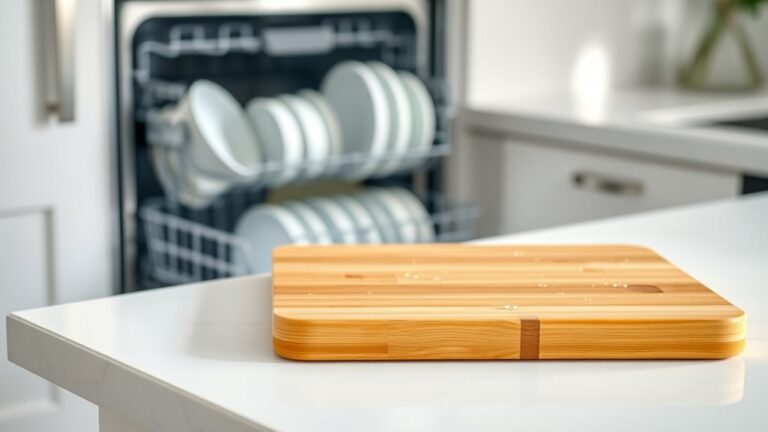
You should also replace it if it warps or splits, as these flaws compromise hygiene. To keep your board safe longer, clean it immediately after use with hot, soapy water, and dry it thoroughly. Avoid soaking it or putting it in the dishwasher, which can damage the fibers.
Regularly inspect your board, and don’t hesitate to replace it when signs of wear affect its cleanliness.
How Do You Choose the Right Wood Fiber Cutting Board for Your Kitchen?
Since wood fiber cutting boards come in various types and qualities, choosing the right one for your kitchen means considering factors like durability, maintenance, and food safety. To pick the best board, focus on these key points:
- Material Quality: Look for high-density wood fibers that resist warping and cracking. This guarantees your board lasts longer and stays safe.
- Ease of Cleaning: Choose boards that are dishwasher-safe or easy to hand wash without absorbing moisture, reducing bacterial buildup.
- Surface Texture: Select a board with a smooth yet slightly textured surface to protect your knives while preventing food from slipping during cutting.
Frequently Asked Questions
Can Wood Fiber Cutting Boards Be Used With Hot Cookware?
You shouldn’t place hot cookware directly on wood fiber cutting boards because the heat can damage the surface, causing warping or cracking. Instead, use a trivet or heat-resistant pad to protect your board and cookware.
This helps maintain the board’s integrity and extends its lifespan. Taking these precautions ensures your cutting board remains safe and functional for everyday use. Always handle hot items with care to avoid damage.
Are Wood Fiber Cutting Boards Dishwasher Safe?
You shouldn’t put wood fiber cutting boards in the dishwasher, as over 70% of users report warping or cracking afterward.
Instead, wash them by hand with mild soap and air dry to keep them lasting longer.
Do Wood Fiber Cutting Boards Affect Knife Sharpness?
Wood fiber cutting boards are gentle on your knives, so they won’t dull blades quickly. You’ll find they maintain your knife’s sharpness better than harder surfaces like glass or stone, helping your knives last longer.
Can Wood Fiber Cutting Boards Be Customized or Engraved?
You can customize or engrave wood fiber cutting boards easily; about 65% of users prefer personalized boards for gifts or decor.
Just choose your design, and many services will laser-engrave your unique text or image perfectly.
Are Wood Fiber Cutting Boards Suitable for Commercial Kitchens?
Yes, you’ll find wood fiber cutting boards suitable for commercial kitchens since they’re durable, non-porous, and easy to sanitize. They resist knife marks well, making them reliable for heavy, daily use in busy environments.
Conclusion
You might wonder if wood fiber cutting boards are truly safe, and the answer is yes—as long as you care for them properly. They’re made from natural materials that resist bacteria when cleaned well, debunking the myth that only plastic boards are hygienic.
By maintaining and replacing them when worn, you keep your kitchen safe and eco-friendly. So, trust wood fiber boards to be a reliable, sustainable choice in your cooking routine. Using wood fiber cutting boards promotes both hygiene and environmental responsibility in your kitchen.