How to Cook a Skirt Steak in a Skillet
To cook skirt steak in a skillet, start by selecting a fresh, well-marbled outside skirt steak about ½ inch thick. This cut is perfect for quick, flavorful meals thanks to its rich beefy taste and tender texture when prepared correctly.
Pat the steak dry to ensure a good sear, then season generously with kosher salt and pepper, adding your favorite spices for extra flavor.
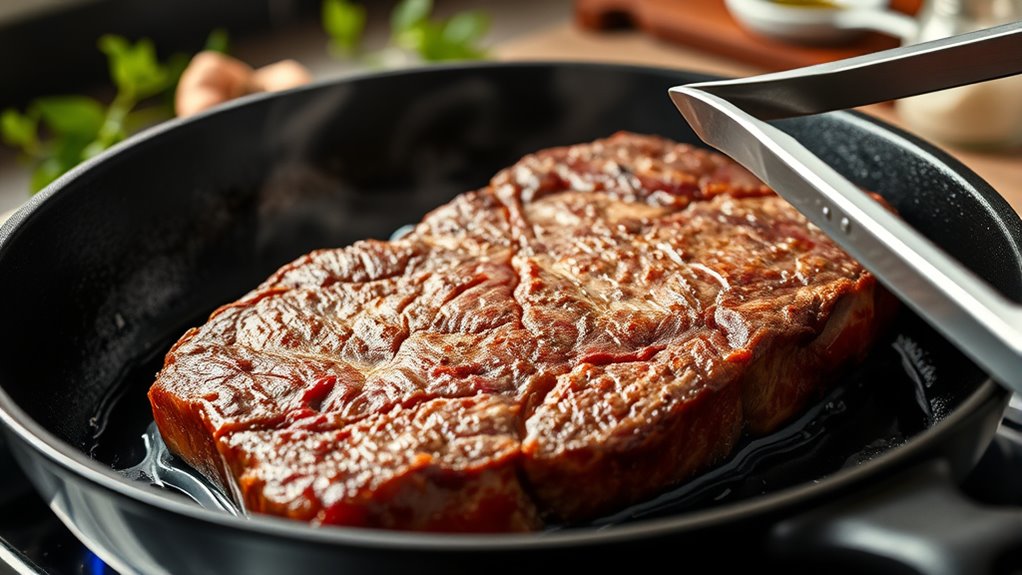
Heat a heavy skillet over medium-high heat until it’s smoking hot. Add a small amount of oil, then place the steak in the pan.
Sear the steak, flipping once or twice to develop an even, caramelized crust on both sides.
After cooking, let the skirt steak rest for a few minutes to retain its juices.
Slice thinly across the grain for maximum tenderness and enjoy.
Keep reading for simple recipes and pro tips to achieve the best results every time.
Key Takeaways
- Preheat a heavy skillet (preferably cast iron) on medium-high until very hot before cooking the skirt steak.
- Season the steak generously with kosher salt, black pepper, and optional spices after patting it dry.
- Lightly oil the skillet with a high-smoke-point oil and sear the steak, flipping only once or twice to develop a crust.
- Cook skirt steak quickly due to its thinness, using visual cues and touch to gauge doneness without piercing.
- Let the steak rest before slicing thinly against the grain at a slight diagonal for maximum tenderness and flavor.
Why Skirt Steak Cooks Perfectly in a Skillet
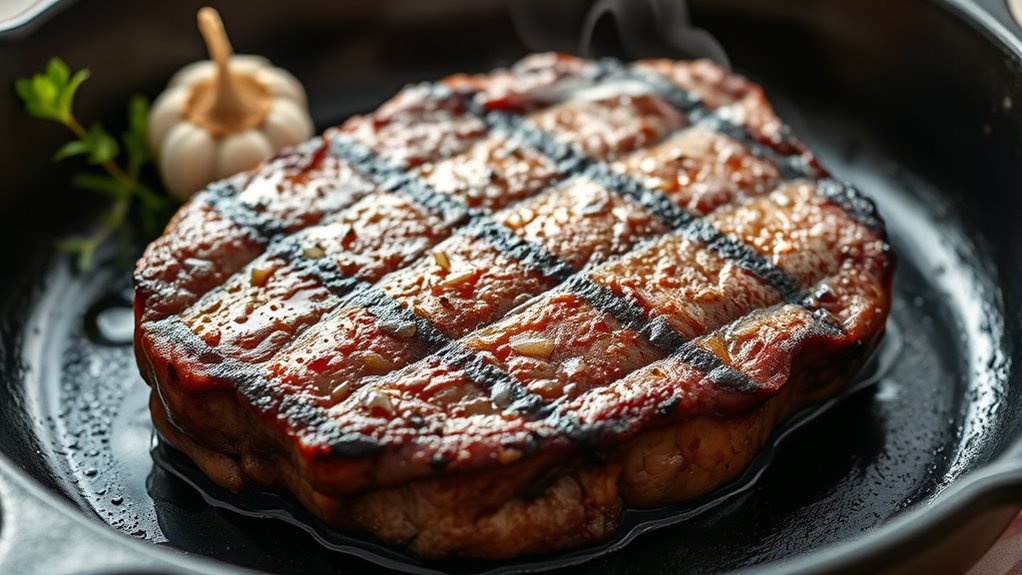
Because skirt steak is thin and cooks quickly, a skillet provides the perfect environment to sear it evenly and lock in its rich flavor. When you heat the skillet until it’s smoking hot, you get that intense, direct heat that creates a delicious crust on the steak’s surface. This crust seals in juices, keeping the meat tender and flavorful.
Plus, the skillet’s flat surface guarantees the steak cooks uniformly, avoiding those dry edges you might get on a grill. You can easily control the heat, flipping the steak just once or twice for consistent doneness. Cooking skirt steak in a skillet also allows you to add aromatics like garlic or herbs directly to the pan, infusing extra flavor as the steak cooks.
How to Choose the Best Skirt Steak
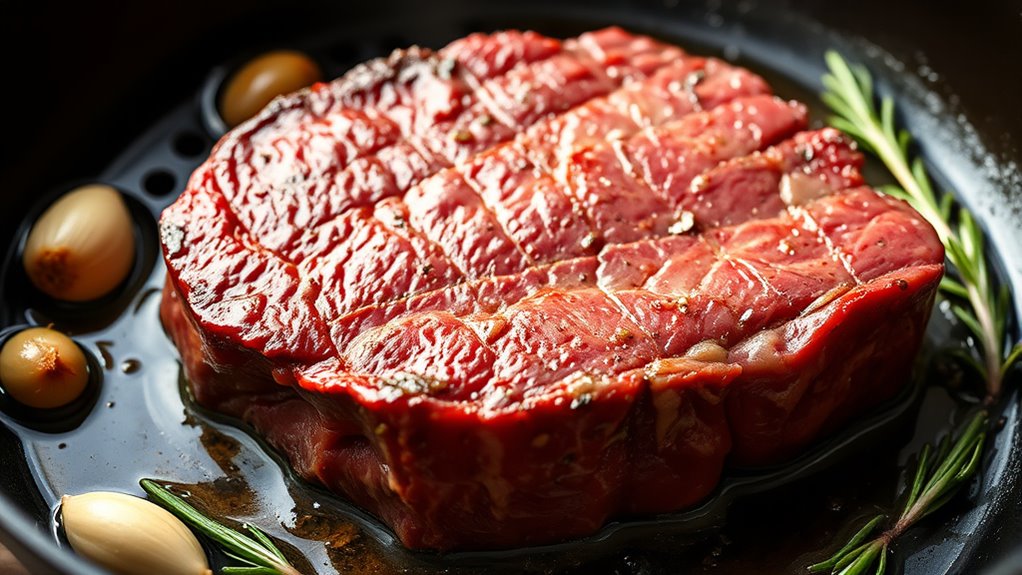
How can you tell if a skirt steak is the best choice at the market? Start by looking for a cut with a rich, deep red color. It should have good marbling—thin streaks of fat throughout the meat—which adds flavor and tenderness.
Avoid steaks that look pale or have dark spots. Also, check the texture; the meat should feel firm but not hard.
Keep these tips in mind when choosing your skirt steak:
- Look for uniform thickness to ensure even cooking.
- Choose steaks labeled “outside skirt” for a more tender cut.
- Avoid any meat with an unpleasant smell.
- Pick steaks that are about 1/2 inch thick for perfect skillet cooking.
This way, you’ll get a skirt steak that’s flavorful and cooks evenly.
How to Season Skirt Steak for Maximum Flavor
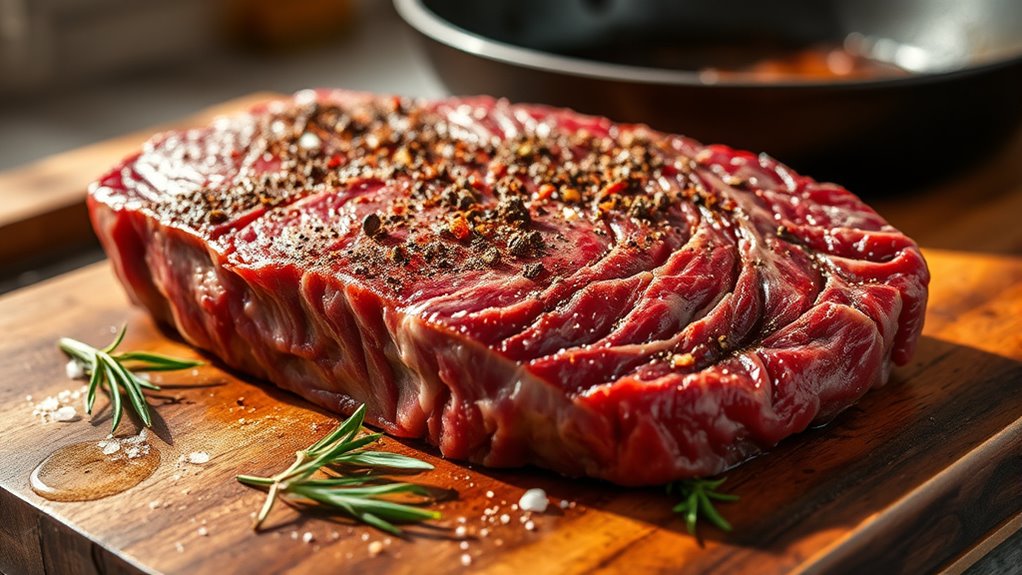
Once you’ve selected a high-quality skirt steak, the next step is to enhance its natural flavors with the right seasoning. Start with a simple base of kosher salt and freshly ground black pepper, applying them generously on both sides. This basic combo brings out the beefy taste without overpowering it.
For extra depth, add garlic powder, smoked paprika, or a pinch of cumin. These spices complement the steak’s robust flavor. Don’t forget to pat the steak dry before seasoning to guarantee the spices stick well.
Let the seasoned steak rest at room temperature for about 20-30 minutes; this allows the salt to penetrate the meat, boosting tenderness and juiciness. Keep it straightforward and bold to maximize flavor without masking the steak’s natural essence.
How to Preheat and Prepare Your Skillet for Skirt Steak
Before you cook your skirt steak, you need to properly preheat and prepare your skillet to achieve a perfect sear. Start by choosing a heavy-bottomed skillet, like cast iron, which retains heat well. Place the skillet on medium-high heat and let it warm up for about 5 minutes until it’s very hot.
You’ll know it’s ready when a drop of water sizzles and evaporates instantly. Next, lightly coat the skillet with a high-smoke-point oil, such as canola or avocado oil, to prevent sticking without burning.
Here’s how to prepare your skillet:
- Use a dry skillet; moisture hinders searing
- Preheat on medium-high heat for even cooking
- Add just enough oil to lightly coat the surface
- Avoid overcrowding to maintain temperature
This prep sets you up for a beautifully seared skirt steak.
How to Sear and Flip Skirt Steak for Even Cooking
You want to get a perfect sear on your skirt steak to lock in flavor and juices. Make sure your skillet is hot enough before placing the steak down, and resist the urge to flip it too soon.
Timing your flips right will help cook the steak evenly without drying it out.
Achieving Perfect Sear
Although skirt steak cooks quickly, getting a perfect sear requires high heat and careful timing. You want a crust that locks in flavor while keeping the inside juicy. Start by preheating your skillet until it’s smoking hot.
Avoid overcrowding the pan, or the steak will steam instead of sear. When placing the steak, press it down firmly to guarantee full contact with the pan.
To help you achieve that flawless sear:
- Use an oil with a high smoke point, like canola or avocado.
- Let the steak come to room temperature before cooking.
- Resist moving or flipping the steak too soon.
- Listen for a steady sizzle—that’s your cue the crust is forming.
Mastering these steps sets you up for steak perfection.
Timing the Flips
Once the steak has developed a deep, golden crust on one side, it’s time to flip it carefully to cook evenly without losing that sear. Use tongs to turn the steak gently, avoiding piercing the meat and letting precious juices escape. Aim to flip only once or twice to maintain a consistent crust.
After flipping, let the other side cook undisturbed for about the same duration as the first, usually 2 to 3 minutes depending on thickness and heat. Keep an eye on the steak’s edges for signs of doneness, like slight curling or browning.
How to Tell When Your Skirt Steak Is Done: No Thermometer Needed
You don’t need a thermometer to know when your skirt steak is done. Pay attention to the color changes, feel the texture with your fingers, and watch the juices that come to the surface.
These simple cues will help you nail the perfect cook every time.
Visual Color Changes
A skirt steak’s color changes provide clear clues about its doneness without needing a thermometer. As you cook, watch how the steak’s surface and interior hues evolve. These visual signals help you decide when to pull the steak off the heat.
- Rare: The steak is bright red in the center with a cool interior.
- Medium-rare: Look for a warm red center with pinkish edges.
- Medium: The center turns light pink, surrounded by browned edges.
- Well-done: The steak loses most pink, becoming uniformly brown or gray.
Touch and Texture
Although visual cues are helpful, your sense of touch offers an equally reliable way to judge when your skirt steak is done. Press the center of the steak with your finger or tongs. A rare steak feels soft and spongy, while a medium-rare steak offers slight resistance but still springs back.
As the steak cooks further, it becomes firmer and less springy—medium will feel noticeably springier than medium-well, which is quite firm. Avoid pressing too hard; gentle pressure is best for gauging doneness. You can also try the finger test: compare the steak’s firmness to the fleshy area beneath your thumb when you touch your thumb to different fingers.
With practice, you’ll confidently tell doneness by touch alone, no thermometer needed.
Juices as Indicators
When cooking skirt steak, paying attention to the color of the juices that seep from the meat can help you determine its doneness without a thermometer. As the steak cooks, juices will start to appear on the surface, giving you visual clues. Clear or slightly pink juices usually indicate medium to well-done, while red or bright pink juices mean the steak is rare to medium-rare.
Here’s what to watch for:
- Bright red juices: Rare, very juicy and soft
- Pinkish juices: Medium-rare to medium, tender with some firmness
- Clear juices: Medium-well to well-done, firmer texture
- Little to no juices: Overcooked, likely dry
Keep an eye on these signs to cook your skirt steak perfectly every time.
How to Rest Skirt Steak to Keep It Juicy
To keep your skirt steak juicy, you’ll want to let it rest immediately after cooking. Remove the steak from the skillet and place it on a cutting board or plate. Tent it loosely with aluminum foil to retain heat without trapping steam, which could make the crust soggy.
Resting allows the juices, pushed to the center by the heat, to redistribute evenly throughout the meat. If you cut into the steak too soon, those flavorful juices will spill out, leaving it dry. Typically, resting for about 5 to 10 minutes works best for skirt steak.
Use this time to prepare any finishing touches or sides. When you’re ready, you’ll have a tender, juicy steak that’s full of flavor and moisture.
How to Slice Skirt Steak for Tender, Flavorful Bites
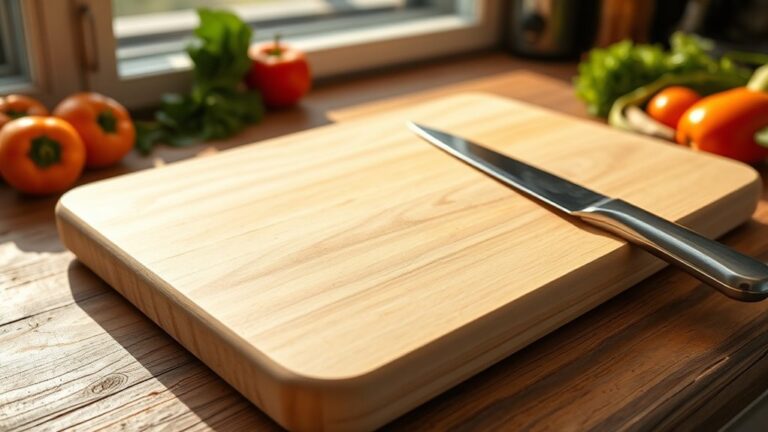
Once your skirt steak has rested and the juices have settled, slicing it correctly becomes key to maximizing tenderness and flavor. Skirt steak has long muscle fibers, so cutting against the grain breaks these fibers, making each bite easier to chew.
Here’s how to slice it right:
- Identify the direction of the grain—look for the lines running through the meat.
- Use a sharp knife to make clean, confident cuts.
- Slice the steak thinly, about ¼-inch thick, for the best texture.
- Cut across the grain at a slight diagonal to increase surface area and tenderness.
Following these steps ensures every bite is tender, juicy, and full of flavor, elevating your skillet-cooked skirt steak experience.
Easy Skillet Skirt Steak Recipes to Try Tonight
Although skirt steak shines on its own, you can easily elevate it with simple skillet recipes that bring out bold flavors and quick cooking times. Try a garlic-lime marinade by mixing minced garlic, lime juice, olive oil, and chili flakes, then sear the steak for a zesty kick.
Or, whip up a classic peppercorn sauce by deglazing the skillet with brandy, adding cream and crushed peppercorns for a rich finish. For something lighter, sauté the skirt steak with fresh herbs like rosemary and thyme, then finish with a squeeze of lemon.
These recipes are straightforward, letting you cook skirt steak perfectly while keeping prep minimal. You’ll have a delicious, restaurant-quality meal ready tonight without fuss.
Tips for Serving and Storing Skirt Steak Leftovers
When serving skirt steak leftovers, you’ll want to pair them with fresh sides to keep the flavors balanced. Make sure to store any extras in an airtight container and refrigerate promptly to maintain freshness. Proper handling will help you enjoy your steak just as much the next day.
Best Serving Suggestions
How can you make the most of your skirt steak after cooking? Serving it right enhances every bite, and leftovers can be just as delicious. Slice the steak thinly across the grain to keep it tender and juicy.
Here are some easy ways to serve it:
- Toss slices into a fresh salad with avocado and cherry tomatoes for a light, healthy meal.
- Use strips in fajitas with sautéed peppers and onions for a quick dinner.
- Make a hearty sandwich with arugula, mustard, and crusty bread.
- Add leftover steak to a stir-fry with your favorite veggies and sauce.
These suggestions help you enjoy your skirt steak’s flavor and texture long after it’s cooked.
Proper Leftover Storage
Enjoying your skirt steak beyond the first meal means knowing the best way to store your leftovers. First, let the steak cool to room temperature but don’t leave it out for more than two hours. Wrap it tightly in aluminum foil or plastic wrap to keep air out, then place it in an airtight container.
Store it in the refrigerator for up to three days. When you’re ready to eat, reheat gently in a skillet over low heat or use the microwave on a lower power setting to avoid drying it out. If you won’t eat the leftovers soon, freeze the steak in a freezer-safe bag for up to three months.
Thaw it slowly in the fridge for best texture and flavor.
Frequently Asked Questions
Can I Marinate Skirt Steak Overnight for Better Flavor?
Yes, you can marinate skirt steak overnight to boost flavor and tenderness. Just make sure your marinade has acid, like vinegar or citrus, to break down fibers without making the meat mushy.
What Side Dishes Pair Best With Skillet-Cooked Skirt Steak?
Picture vibrant roasted vegetables and creamy mashed potatoes beside your sizzling skirt steak.
You’ll want crisp salads or garlic butter mushrooms to balance rich flavors, helping you enjoy every juicy, tender bite with perfect harmony on your plate.
How Long Can Cooked Skirt Steak Be Safely Refrigerated?
You can safely refrigerate cooked skirt steak for 3 to 4 days. Make sure to store it in an airtight container or tightly wrapped to maintain freshness and prevent contamination.
Always reheat it properly before eating.
Is Skirt Steak Suitable for Grilling Instead of Skillet Cooking?
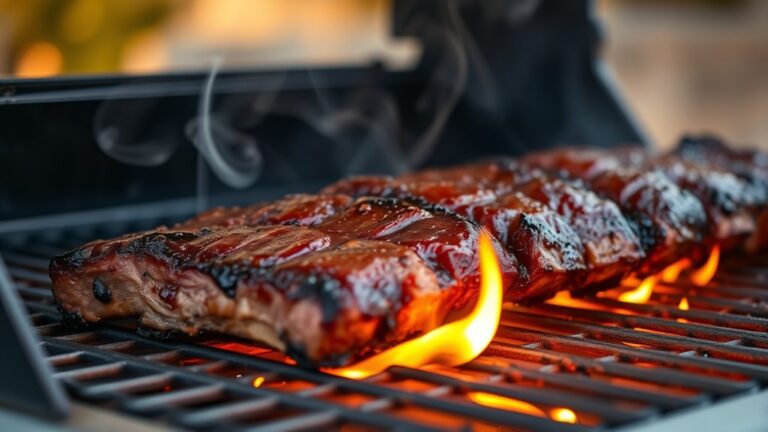
You can definitely grill skirt steak instead of using a skillet. While a skillet gives you control over searing, grilling adds smoky flavor and char marks, making it perfect for outdoor cooking and enhancing its bold, beefy taste.
Can I Use Cast Iron or Non-Stick Skillets for Cooking Skirt Steak?
You can use both cast iron and non-stick skillets, but cast iron’s better for high heat and searing. It holds heat well, giving your skirt steak a delicious crust, while non-stick may not brown it as nicely.
Cast iron skillets retain and distribute heat evenly, making them ideal for achieving that perfect sear. Non-stick pans are easier to clean and require less oil. However, they might not deliver the same rich, caramelized flavor as cast iron.
Conclusion
Cooking skirt steak in a skillet is a quick, flavorful way to enjoy a tender cut of beef. Did you know skirt steak cooks in just 3-5 minutes per side, making it perfect for busy weeknights? By seasoning well, searing properly, and letting it rest, you’ll get juicy, delicious results every time.
Keep these tips in mind, and you’ll master skillet skirt steak while impressing family and friends with your cooking skills. With the right technique, cooking skirt steak in a skillet can become your go-to method for a tasty, satisfying meal. Enjoy the rich flavors and tender texture that skillet-cooked skirt steak delivers every time.