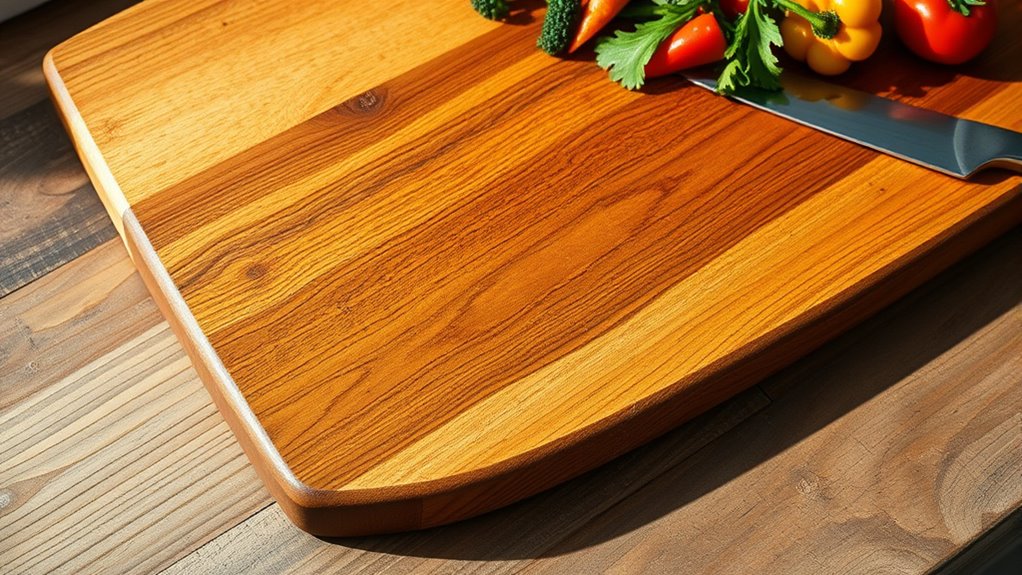
7 Reasons Oak Is Good for Cutting Boards
You’ll love oak cutting boards because they’re tough enough to resist dents, scratches, and warping while staying gentle on your knives, helping them stay sharp longer.
Oak cutting boards are a popular choice for their durability and natural resistance to moisture and bacteria. With its tight grain and tannins, oak naturally fights moisture and bacteria, keeping your board hygienic.
Its warm, classic look adds style and ages beautifully over time. Plus, it’s a smart, long-lasting investment that’s easy to clean and maintain.
Explore further to see why oak stands out.
Key Takeaways
- Oak’s dense grain resists deep knife marks, enhancing durability and reducing the need for frequent replacement.
- Its hardness balances knife friendliness by protecting blades while resisting wear and tear.
- Oak’s tight grain and natural tannins prevent moisture absorption, reducing bacterial growth and ensuring hygienic surfaces.
- The wood ages beautifully, developing a rich patina that adds lasting aesthetic appeal.
- Oak cutting boards resist warping and cracking, providing a stable, long-lasting kitchen tool.
Why Oak Is a Durable Choice for Cutting Boards
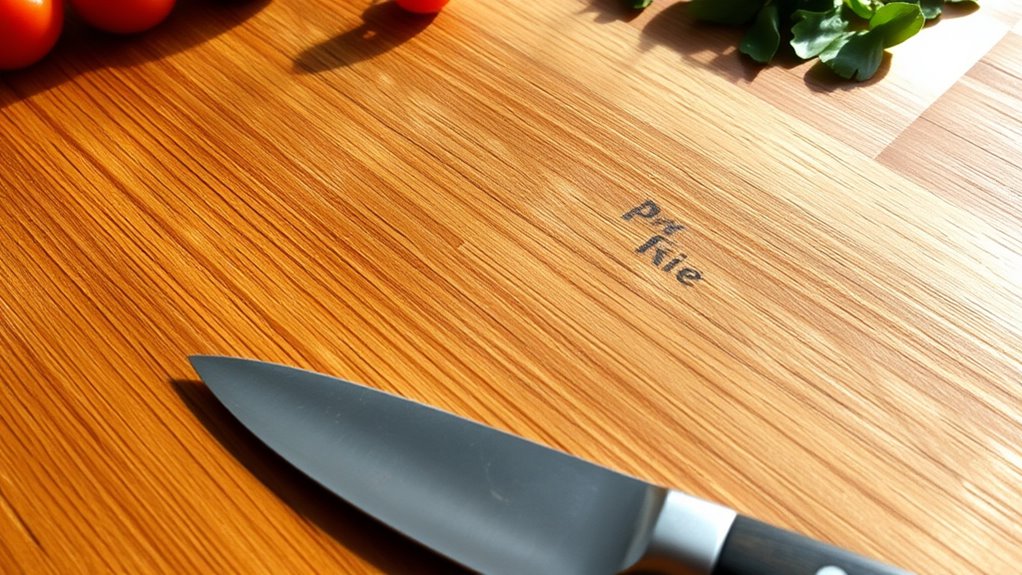
Although you might not notice it at first, oak’s natural hardness makes it an excellent choice for cutting boards. When you use an oak cutting board, it withstands the daily wear and tear of chopping, slicing, and dicing without easily denting or scratching. This durability means your board will last longer, saving you money in the long run.
Oak’s dense grain structure also resists moisture absorption, reducing the risk of warping or cracking over time. You won’t have to worry about your cutting board deteriorating after just a few uses. Plus, oak’s toughness supports heavy-duty kitchen tasks, so you can chop with confidence.
Choosing oak means you’re investing in a cutting board that stays reliable and sturdy through constant use.
How Oak Balances Hardness and Knife Friendliness
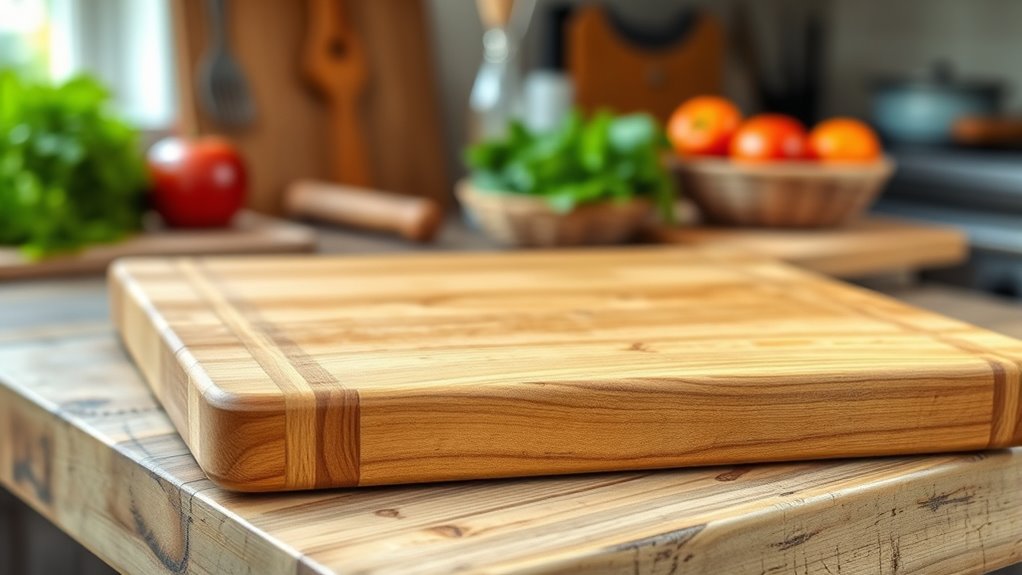
You want a cutting board that’s tough but won’t dull your knives quickly, and oak hits that sweet spot. Its hardness is just right—sturdy enough to resist deep cuts while still being gentle on your blade edges.
This balance makes oak both durable and forgiving for everyday kitchen use.
Optimal Hardness Level
When selecting a cutting board, finding the right balance between hardness and knife friendliness is essential, and oak nails this perfectly. Oak’s hardness falls within an ideal range: sturdy enough to resist deep cuts and dents but not so hard that it dulls your knives quickly. This balance means your board stays in great shape longer, while your knives maintain their sharp edges with less frequent sharpening.
Oak’s dense grain structure provides durability, helping it withstand daily kitchen use without warping or cracking. At the same time, it offers enough give to prevent excessive wear on your blades. Choosing oak gives you a reliable, long-lasting cutting surface that protects both your tools and your prep work, making it a smart choice for any kitchen.
Gentle on Knife Edges
Because oak strikes the perfect hardness balance, it treats your knife edges with care while standing up to everyday kitchen tasks. When you cut on an oak board, you’ll notice it’s firm enough to provide a stable surface without dulling your blades quickly. Oak’s dense grain resists deep cuts, so your knife won’t hit rough spots that can chip or wear down the edge.
Unlike harder woods like maple or walnut, oak offers a slightly softer touch, reducing the friction your knife faces with every slice. This means you can maintain sharper blades longer and spend less time sharpening. Choosing oak helps you protect your knives while enjoying a reliable, sturdy cutting surface that won’t compromise your tools.
Durable Yet Forgiving
Although oak is tough enough to withstand daily kitchen use, it still offers a forgiving surface that protects your knives from unnecessary wear. Oak’s hardness provides durability, resisting deep cuts and warping, while its slightly porous structure cushions your blades. This balance means your cutting board lasts long without dulling your knives quickly.
Here’s how oak compares in durability and knife-friendliness:
| Feature | Oak | Harder Woods |
|---|---|---|
| Hardness | High | Very High |
| Knife Friendliness | Moderate-High | Low |
| Durability | Excellent | Excellent |
Choosing oak means you get a board sturdy enough for heavy use yet gentle enough to keep your knives sharper, longer.
How Oak Resists Moisture and Bacteria to Stay Hygienic
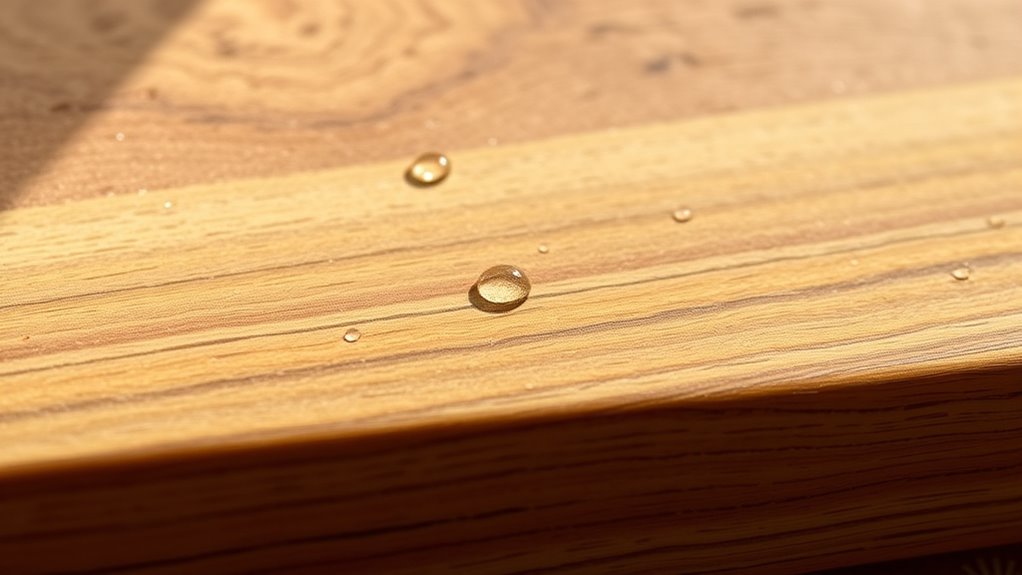
You’ll appreciate how oak naturally resists moisture, thanks to its tight grain structure that keeps water from seeping in. This barrier helps prevent bacteria from taking hold, making your cutting board more hygienic.
Plus, oak’s natural antimicrobial properties add an extra layer of protection for your kitchen.
Natural Moisture Resistance
When you use an oak cutting board, its natural moisture resistance helps keep your surface dry and clean. Oak contains compounds like tannins and tyloses that make the wood less permeable to water. This means liquids don’t soak in quickly, reducing the chances of bacterial growth.
You won’t have to worry about your board absorbing juices from raw meat or vegetables, which can cause unpleasant odors and contamination. Because oak resists moisture, it also dries faster after washing, lowering the risk of mold or mildew. This natural property makes maintaining hygiene easier, so your cutting board stays safe for food prep.
Choosing oak means you get a durable, sanitary surface that naturally fights moisture without extra treatments.
Tight Grain Structure
Because oak has a tight grain structure, it naturally limits how much moisture and bacteria can penetrate the wood. This feature helps keep your cutting board more hygienic by reducing environments where bacteria thrive. When you use an oak board, you benefit from:
- Reduced water absorption, which prevents warping and cracking.
- Less chance for bacteria to hide deep within the wood fibers.
- Easier cleaning since contaminants stay near the surface.
- Enhanced durability, allowing your board to last longer under daily use.
Antimicrobial Properties
How does oak naturally fight off bacteria and moisture to keep your cutting board hygienic? Oak contains natural tannins and phenolic compounds that act as antimicrobial agents, inhibiting bacterial growth on the surface. Its dense grain structure limits water absorption, reducing moisture buildup that encourages bacteria and mold.
When you use an oak cutting board, this resistance to moisture means less warping and fewer cracks where germs can hide. Oak’s natural oils also create a subtle barrier, preventing bacteria from penetrating deep into the wood. This combination of antimicrobial chemicals and moisture resistance helps keep your cutting board cleaner and safer for food prep.
How Oak Cutting Boards’ Grain Pattern Benefits Food Prep
Oak cutting boards’ unique grain pattern offers practical advantages that can enhance your food preparation experience. The tight, interlocking grain of oak provides a sturdy surface that resists deep cuts and grooves, helping your board stay smooth longer. This pattern also naturally channels liquids away, reducing mess and preventing pooling.
Oak’s tight grain resists deep cuts and channels liquids, keeping your cutting surface smooth and mess-free.
Plus, the texture offers a slight grip, keeping your fruits, vegetables, or meats steady as you chop. Here’s how oak’s grain benefits you:
- Durability – The tight grain withstands knife marks better than softer woods.
- Liquid management – Grain channels direct moisture away, reducing slipping.
- Food stability – Slight texture holds ingredients in place while cutting.
- Reduced wear – Less deep scoring means easier cleaning and maintenance.
These features make oak boards a reliable tool in your kitchen.
Why Oak Cutting Boards Age Well Over Time
The grain pattern that makes oak boards so practical also helps them improve with age. As you use your oak cutting board, tiny scratches fill with oils and moisture, creating a richer, darker patina that enhances its natural beauty. This aging process doesn’t weaken the board; instead, it adds character and durability.
You’ll notice the wood becomes more resistant to stains and odors over time, making your board more hygienic and long-lasting.
| Feature | Benefit |
|---|---|
| Tight Grain | Prevents deep cuts and bacteria |
| Natural Oils | Enhance moisture resistance |
| Dense Fibers | Increase durability with use |
| Patina Formation | Adds rich color and hides scratches |
Your oak board ages gracefully, turning each meal prep into an experience enriched by time.
How Oak Adds Style to Your Kitchen
Even if you’re starting with a simple kitchen setup, incorporating an oak cutting board instantly elevates the space with its warm tones and natural texture. Oak’s classic grain patterns create a timeless look that blends well with various kitchen styles. You’ll notice how it adds depth and character without overwhelming your existing decor.
Here’s how oak cutting boards add style to your kitchen:
- Natural Warmth – Oak’s rich color brings cozy warmth to your countertops.
- Versatility – It complements both modern and rustic kitchen designs.
- Visual Contrast – Oak boards stand out beautifully against stainless steel or white surfaces.
- Elegant Simplicity – The subtle grain pattern adds sophistication without being flashy.
Choosing oak means adding both function and effortless style to your kitchen.
Why Oak Cutting Boards Are a Smart Kitchen Investment
Because you use cutting boards daily, choosing one that lasts makes a big difference in both performance and value. Oak cutting boards offer durability that stands up to regular chopping, slicing, and dicing without warping or cracking. This means you won’t have to replace your board frequently, saving you money over time.
Oak’s dense grain also resists deep knife marks and bacterial buildup, helping maintain a hygienic surface. Plus, its natural hardness protects your knives from dulling quickly. Investing in an oak cutting board means you get a reliable, long-lasting tool that performs well and looks great in your kitchen.
When you pick oak, you’re choosing a smart, practical investment that supports your cooking needs day after day.
Frequently Asked Questions
Can Oak Cutting Boards Be Used for Serving as Well as Cutting?
Yes, you can use oak cutting boards for serving as well as cutting. They’re sturdy, attractive, and durable, making them perfect for presenting food while handling everyday chopping tasks in your kitchen with style and practicality.
How Do Oak Cutting Boards Compare in Price to Other Wood Types?
Oak cutting boards often cost less than exotic woods but more than softwoods. You’ll find they strike a nice balance—affordable yet durable—so you won’t need to sacrifice quality for price when choosing oak.
Are There Any Special Cleaning Methods for Oak Cutting Boards?
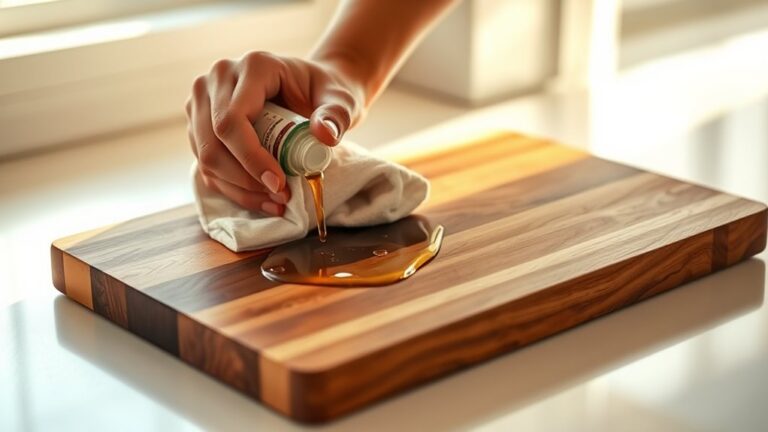
You don’t need special cleaning methods for oak cutting boards. Just wash them with mild soap and warm water, avoid soaking, and regularly oil them to maintain moisture and prevent cracking.
Don’t use harsh chemicals or dishwasher.
Can Oak Cutting Boards Be Refinished or Sanded Down if Damaged?
Yes, you can sand down oak cutting boards if they get damaged. Just use fine-grit sandpaper, sand evenly, then reapply food-safe mineral oil to restore the surface and keep it smooth and safe for use.
Is Oak Environmentally Sustainable for Cutting Board Production?
You might be surprised, but yes, oak is environmentally sustainable when sourced responsibly.
You can choose boards made from FSC-certified oak, ensuring forests are managed well, so you’re supporting eco-friendly practices while enjoying a sturdy cutting board.
Conclusion
When it comes to cutting boards, oak truly stands the test of time. You get durability, knife-friendly hardness, and natural resistance to moisture and bacteria. Its beautiful grain adds style, while its aging only enhances character.
Remember, “good things come to those who wait”—your oak board will serve you well for years, making it a smart investment for any kitchen. You’ll appreciate how oak balances function and beauty every day. Choosing oak means choosing a cutting board that combines durability, natural resistance, and timeless appeal.